
The Quercus, or Oak tree, has been identified as one of the most favourable trees to plant as we face ongoing climate change in our future. In a presentation in Qualicum Beach several years ago, Douglas Justice of the University of British Columbia, hailed the oak tree, the Quercus species as the most reliable tree capable of surviving and thriving in a challenging future.
Oak are the trees to plant for our grandchildren and the generations that follow.
They are the keystone species, the crucial piece that holds the ecosystem together and supports the other pieces. When a keystone is removed, the arch, or in this case, the ecosystem, collapses.
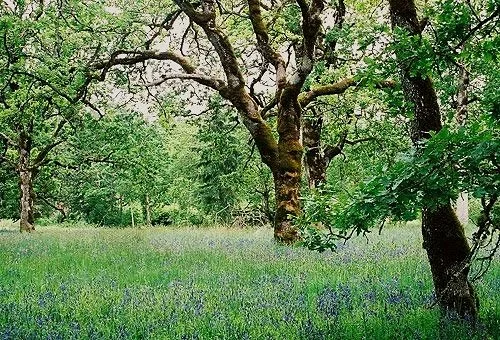
A deep soil Garry Oak ecosystem at Cowichan Garry Oak Preserve Photo by Shyanne Smith
Why is the Quercus so significant?
Quercus is a genus of over 600 species and is one of the most widespread and beloved tree families.
Throughout history, oak trees have offered a majestic presence. As cultural icons they signify strength and endurance.
The Quercus are long-lived, slow growing trees, and are, in general, adaptive, hardy and resilient, capable of withstanding various climatic conditions. They are found across temperate and tropical regions of the Northern Hemisphere. Each species has adapted to its specific habitat.
Their ecological significance is immense
Doug Tallamy, the well-known entomologist and author, considers native oaks a keystone species—a species upon which many other organisms depend—because they support more forms of life than any other tree in North America.
Oaks are communities of hundreds of species, and provide food, nesting materials, nesting sites, and shelter among other resources. Oaks feed mosses, fungi, and lichens. They also produce countless insects. There is even more life in the fallen litter beneath oak trees than in the tree itself.
Acorns are a key food source for many animals, critical winter food for dozens of species of birds (from songbirds to turkeys), squirrels, rodents, black bears, raccoons, deer, and others. One oak can produce 3 million acorns in its life. These acorns provide protein, fat, and carbohydrates when food resources are scarce.
All leaves are valuable for enriching soil, but Quercus leaf litter is especially valuable. A mature oak may shed up to 700,000 leaves a year that may take up to three years to decompose. They provide shelter and habitats for thousand of specialized microorganisms; they encourage the growth of mycorrhizal fungi, which improve soil health and create carbon-rich glomalin, a glycoprotein that is deposited into the soil.
This slow decomposition ensures long-lasting organic matter that enriches soils with nutrients and improves soil structure for greater water retention and aeration.
Oaks are one of the best trees for sequestering carbon; they store huge amounts—several tons in an average tree—in their trunks and roots. Because they are long-lived trees, that carbon will be locked up for hundreds of years. They are also good at removing pollutants from the atmosphere.
The effect of oaks on the watershed is profound. First, the tree canopy breaks up rain, helping to prevent soil erosion. A dense layer of leaf litter allows rain to absorb into soil slowly, and the leaves also serve as a filtering mechanism as the rainwater percolates down through deep and extensive root systems into the aquifer.
In urban landscapes, oaks are valuable. They block excessive wind and cool homes, buildings, and urban hardscapes, not only by providing shade but also with the cooling effect of transpiration.
Oaks are truly wonderful trees to be nurtured, protected, and treasured, not only in our wilderness and garden areas, but also in our urban spaces.
Why not plant an oak tree?
Despite the fact that the might of the Oak Tree is impressive, awe-inspiring, and stirring, you hesitate to visit the nursery to purchase one.
There are several logical reasons for such hesitancy; you’ve heard them.
“Oh, the leaf litter sticks around too long. It’s too heavy. There’s acorns everywhere. Oh, the tree is too big for my yard. It lifts up the sidewalk. The trees are too expensive and they grow too slowly.”
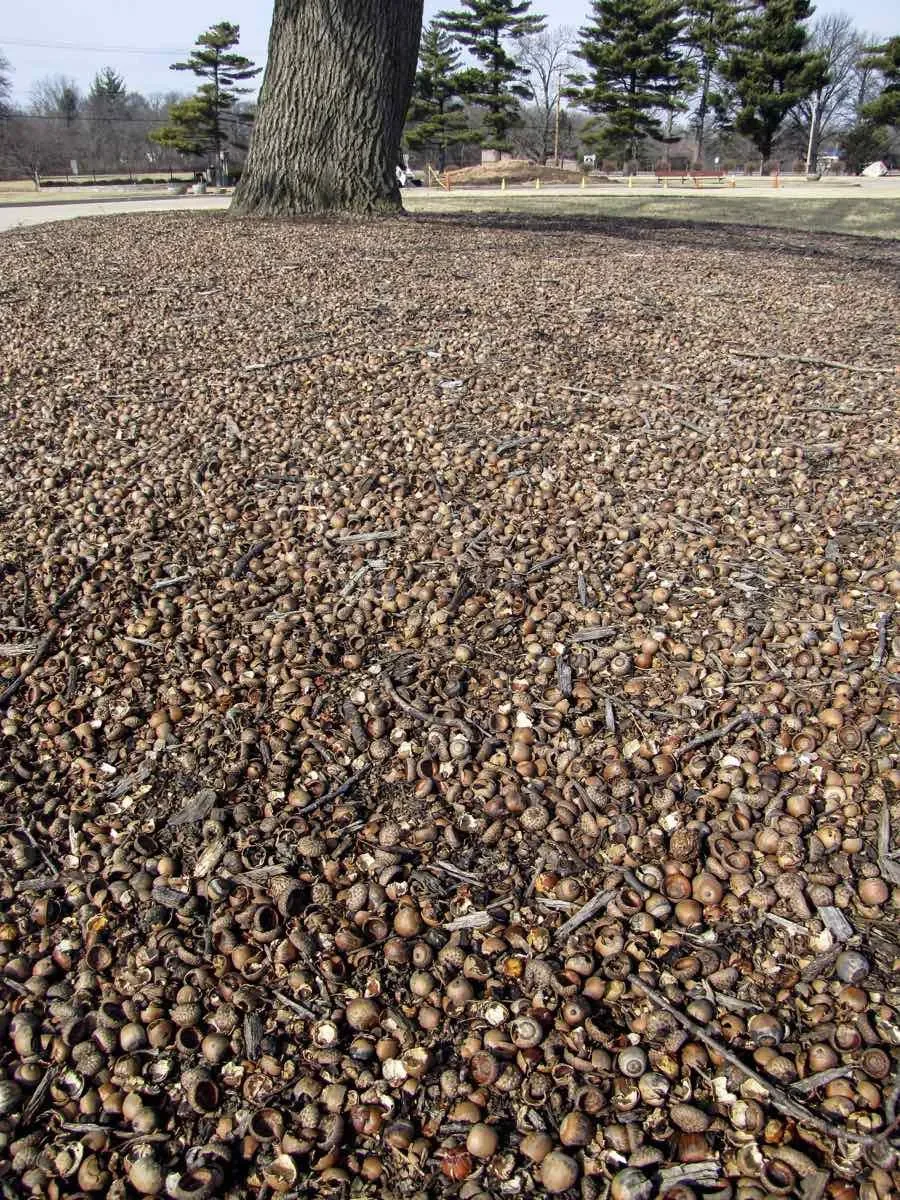
Oak masting is a phenomenon that only happens once in several years
Photo right: A one year old seedling that will be lifted to transplant
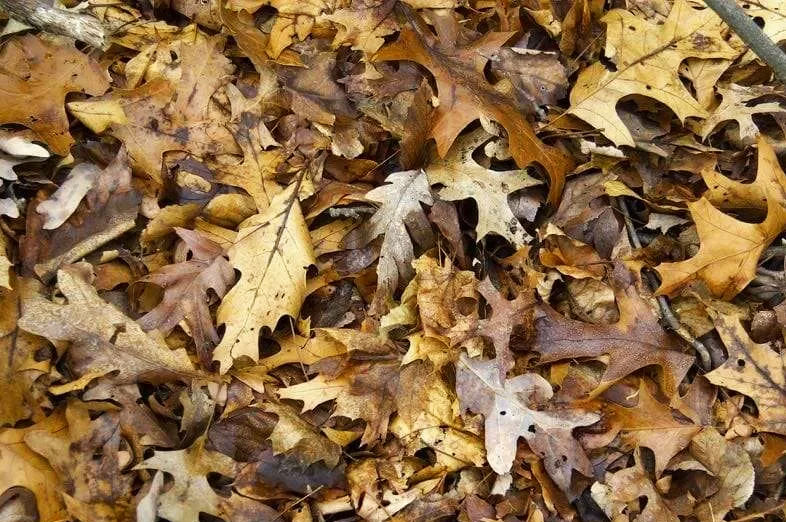
Oak leaves are ecological gold
Perhaps, we can overcome some of our gardener/human objections about oak trees.
Oaks do not produce thousands of acorns each year. During mast years, some oaks produce a lot of acorns in a single year and but then go one or two, or maybe even more years, without producing very many at all.
In answer to cost and slow growth, Doug Tallamy suggests planting acorns, or small seedlings, instead of a 15-foot tree with a giant rootball. That tree has been root-pruned so badly that it will sit without growing for years as it tries to rebuild its roots. There is “10 times more root biomass laid down by the oak in its first year than leaf biomass.” Once that root system is built, it will outgrow the larger transplants that must re-establish their roots.
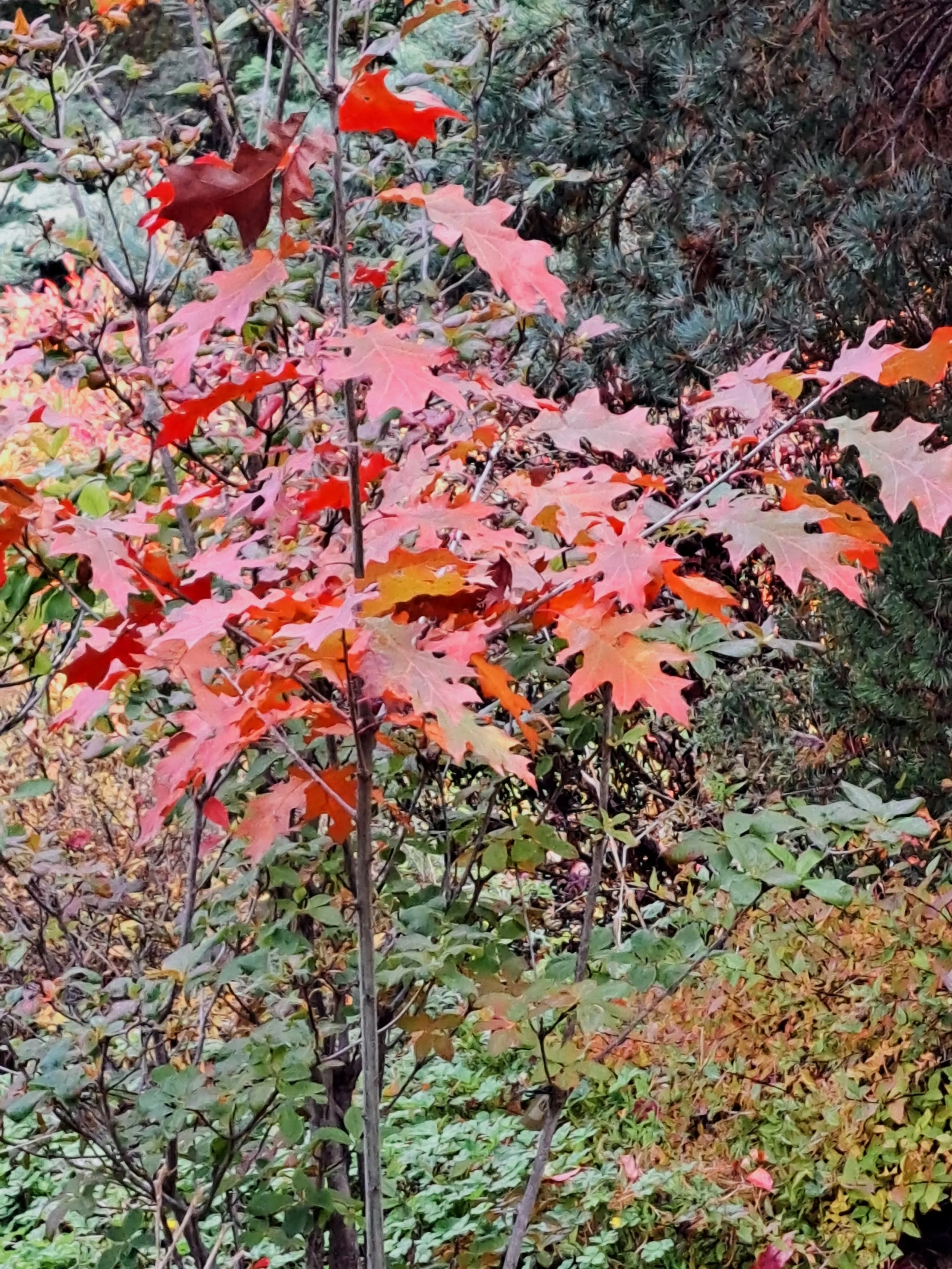
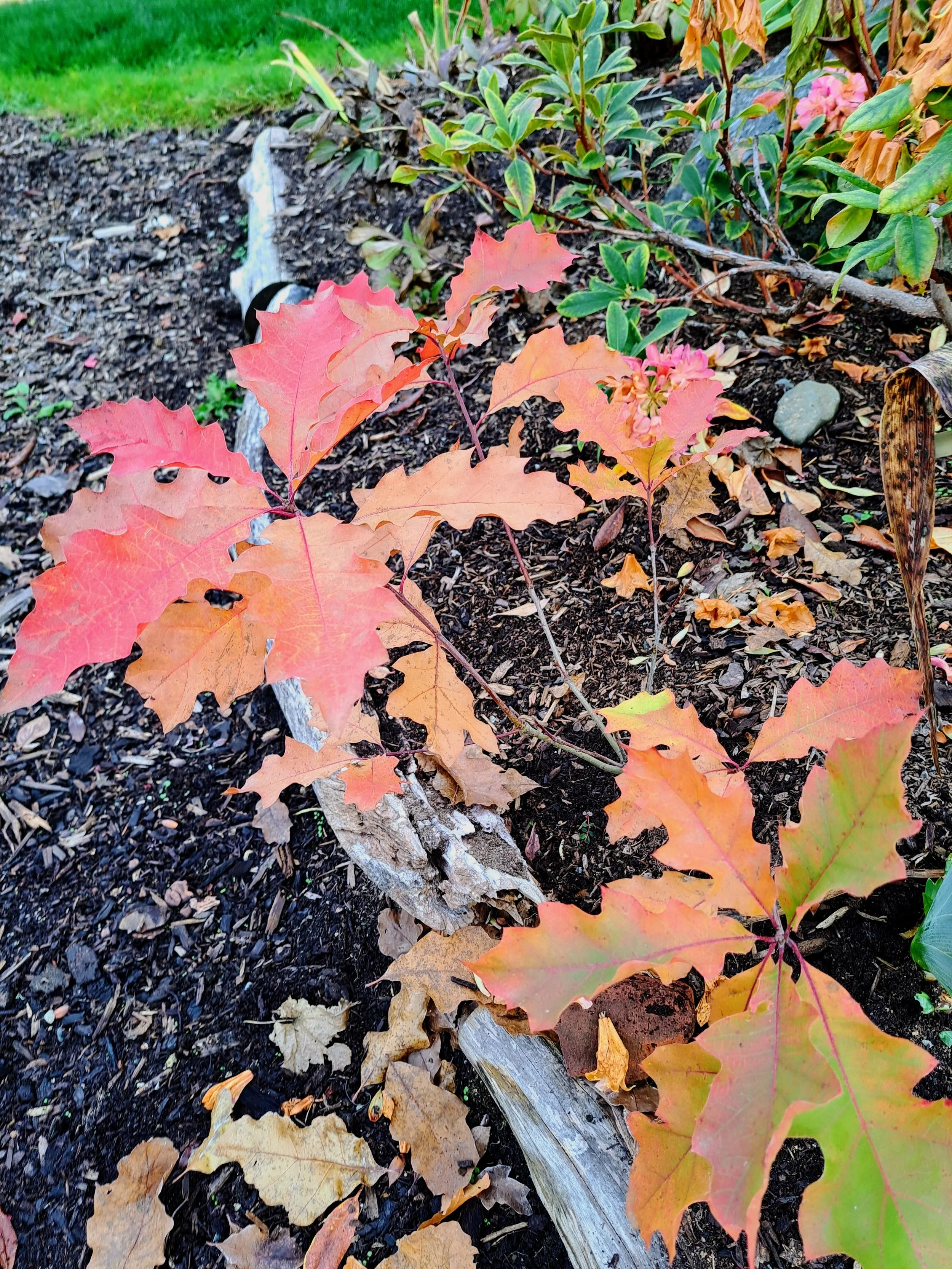
An 8-inch seedling, left go grow in a “problem area” of a garden only 2 years ago, has amazingly developed its root system to already delight with its stance and brilliance.
Because of the hundreds of varieties of oak trees finding one that will perfectly suit your yard and space is indeed possible.
Below are two seedlings potted up by Joe Hudak several years ago and planted into my garden 4 to 5 years ago. It is fascinating to see how different they are. The oak tree on the left has spreading branches and bright autumn colour. The oak on the right is columnar, and retains its smaller green leaves much longer than its neighbour. The columnar tree has seedlings growing around it that will be dug up; some will be potted up and several will be planted together to create a screen where a neighbour’s tree removal has left a rhododendron bed exposed to sun and strong winds.
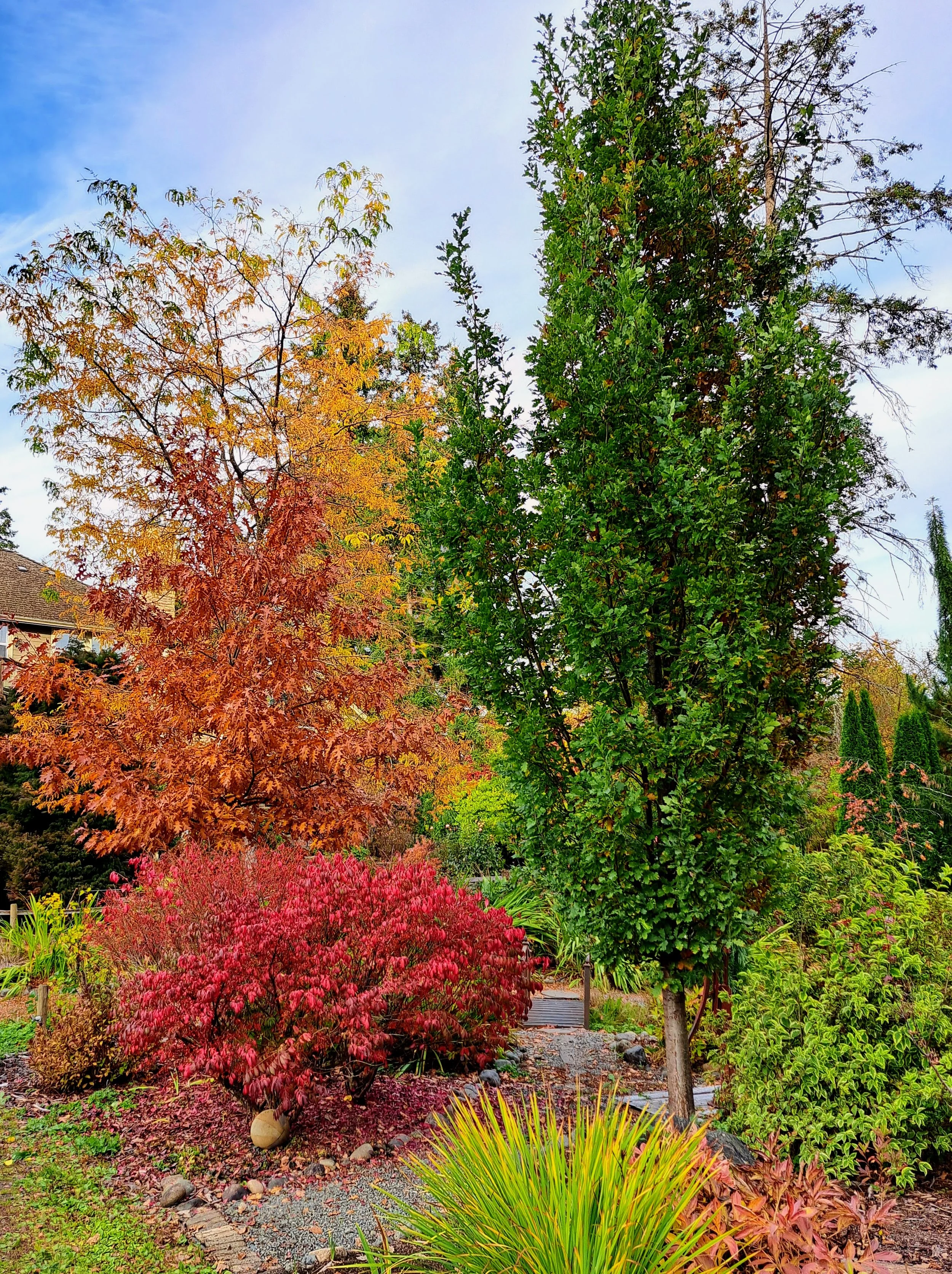
Two seedling oak trees express their individuality side by side
Your grandchildren and their children will thank you for planting Quercus, the resilient oaks, trees for their green future.