
By Alan Campbell
An interesting discussion took place on the internet chat group that concerns itself with the growing of rhododendrons. This rhododendron forum* has some 400 registered users around the world with a wide range of knowledge and experience.
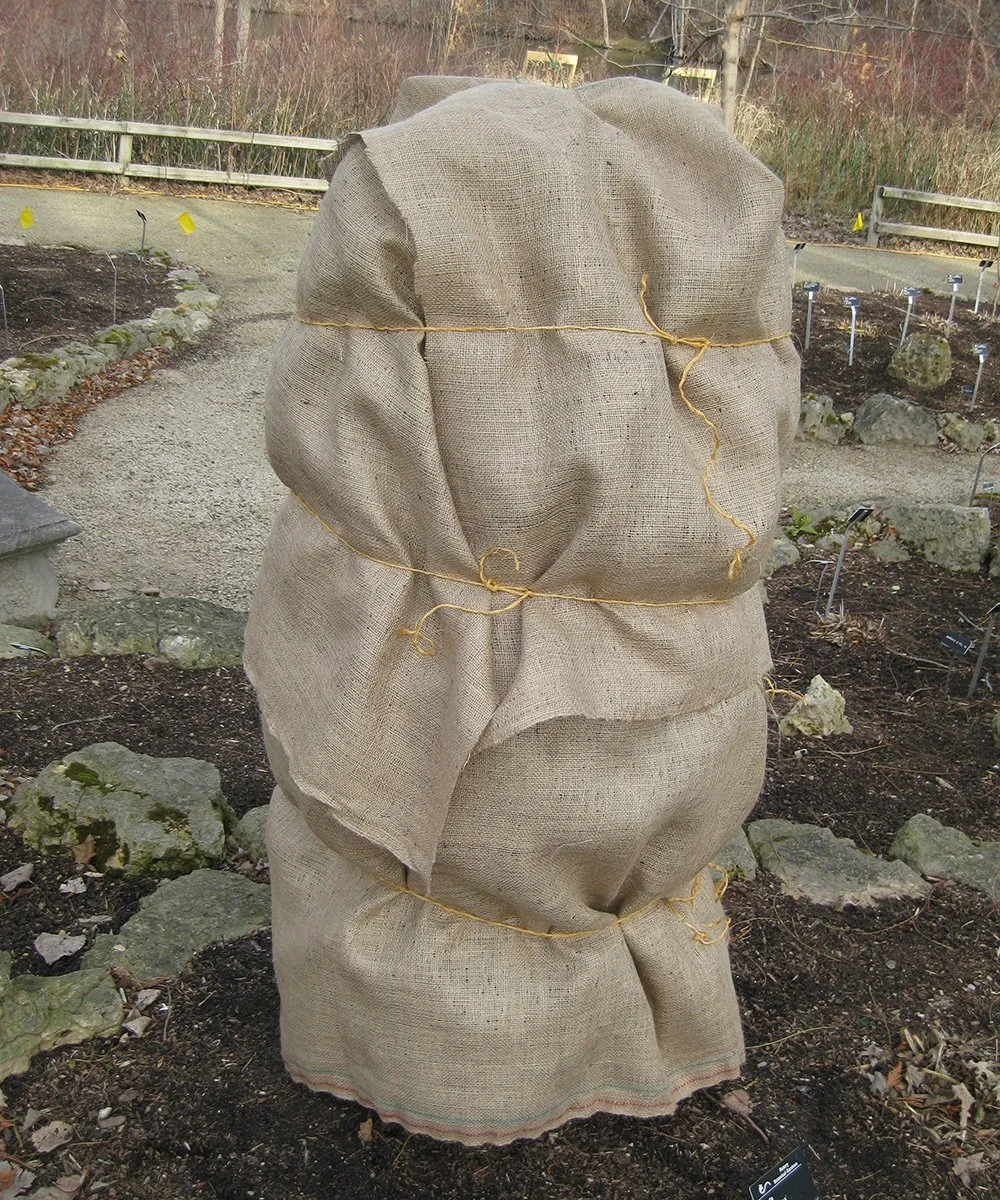
This rhododendron is sited in an exposed garden bed. It will be vulnerable to sun exposure in summer seasons, and to sun exposure, freezing temperatures and wind chill in winter.
‘Webster’ defines wind chill as a still-air temperature that would have the same cooling effect on exposed human skin as a given combination of temperature and wind speed, also called chill factor, wind chill factor and wind chill index.
As plants do not feel, having no nerves to transmit impulse, to use the term wind chill in relation to plants is meaningless.
It was then posted by Bruce Clyburn of District 12 of the ARS in Nova Scotia that he held a different view:
“I, on the other hand, drift from the literal definition and interpret it as the combined effects of temperature and wind. Wind can increase the evaporation of soil moisture, thus speeding drying and making water harder for the plant to obtain. It also speeds evaporation of moisture from the plant leaves and bark. The faster the wind, the faster the moisture is lost.”
The next posting to the forum was from Steve Henning, the rhodyman, of Pennsylvania, in District 8 of the ARS. Steve’s comments give in-depth reasons on how and why our gardens should be prepared for Winter.
“You are correct Bruce, the biology is entirely different. In humans the body temperature should be near 98.6F and the wind chill is the effect of the environment to combat our body’s effort to keep that temperature. Also our extremities are susceptible to frost bite but our core is producing heat and trying to combat that. So the colder and the windier it is, the harder it is on the person.
In a plant everything is different. The plant has no body temperature but must maintain cell integrity which it loses when the cells freeze (frost bite) or when they are desiccated. The temperature at which cells freeze varies depending on the variety and hardening of the plant. There are four different scenarios.”
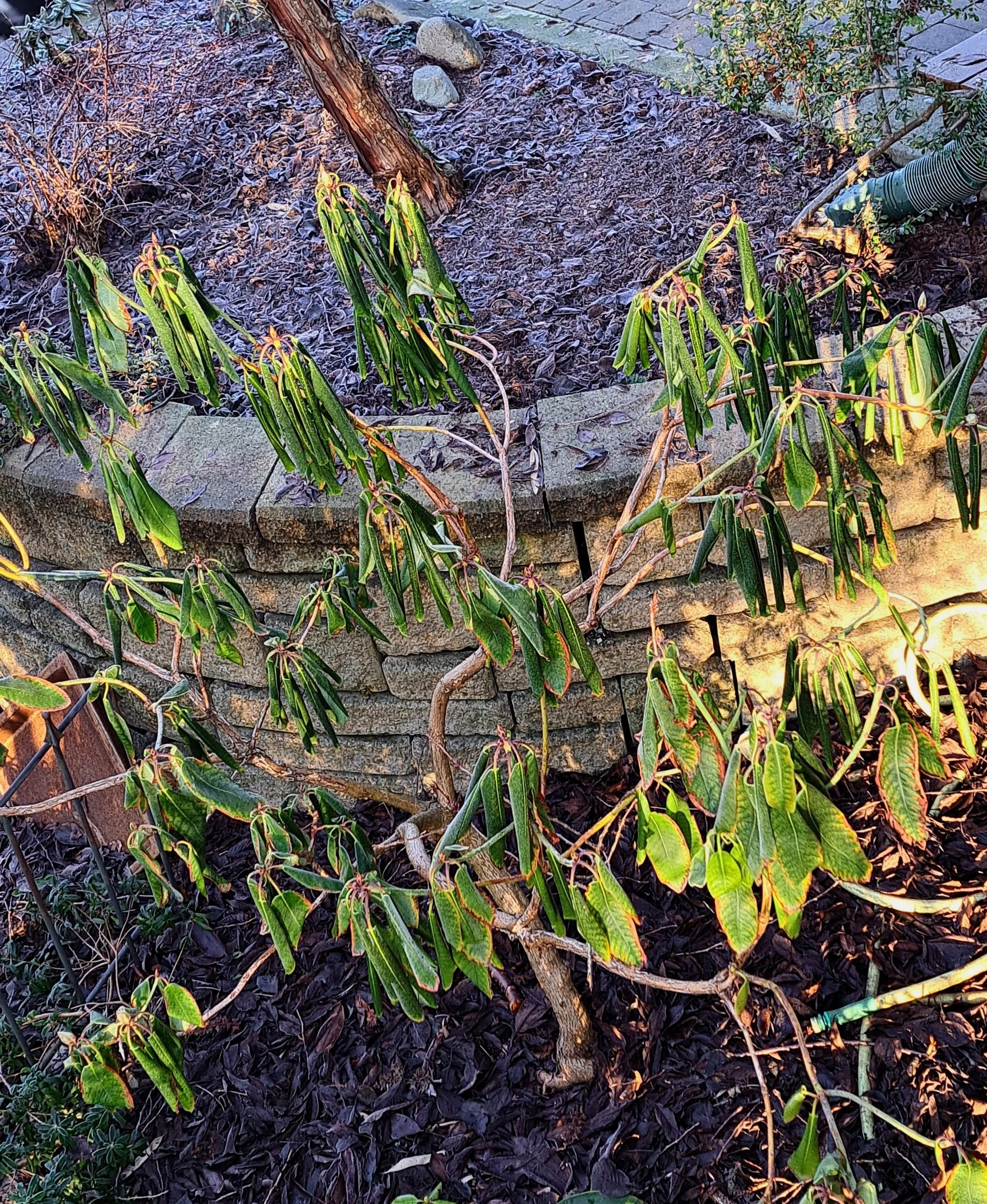
Species Rhododendron fortunei is reacting to the freezing temperatures. Whether, or how well, this rhododendron will recover will depend on the combination of factors explained below.
The Scenarios:
When the ground is thawed and the air temperature is above freezing as well, sap can flow and replenish the moisture lost from leaves until the ground is desiccated. So here the effect is the drying root zone. The severity depends upon the moisture available. It causes drought damage, wind burn, sun burn and possible death.
When the ground is frozen, but the air is warmer, the plant is vulnerable to desiccation. The leaves are not curled up and the biological processes in the stem portion of the plant can occur. So a variety that will maintain dormancy under such conditions will do better. Those that don’t, will suffer more. They will suffer more depending upon the dryness of the air.
When the ground is frozen and the air temperature is below freezing, the plant is better off until the temperature gets down to where some of the cells are freezing and being destroyed. So this again depends how hardened off the plant is and on the variety as well. The wind is not much of a factor here. It will make desiccation worse, but most hardy varieties will cope. Varieties that can’t cope will suffer. Here moisture in the air has much less of an effect.
When the ground is thawed but the plant is frozen, the plant should be okay unless the temperature does get down low enough to compromise cell structure. The wind is not much of a factor here either.“
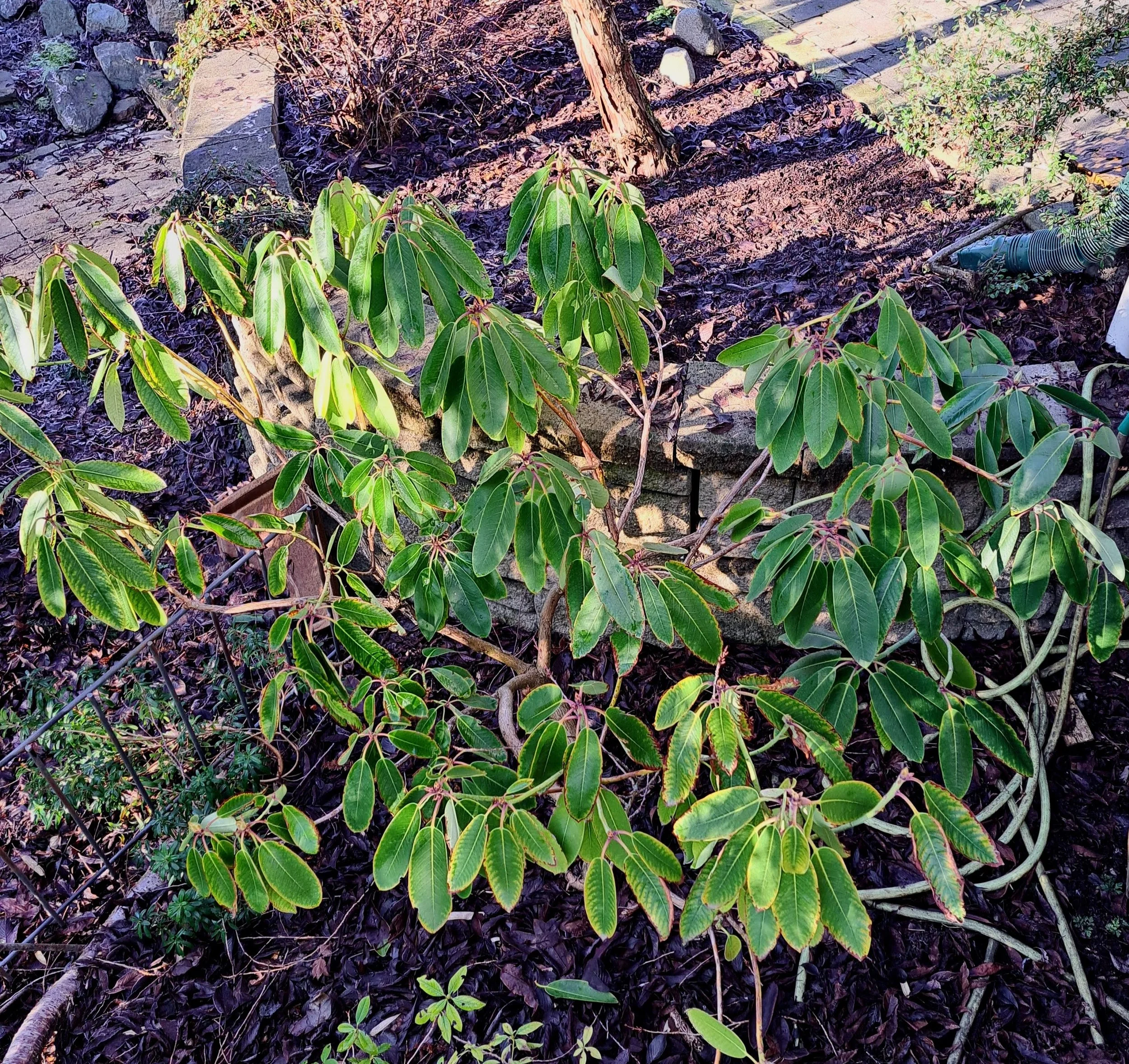
In the earlier photo, Rhododendron fortunei responded to the freezing temperatures by a process called thermonasty, drooping down and curling its leaves reducing the amount of leaf space by which it could become desiccated. It was closing and protecting the stomata. The same rhododendron, as shown in the photo above, recovered quickly when temperatures warmed, suggesting it had been prepared for winter with well watered roots.
“So for plants it is complex, and variety dependent. It is also dependent upon how hardened off the plant is. Hardening off means that cell tissue has adapted to the cold weather and has maximum resistance to cold, wind and sun. This usually means the plant cells ‘bulk up’ on chemicals that inhibit freezing and drop their moisture level to increase the concentration of chemicals in solution. So the cold weather tolerance of a plant can vary considerably depending upon how well it has hardened off. Too much nitrogen fertilizer or ‘freaky’ weather with warm spells can compromise a plants ability to harden off.
A human being burns food for energy and is a warm bodied creature with a thermostat, a large thermal mass and some clothing for insulation. A plant is a small cold bodied entity with no thermal heat source, very little stored heat due to very small thermal mass and no insulation unless there is snow cover or leaves or something.
The difference between the cell temperature and the ambient temperature is negligible. The only protection is the dissolved chemicals in the cell that act like antifreeze and suppress the freezing point of the cells. The composition of these chemicals is what distinguishes between a hardy plant and a tender plant or between a hardened off plant and one that is not hardened off.”
Steve Henning has his own web-site at http://rhodyman.net/resite.html and I recommend that everyone visit his site. It is just packed full of information.
*If you should care to visit the rhododendron group forum, that address is http://groups.yahoo.com/group/rhodo/.
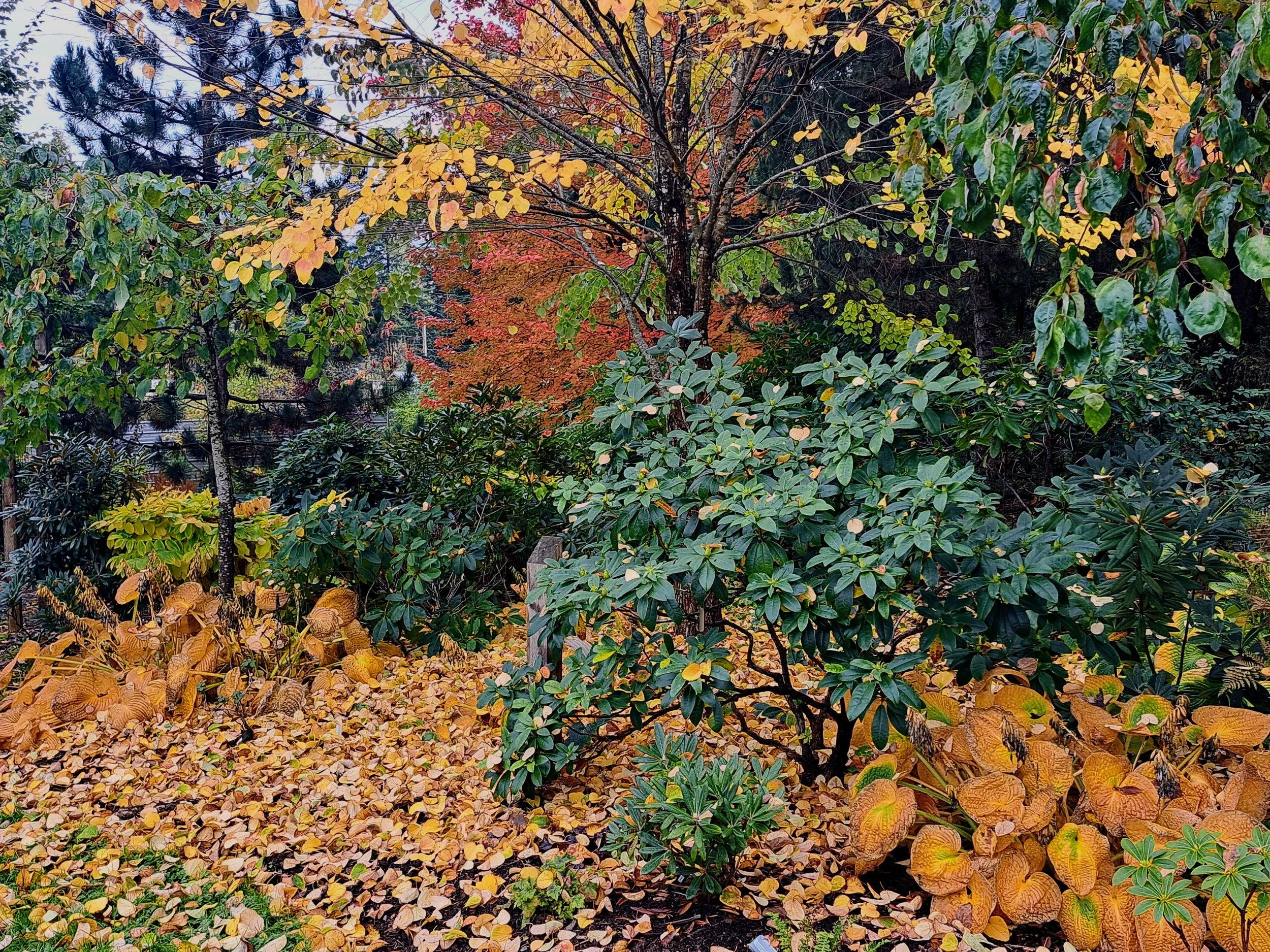
Planting your rhododendrons in more appropriate locations, such as in woodland gardens, and ensuring they enter the winter season well hydrated, will protect them from most winter challenges.