
Rhododendrons in the Switzerland Alps
Rhododendron ferruginum and Rhododendron hirsutum
Rhododendron ferrugineum
On our first hike in Switzerland, not far above Kandersteg, I unexpectedly noticed a pink flowered shrub — a dwarf rhododendron in bloom. I had not even considered seeing rhododendrons, so this delightful sighting nudged my interest. Although most of the native rhododendrons were no longer in flower, this one was, and therefore had caught my eye. In the days following, I was alert for more Rhododendron ferrugineum plants.
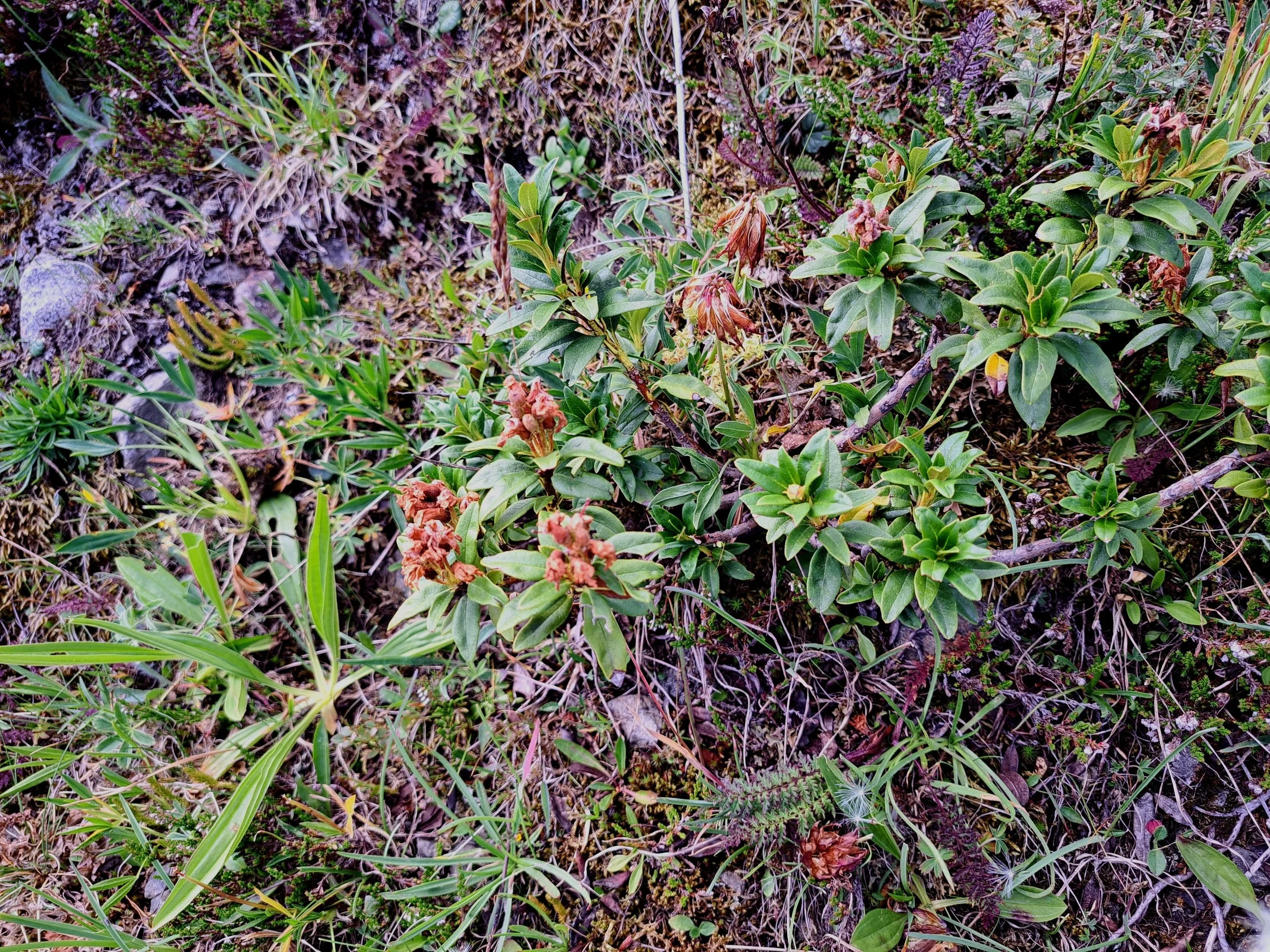
As tempting as it was to pretend I was a plant hunter, I did not collect the seeds from this rhododendron.
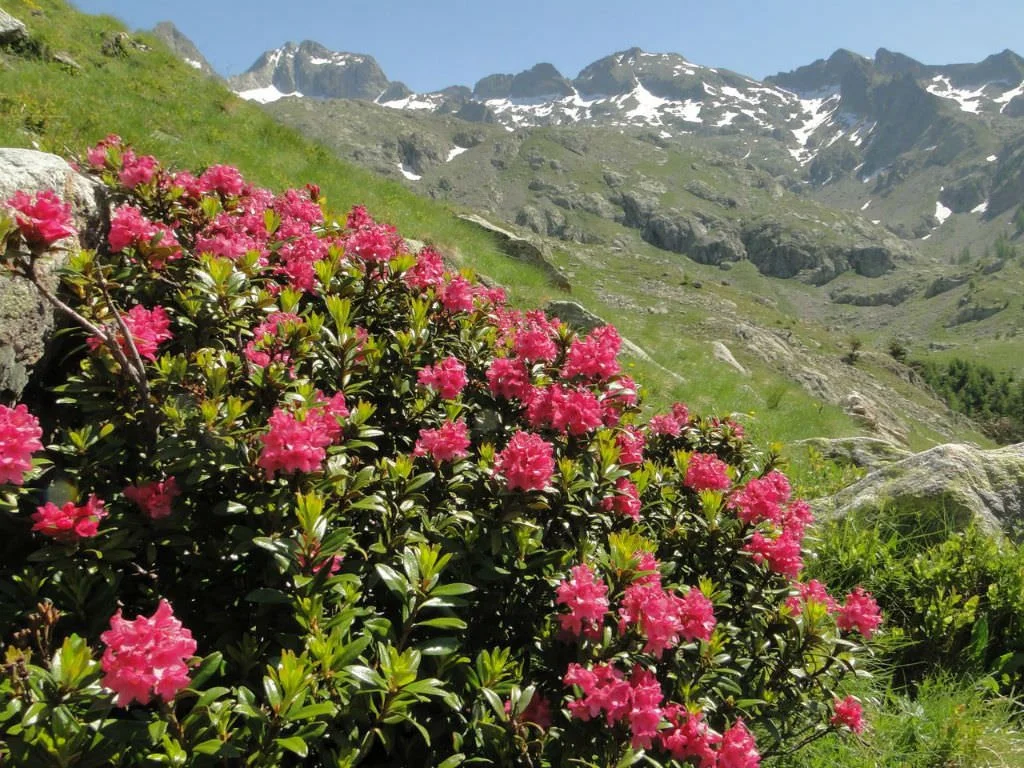
Rhododendron ferrugineum (World of Flowering Plants) What the alpenrose would look like in full bloom.
In Switzerland, the common name for the rhododendron is Alpenrose. Rhododendron ferrugineum is sometimes called the rusty-leaved alpenrose because of the rust-brown spots on the underside of its foliage.
Switzerland is also home to another alpenrose. This native rhododendron is Rhododendron hirsutum, and I was privileged to see it on my hikes as well.
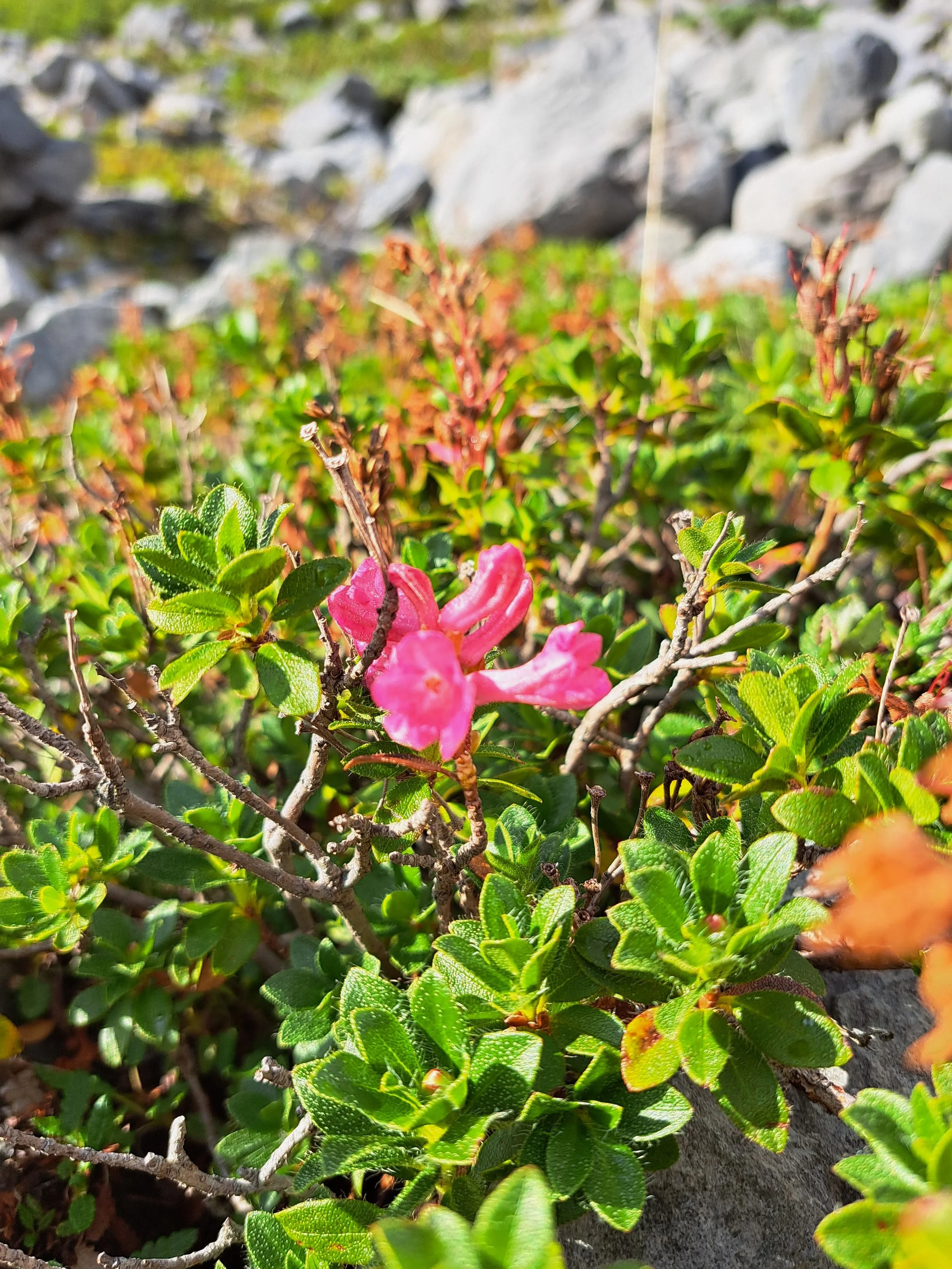
One pink truss of Rhododendron hirsutum, amongst many faded ones, now in stages of seed formation.
I came upon this second alpenrose on another of our hikes. Again the one pink flower amongst the many finished blossoms and the shrub’s growing habit alerted me to the rhododendron. This dwarf appeared different from Rhododendron ferrugineum in that it was chunkier, and its foliage was ‘hairy’. This was Rhododendron hirsutum. I came to understand why I found them on hikes in different areas of the alpine regions.
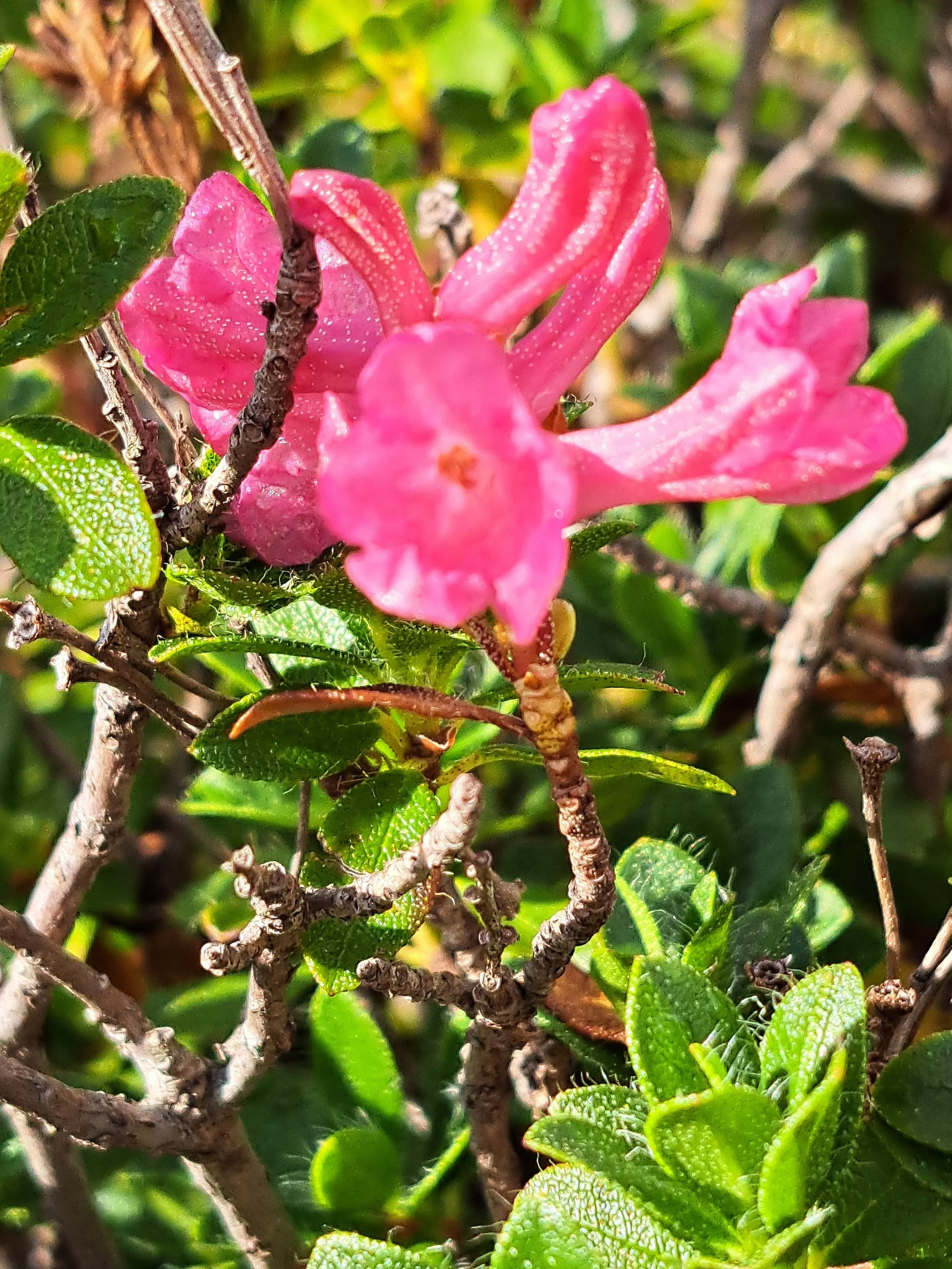
The tiny hairs on the foliage of Rhododendron hirsutum clearly visible.
Rhododendron ferrugineum grows primarily on acidic soils, whereas its close relative Rhododendron hirsutum grows on limestone soils. These two types of soils frequently occur near each other in the Alps.
In the wild, R. hirsutum is usually found on a limestone formation, but its soil preferences are not so definite as those of R. ferrugineum, which is never found on limestone except where the soil is so leached as to be slightly acid or unless there is an accumulation of peat above the substrate, whereas R. hirsutum, despite its preference for calcareous soils, can and does grow on slightly acid soils.
Where the two species are contiguous, R. hirsutum is confined to dry, open, stony soils and screes, while R. ferrugineum prefers damper and shadier locations, with a soil richer in humus. A further difference is that R. hirsutum is a less gregarious species, rarely forming extensive pure stands as its ally so often does (Hegi, Fl. Mitteleuropa)
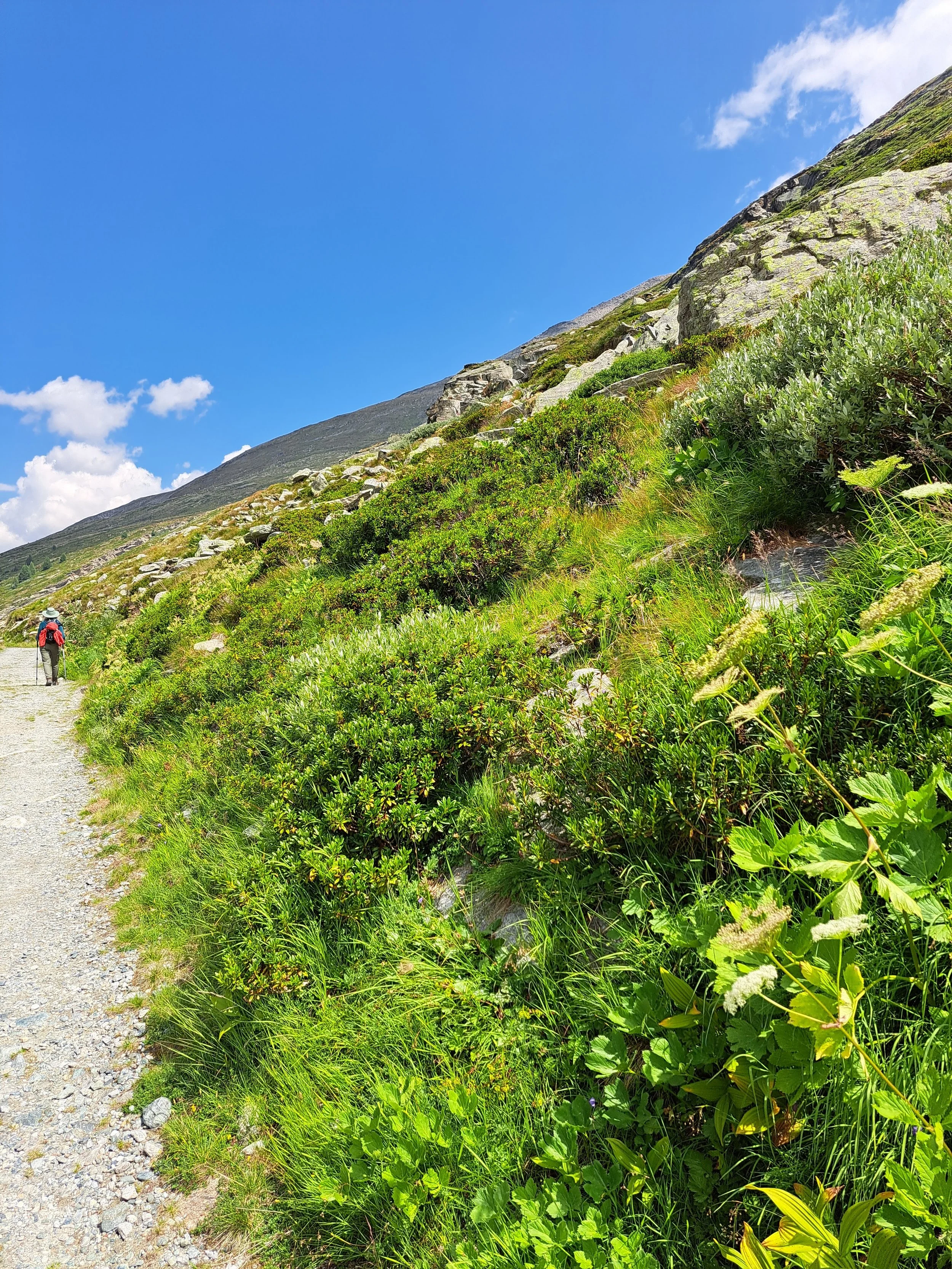
Rhododendron stands on exposed alpine hillsides.
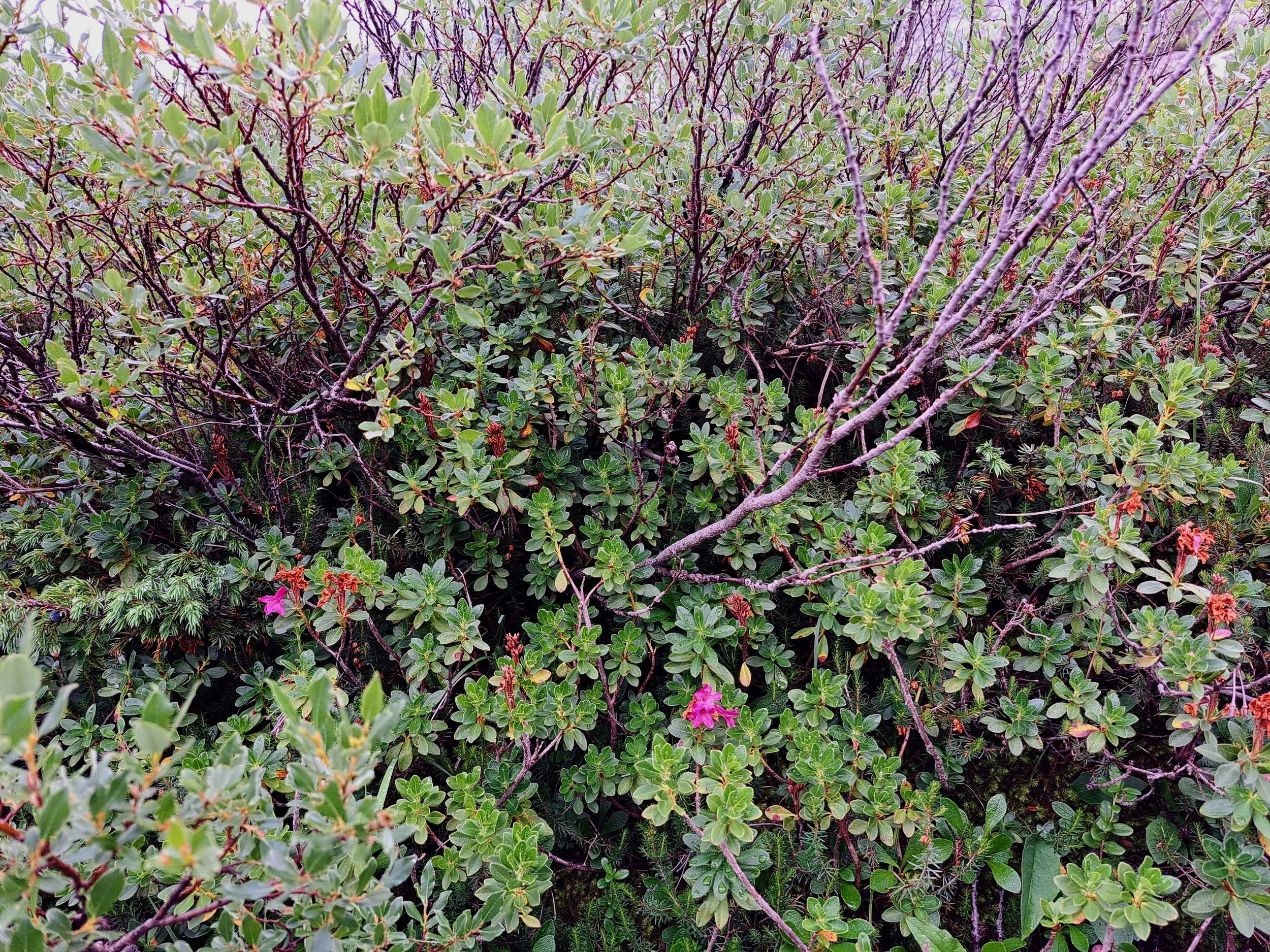
A rhododendron sighting in Switzerland alpine regions, but which species, was at times, difficult to determine
Perhaps some of the alpenroses were difficult to identify because they did not clearly match either species. Where the two alpenroses occur together, they frequently produce the hybrid Rhododendron x intermedium.
Both rhododendron species can be, and are, grown in our gardens on Vancouver Island. Seeing them growing in their native habitats definitely helps understand why attempting to grow some rhododendrons in our gardens may be more difficult than growing others.
In the case of these two dwarf rhododendrons, adding a bit of lime to the soil around Rhododendron hirsutum might produce pleasing results.