
Alpine Trees of Switzerland
Pinus cembra and Larix decidua
Article and Photos by Verna Buhler unless otherwise indicated
The subalpine and alpine slopes of Switzerland feature a mixture of coniferous trees, the most common being Pinus cembra (Arolla or Swiss stone pine), Picea abies (Norway spruce), Abies alba (Silver fir), and Larix decidua (European larch).
A mature Pinus cembra behind a new generation of Picea abies (left) and Pinus cembra (right)
Mixed coniferous forests at subalpine levels
It was wonderful to see these four conifers in their natural habitats, and easier to understand why a Pinus cembra, a Swiss stone pine, in my garden had died several years ago.
Coniferous stands at high-altitudes in the Alps. (click on photo to enlarge)
Pinus cembra
Pinus cembra, the Swiss stone pine, is honourably referred to as The Queen of the Alps. The five-needled pine is perfectly suited to high altitudes of harsh mountain climates where it braves freezing wind and weather its whole, generally long, life.
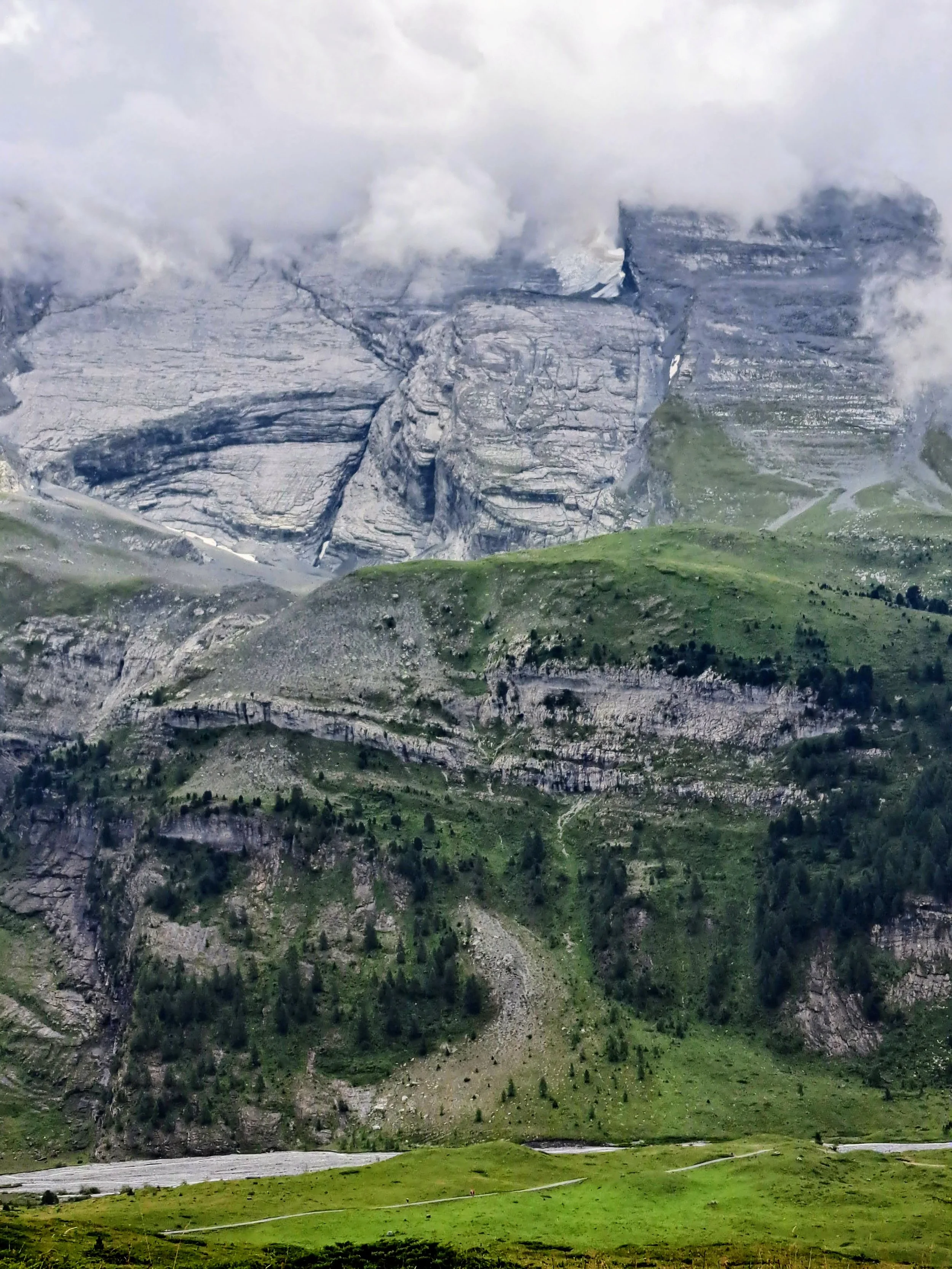
Rugged terrain of the high-altitude Swiss Alps. (click on photo to enlarge)
The Swiss stone pine has 5 needles per cluster; its needles have whitish wax stripes on 2 sides and are triangular in cross-section. It has closed, purple-tinged, rarely green, cones with non-winged, hard-shelled seeds.
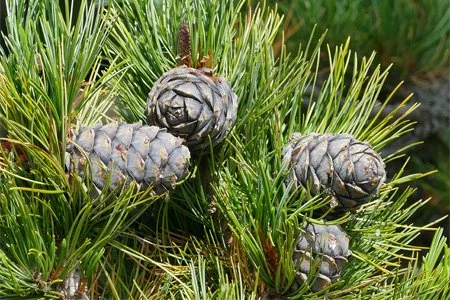
The Swiss stone pine has a symbiotic relationship with the nutcracker which disperses its seeds year after year. For this reason it is a protected species.
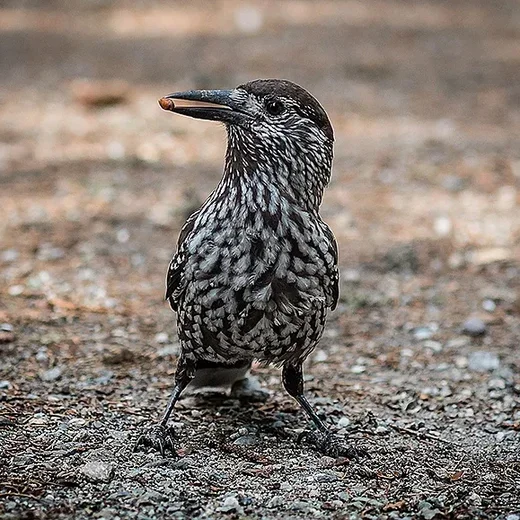
Spotted nutcracker with a stone pine seed in its beak
Photo: waldwissen.net
The spotted nutcracker feeds mainly on the seeds of the stone pine. It collects them from late summer onwards, and hides them as winter reserves in tree trunks, large stones, boulders, and terrain edges which, at times, may be far beyond the tree line. Then, the nutcracker has to find the seeds under the snow in winter and dig them out, often with a great deal of effort.
Amazingly, about 80% of these caches are recovered. The seeds that remain buried are essential for the spread of the Swiss stone pine.
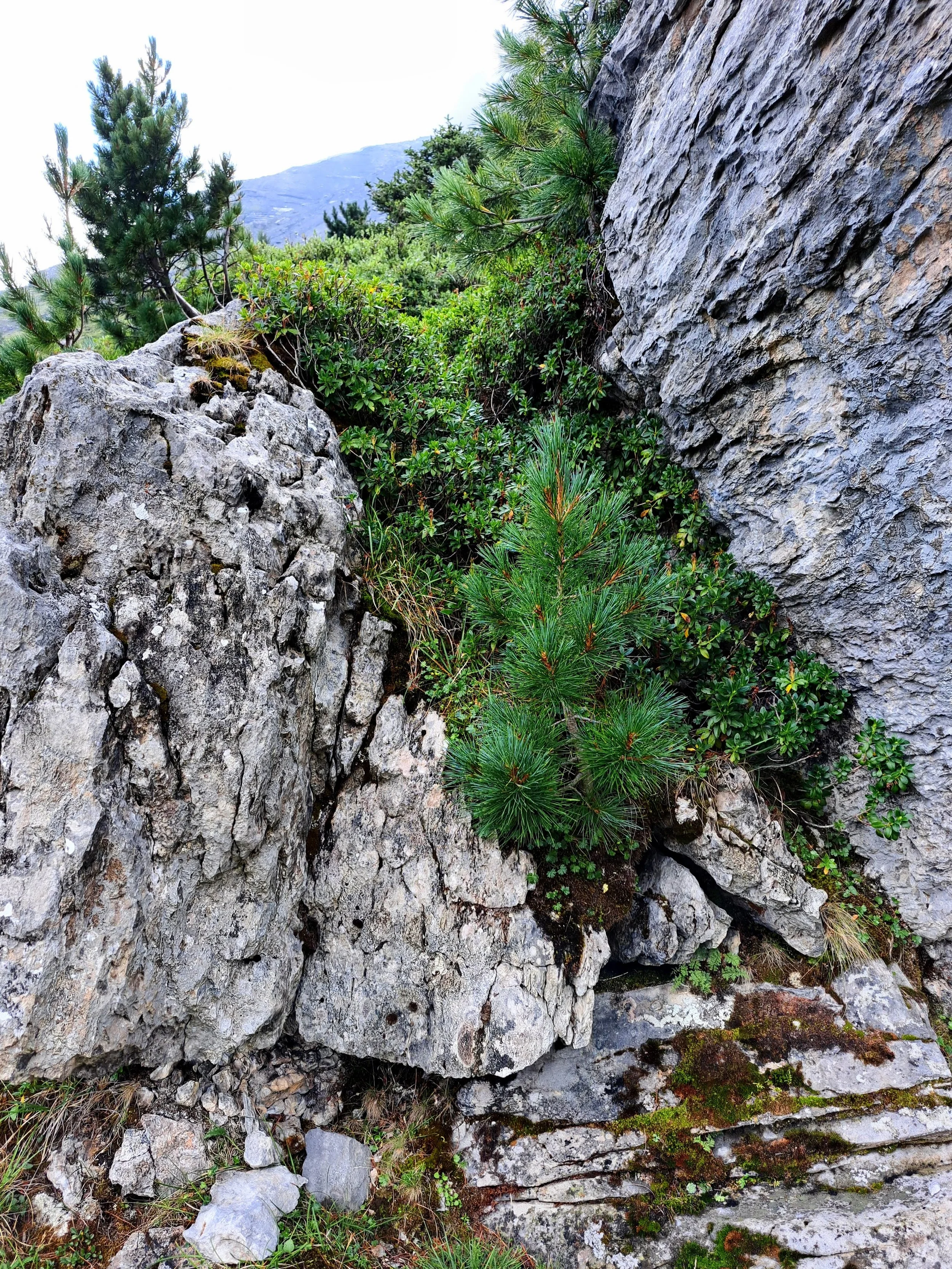
A young Pinus cembra begins its life in the rugged terrain among a stand of rhododendrons.
A major challenge for the Swiss stone pines is rapid climate change. Warmer temperatures, less precipitation and longer dry periods affect the habitat of the stone pines.
The long-lived Swiss stone pine can only move up the slopes slowly in response. It grows slowly, does not compete well with other advancing tree species, and depends heavily on the spotted nutcracker to reach higher altitudes. Unfortunately, the bird tends to create most of its seed caches in forested areas. Many other nutcracker caches are not stored on sites that are favourable for germination and establishment for Pinus cembra, which is a humus layer that is generally lacking above the timberline. Therefore, the slow response in moving upward to colder and wetter altitudes.
This is in contrast to Larix decidua, the European larch, which apparently benefits from climate warming.
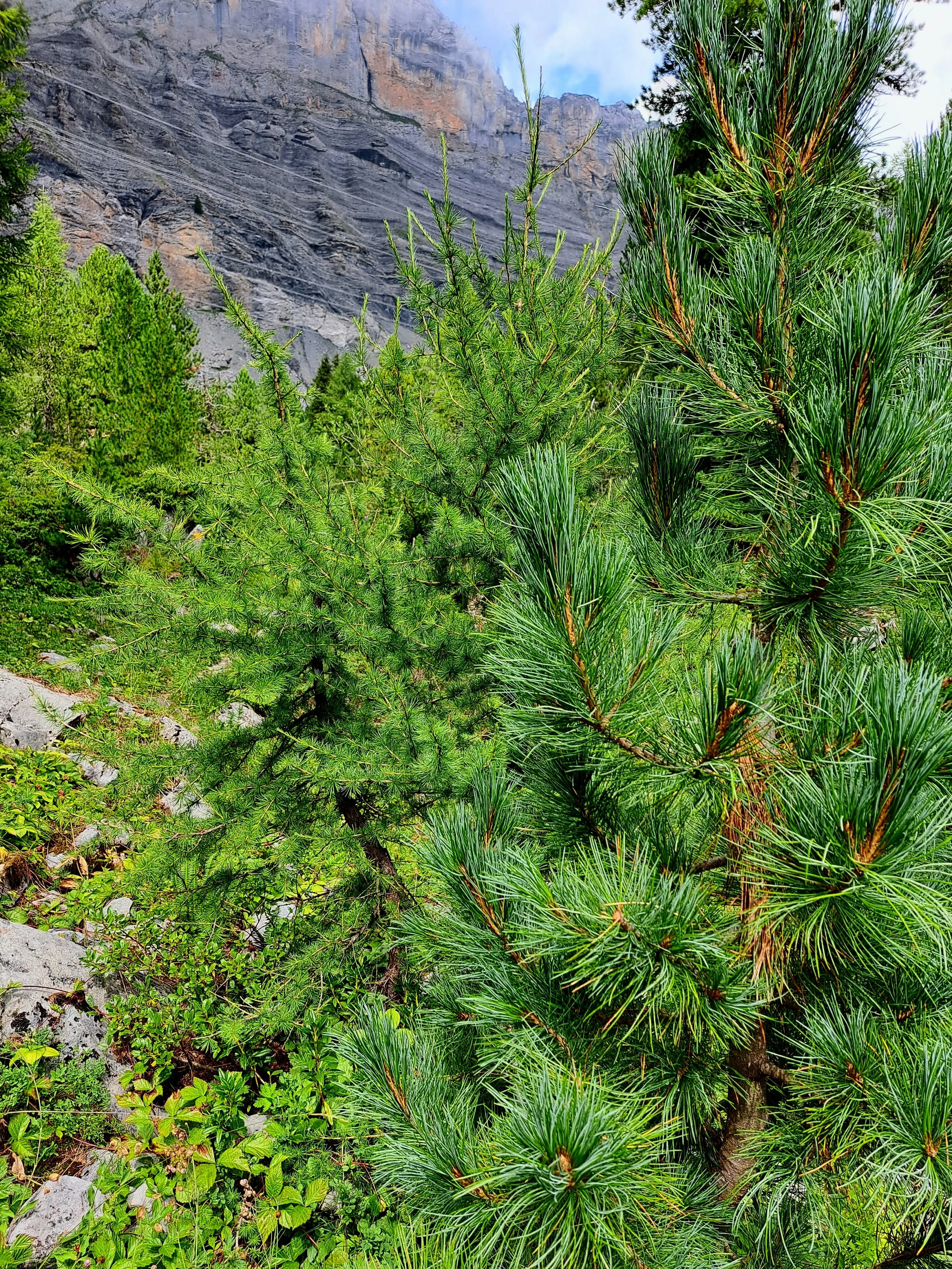
Two young conifers, Pinus cembra with Larix decidua growing side by side. In the next decades, one will struggle more than the other in adapting to climate change.
Larix decidua
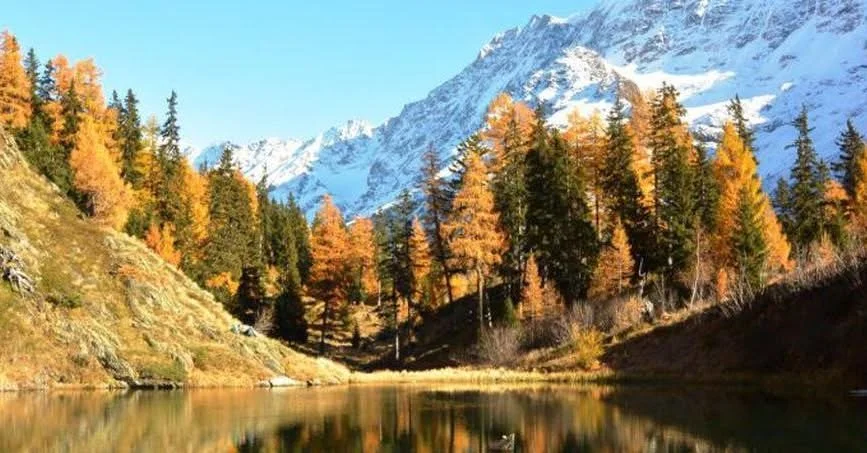
Larch conifers turn golden in the Swiss alps before they drop for the winter. Photo: Hiking-Buddies.com
Larix decidua, the European larch, is a very long-lived, fast-growing deciduous conifer which forms open forests and pasture woods at the upper tree limits in the alps. It is considered a transitional tree in that it readily inhabits cleared areas following natural disturbances such as avalanches and landslides, possibly because it requires a lot of light for germination.
Another reason the European larch is a pioneer species is that it does not appreciate shade; when the species has ample sun and nutrients, it tends to grow very quickly, even on greatly disturbed soils.
By losing its needles in fall, it avoids foliage desiccation, enabling it to tolerate very cold temperatures during winter. Mature bark is extremely thick, protecting it from lightning and damage by wildlife.
Larix decidua growing rapidly at the edges of the treeline in the alps. (click on photo to enlarge)
Larix decidua generally grows at subalpine levels on granitic rock from elevations of 4500 to 6500 feet. Optimal elevation for growth and development occurs roughly at 5000 feet, but it does not appreciate the competition with other trees such as Norway spruce (Picea abies) or Silver fir (Abies alba) usually found at these levels.
As the European larch is long-lived, it has been found growing up to 177 feet in height in its natural habitat in the Alps. Most individuals live for 100-150 years, but in the Alps, some individuals have been found to live for over 600 years.
The striking beauty of the scattered trees on rugged terrain in the high altitude alps arrest us with a wordless sense of awed wonder
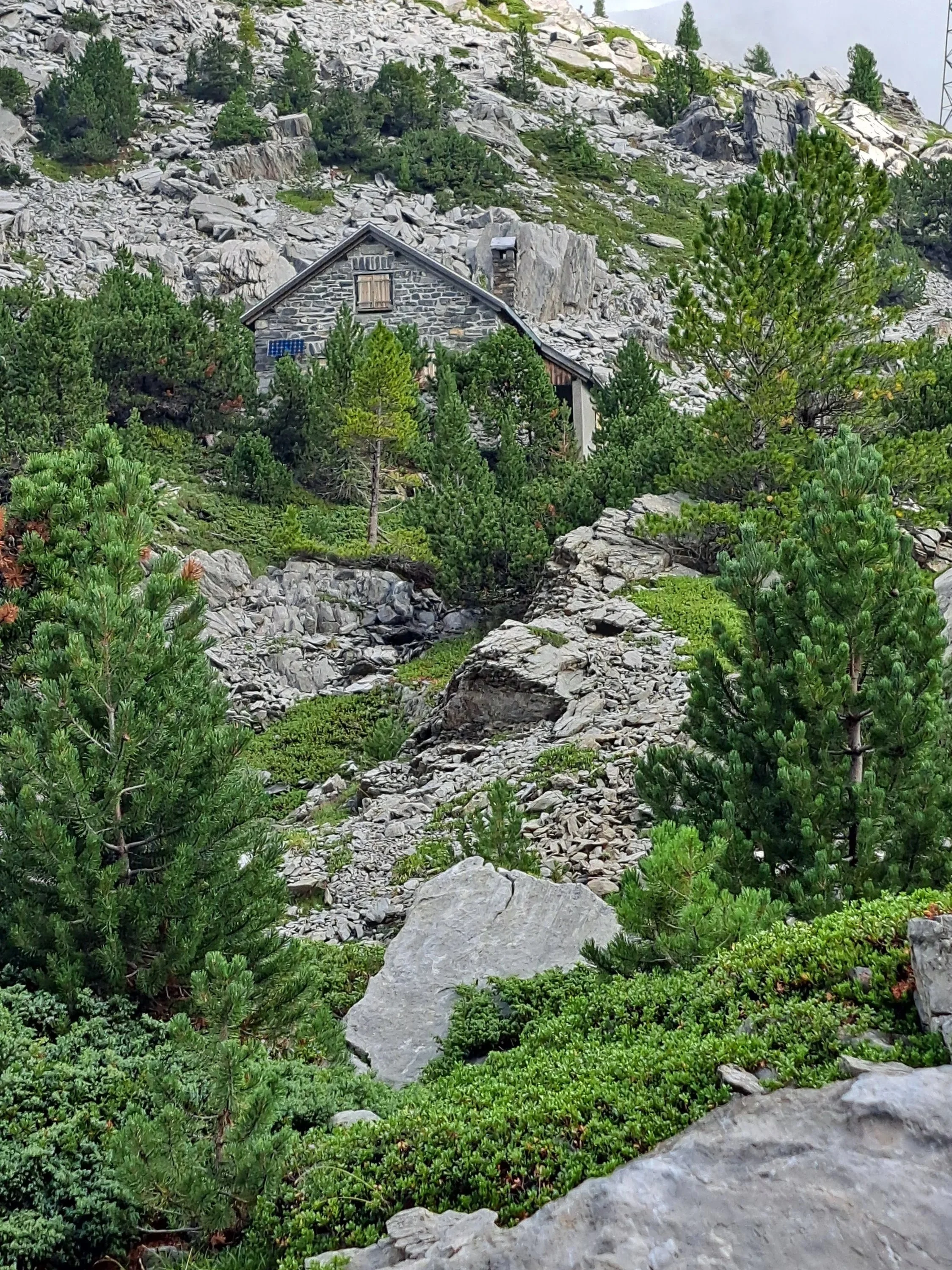
Serene beauty of conifers in the Swiss Alps