
Companion Plant Troubles
HOSTA VIRUS X
by Verna Buhler
It was a shock to discover that some of my favourite and plentiful companion plants in my woodland garden are ill and will need to be removed.
LEARNING THIS HARD LESSON
I noted a young man, who visited my garden with his young, children during the CVRS tour, was studying plants very carefully and researching on his phone as he moved thru the garden. One of the children bouncing from one fir round to another stopped suddenly, and said, “Hey, I know you!” I tried to follow up on that with “From where?” but the child bounced on; this, however, led to a conversation with the young parent. The young man told me he was botanist and was working on creating hosta with yellow-coloured foliage.
He told me he had some bad news for me, “I think you have the hosta virus, HVX.” I led him to show him how healthy my other hosta were in another garden bed, but then I saw it too.
Later, I saw it everywhere in my garden!
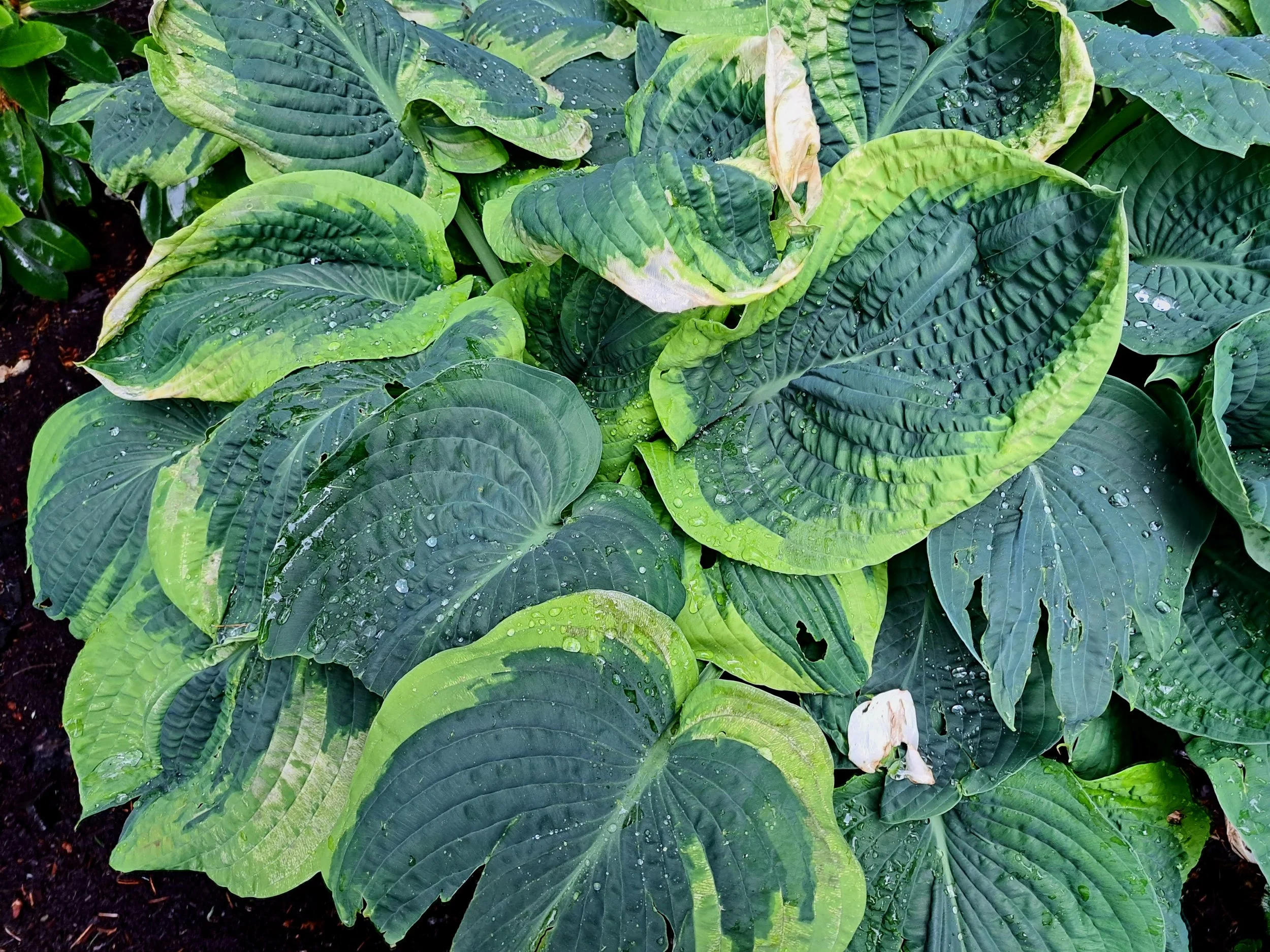
Damaged hosta - rabbit, hail, and HVX
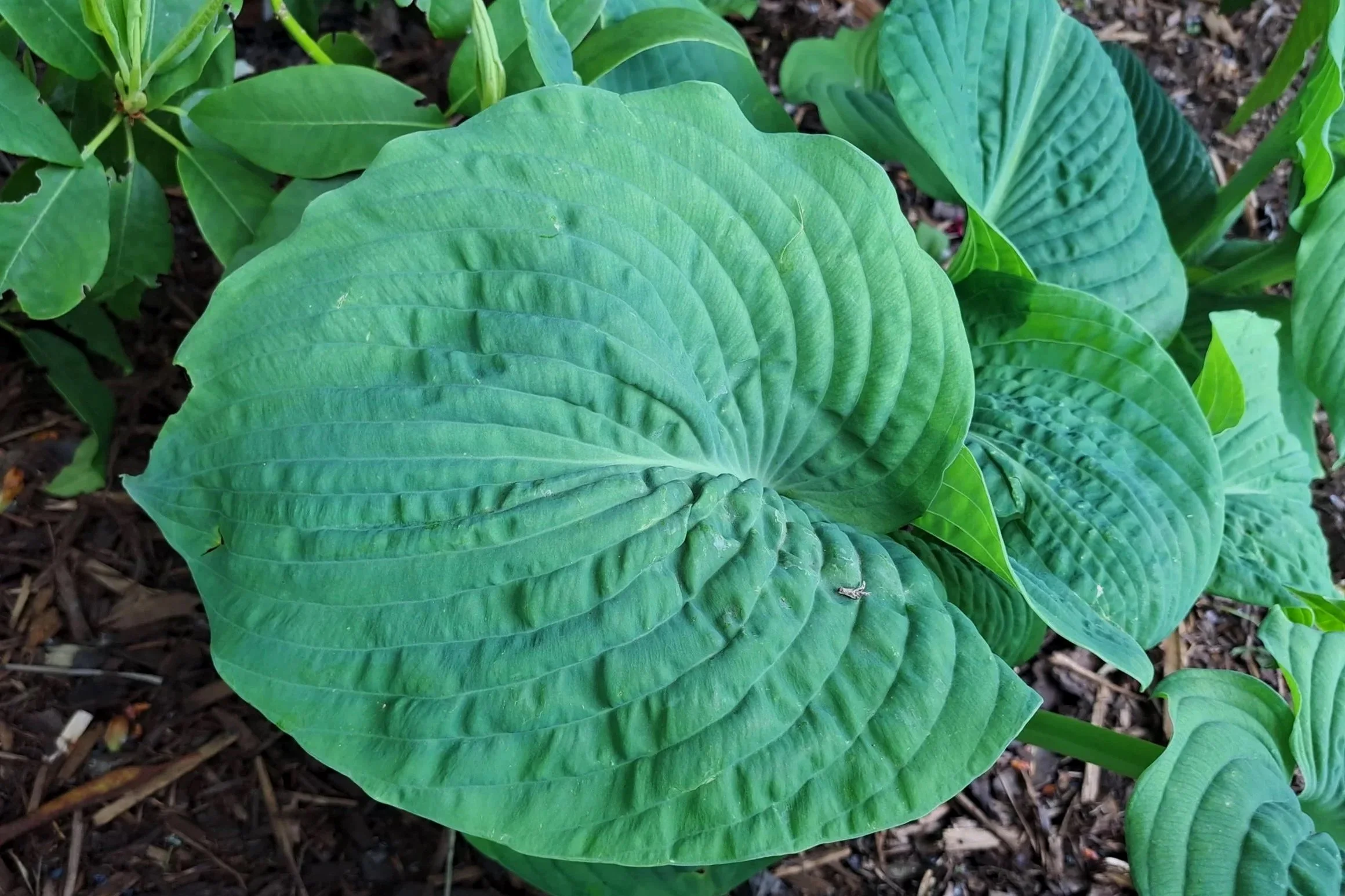
Less obvious, but a close inspection of the leaf shows bleeding veins, thinning of the composition the leaf, and discolouration indicators of HVX.
I, along with several of my gardening friends, have heard about some of the signs of a hosta virus, but we essentially failed to pursue the topic. Our hosta didn’t die, and some years looked better than the previous year; so we dismissed warnings.
NOT WISE!
Many of us have pleasing collections of Hosta in our gardens, as Hosta, along with ferns, perfectly support our rhododendron gardens by adding contrasts in structure, textures and colour. They appreciate the same growing conditions as rhododendrons. Hosta form bold clumps of colourful foliage of all sizes. Ferns, by contrast, offer delicate, intricate, and patterned textures.
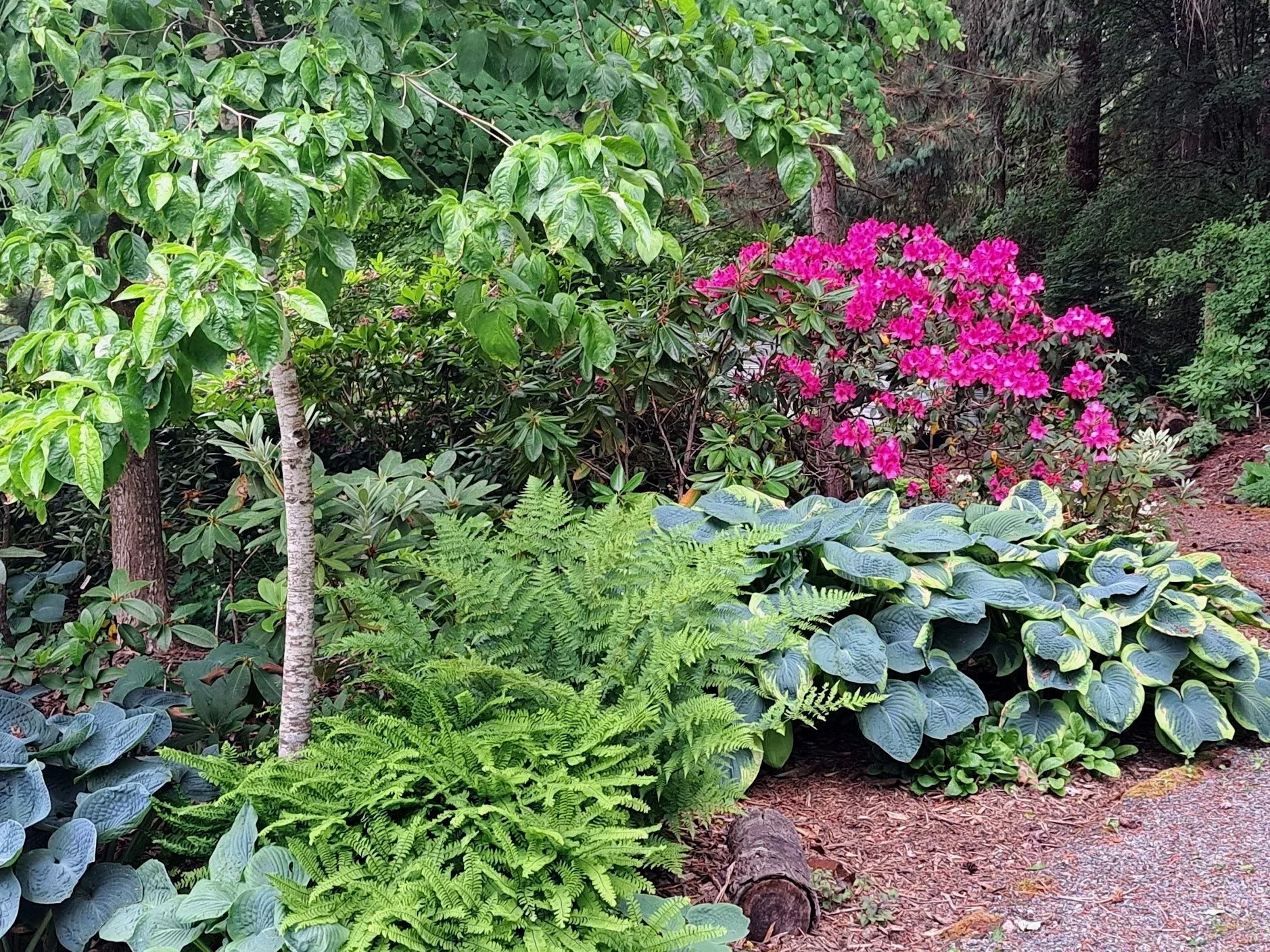
Rhododendrons and their ideal companion plants, hosta and ferns
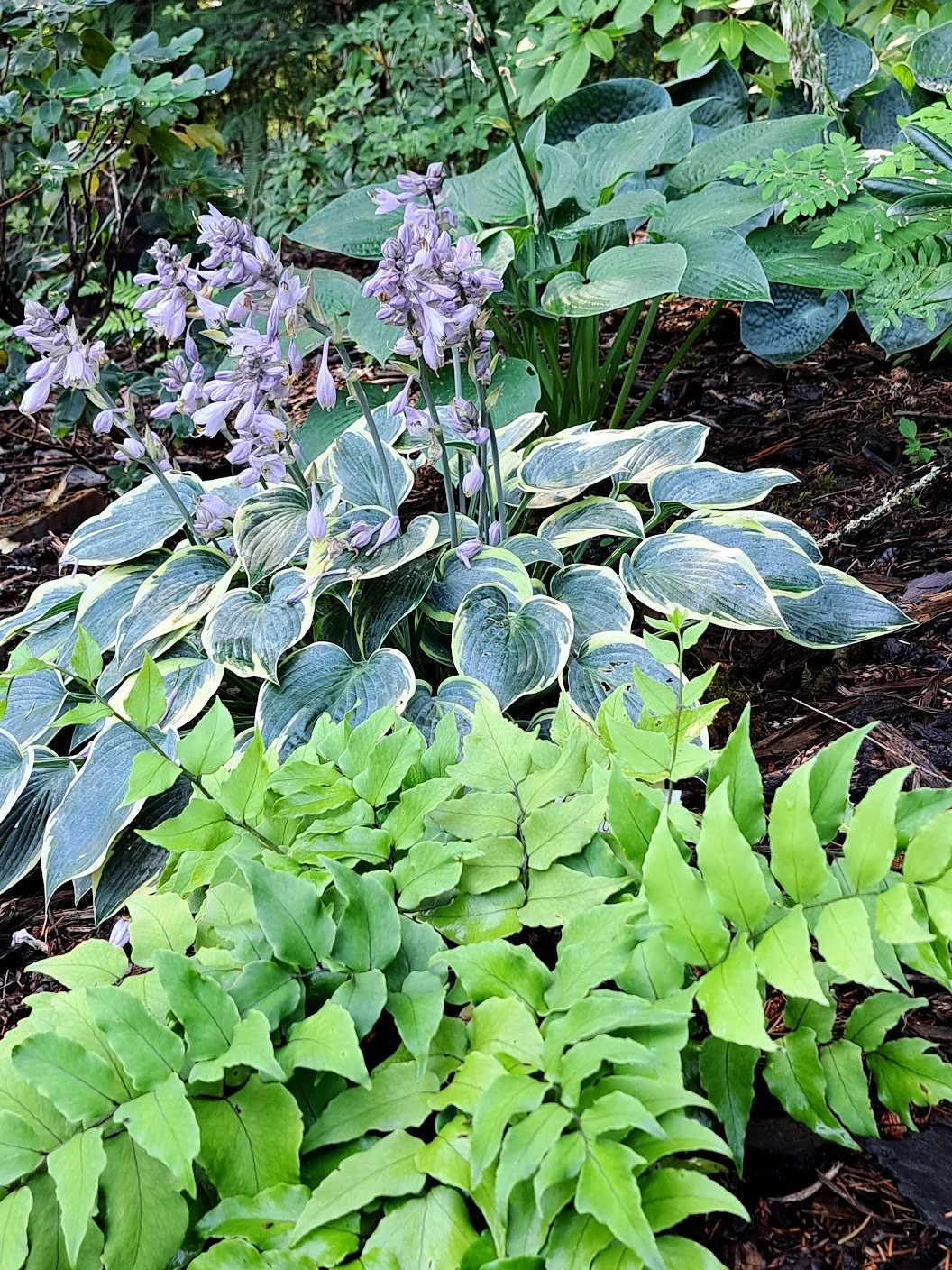
Hosta and fern in the woodland garden
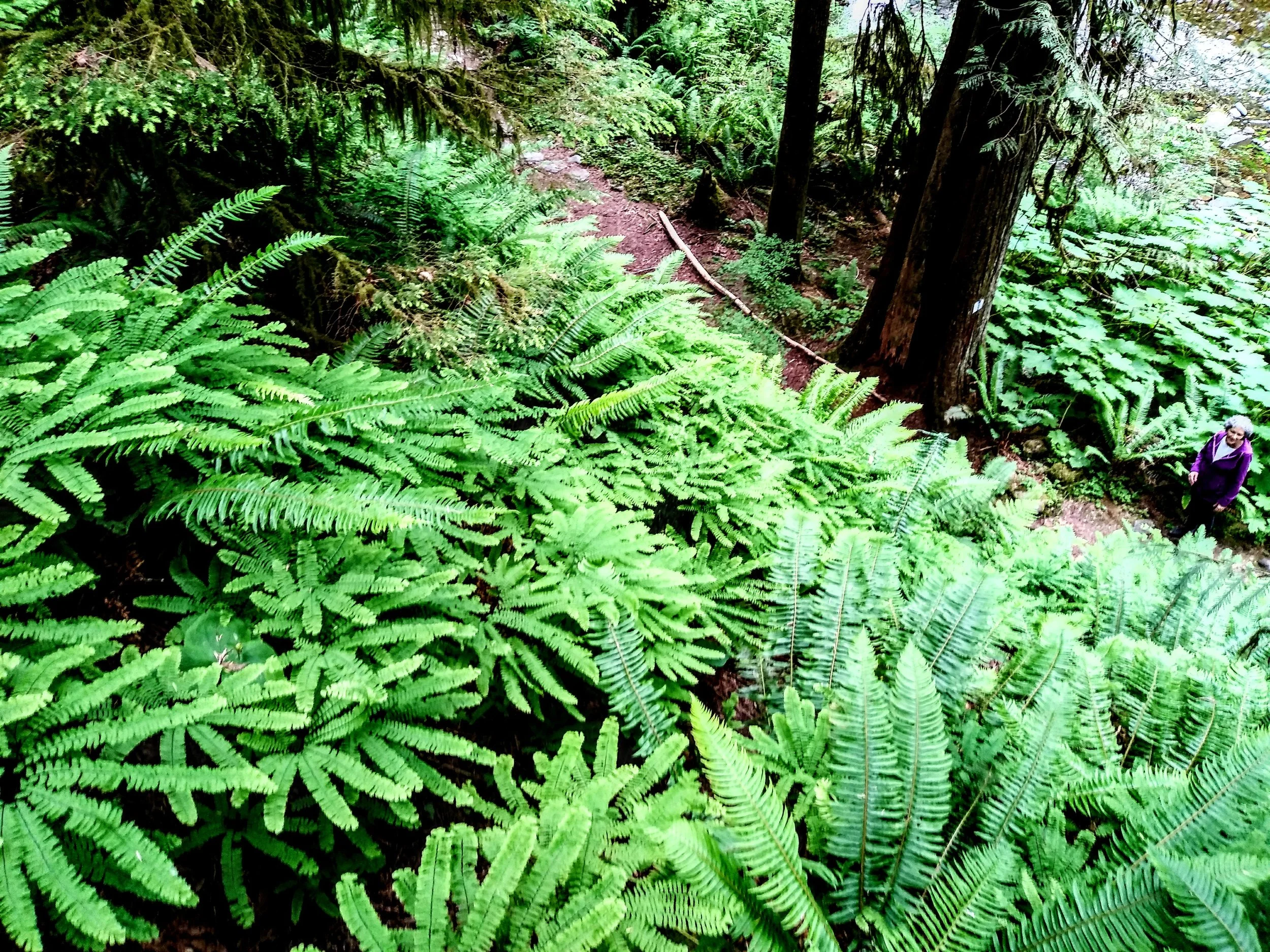
Adiantum, Maidenhair Fern
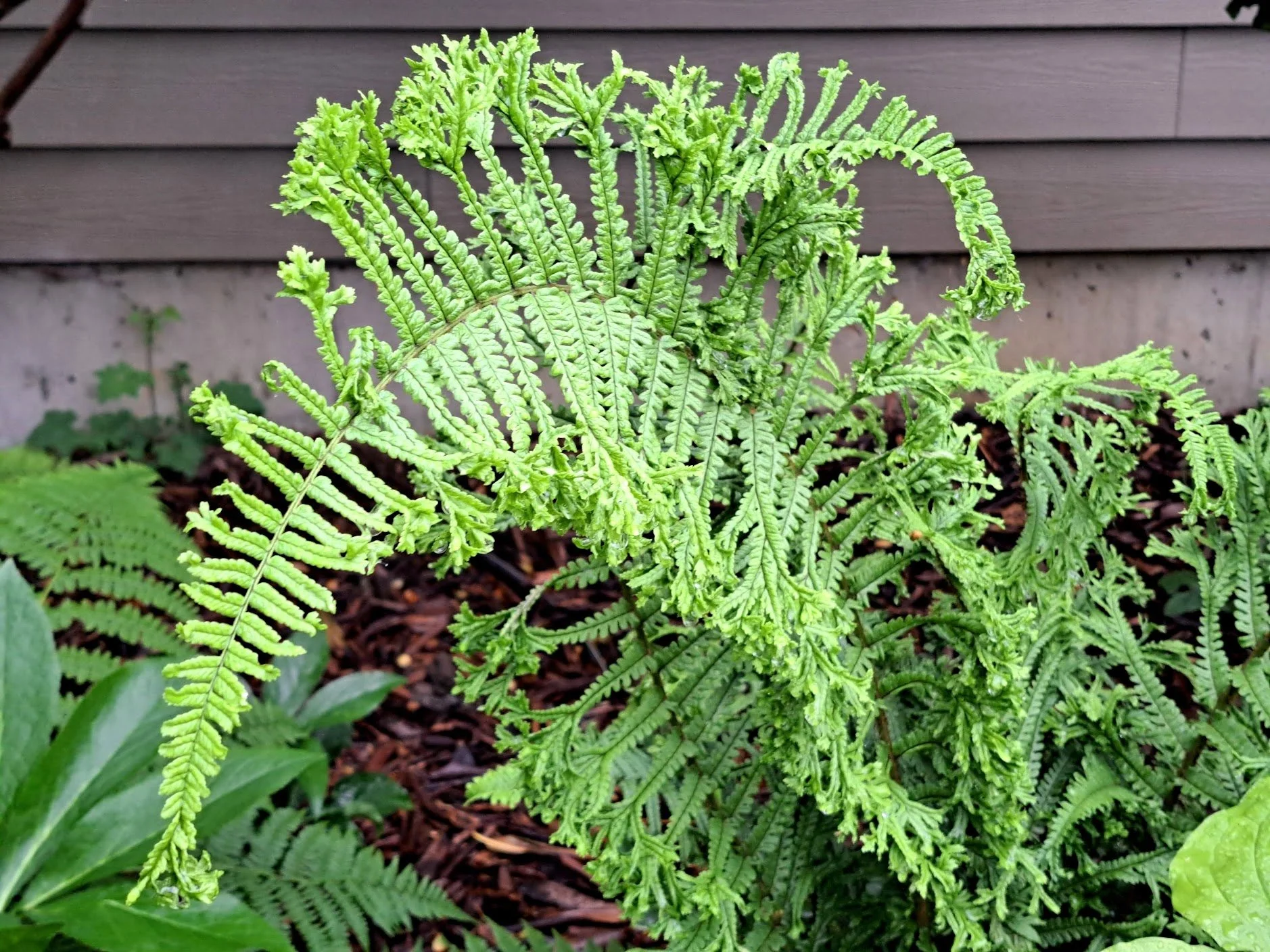
Dryopteris filix-mas ‘Cristata’
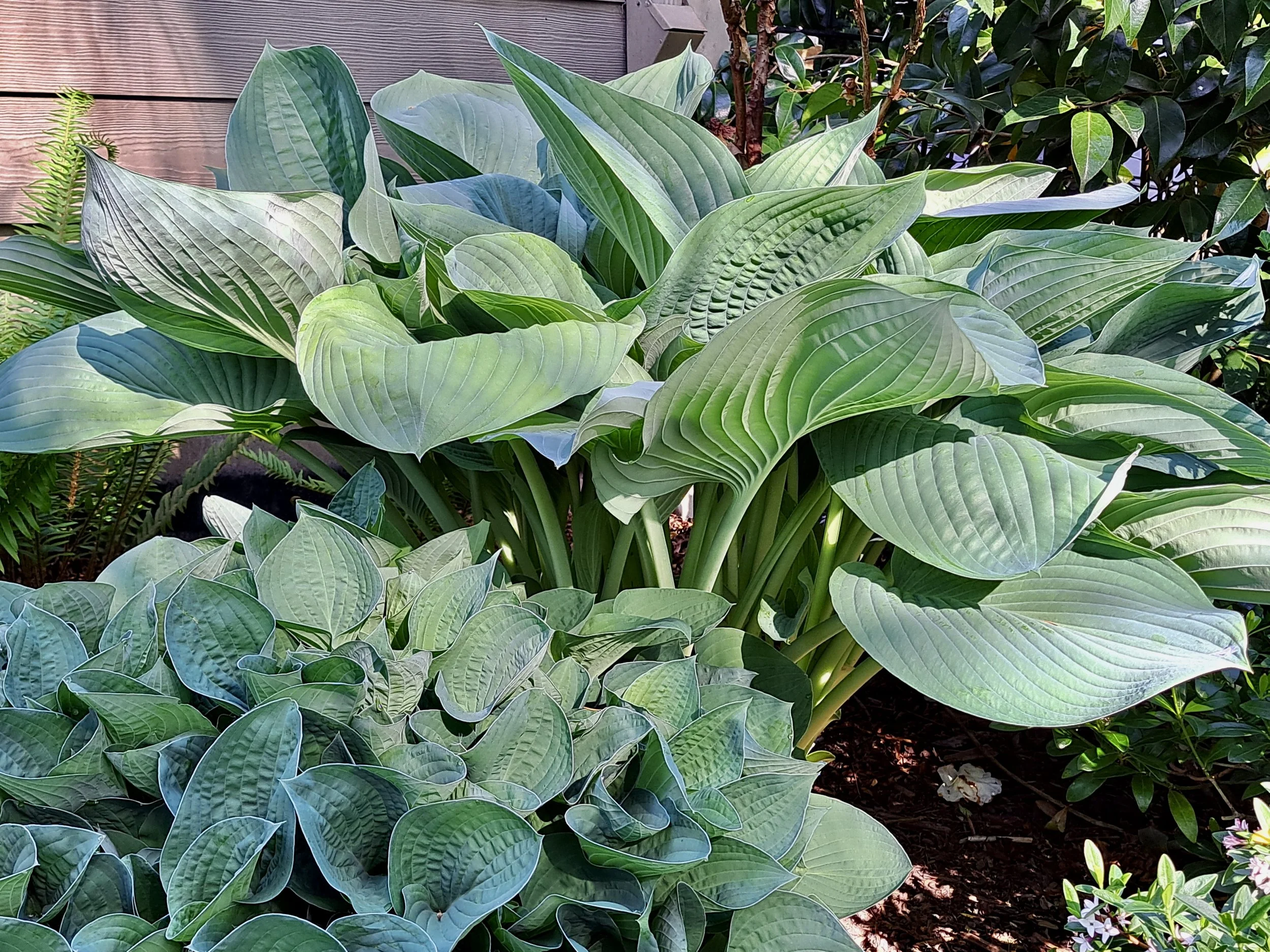
Does Hosta ‘Empress Wu’ still appear healthy?
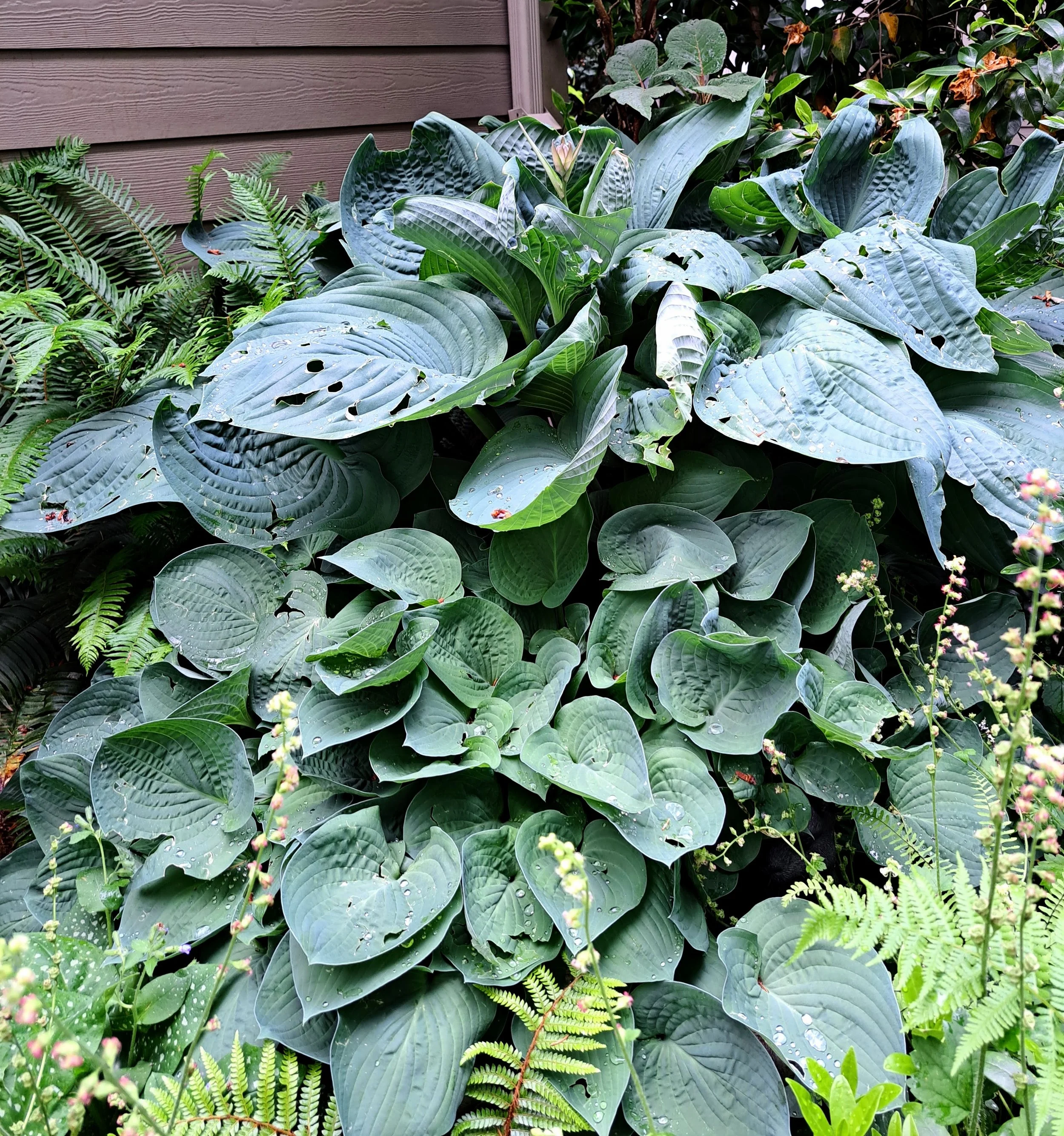
Now, Hosta ‘Empress Wu’ has been eaten by rabbits, beaten by hail, and may have HVX.
The following material has been drawn from the Hosta Library:
All material in the Hosta Virus X section of the HostaLibrary, including photographs, is intended for free use as a public service. Please feel free to copy and use to help us contain the spread of this disease.
HOSTA VIRUS X
More Photos of HVX-infected plants Page 2 Page 3
Symptom Identification HostaVirus Myths
Many hostas are still turning up that are infected with a virus called Hosta Virus X (HVX). The most commonly seen ones are plants of 'Gold Standard', 'Striptease', and 'Sum and Substance', but other common varieties are being reported infected in large numbers. No hostas are immune to HVX.
While this disease does not kill plants, its primary danger lies in its proven ability to spread prolifically. Because symptoms may take years to show after infection, HVX has infected hundreds of thousands of plants and is at epidemic levels around the world. If a batch of hostas contains any individual plants that show HVX symptoms, the whole batch should be considered infected and should be destroyed, as individual testing is impractical and not a guarantee.
If you are a gardener, do not buy plants from batches that show even the slightest markings on even one plant. If you have these plants from batches that show symptoms at your home, dispose of them immediately. If you are a grower or vendor, learn what the signs are and contact the supplier if you see them in your stock. Only testing with the specific ELISA kit for HVX can detect HVX. Very large numbers of HVX-infected plants are still currently being sold at all levels.
This virus is transmitted primarily through cutting the plants. Contact of the infected plant's sap with sap of a healthy plant will infect the new plant. This can happen whenever cuts are made and the instruments or hands are not disinfected afterwards. Dividing hostas, removing bloom scapes, removing leaves, stepping on them, even accidentally running the lawnmower over them can and will spread this virus. It survives only in living plant tissue and dies without a host. Plants in pots may be simply disposed of or burned. Plants in the ground should be dug carefully as to get as many roots as possible, and the spot should not be replanted until any remaining roots have died and rotted away.
What this means for me this fall:
It means many weeks of hard, physical, and very careful digging and destroying of many of my once stunning Hosta collection.
It means removing as much soil as possible along with the Hosta I remove.
It means not planting Hosta in these areas for at least two years
It means searching for, and purchasing, many other companion plants to fill he gaps, as the HVX loves Hosta but does not transport to other plants
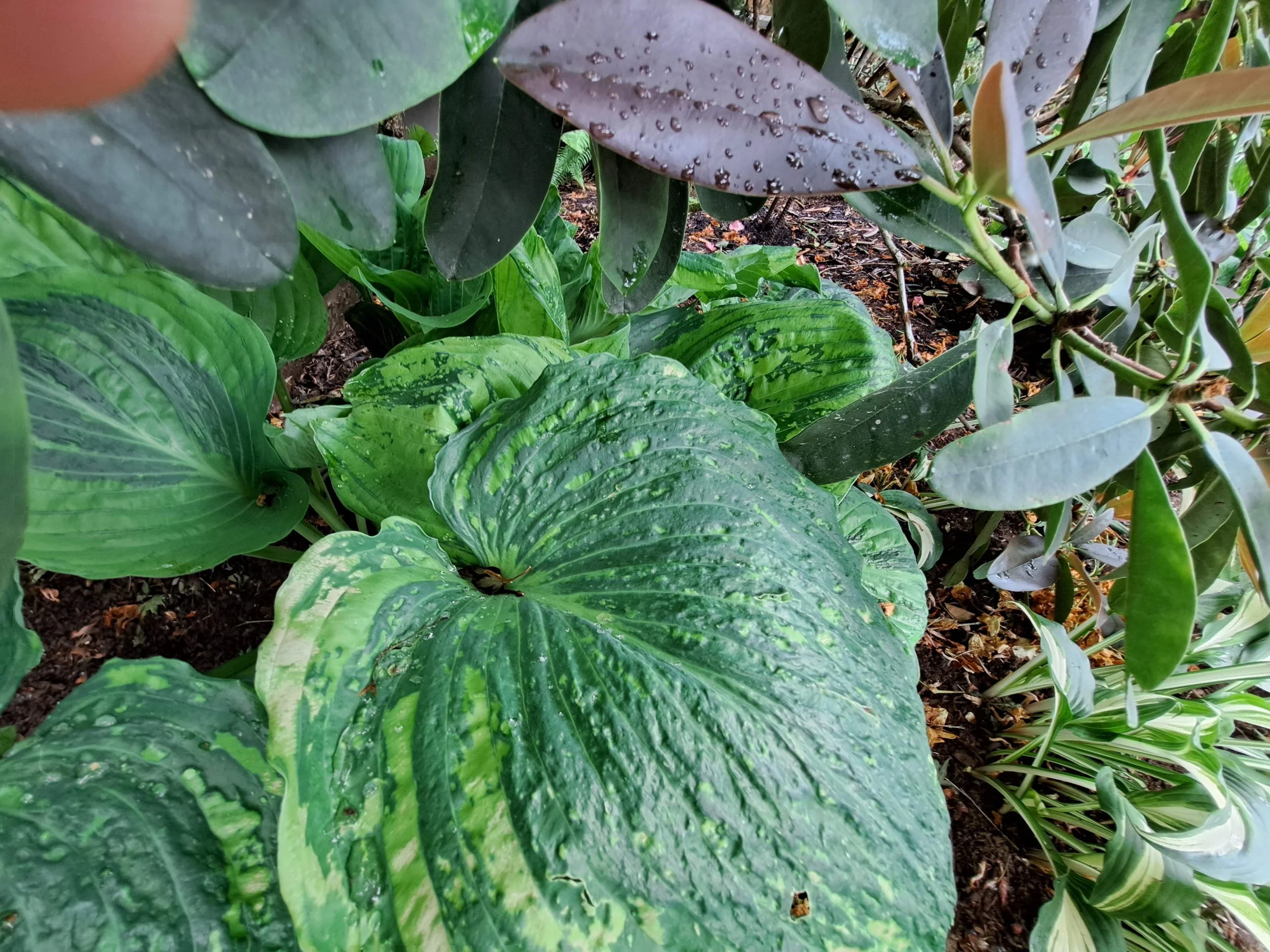
Please take note and prevent your Hosta from looking like this in four years. I regret postponing the little indicators of the HVX virus four years ago.