
Deciduous Azaleas
Propagating Deciduous Azaleas
by Verna Buhler
Deciduous azaleas drew the attention of many guests during the garden tours in May. When in bloom in spring, they light up the gardens. In summer, they blend into the greens; in fall, they dazzle with brilliant shades of red and yellow foliage; in winter, they are bare and humble once again.
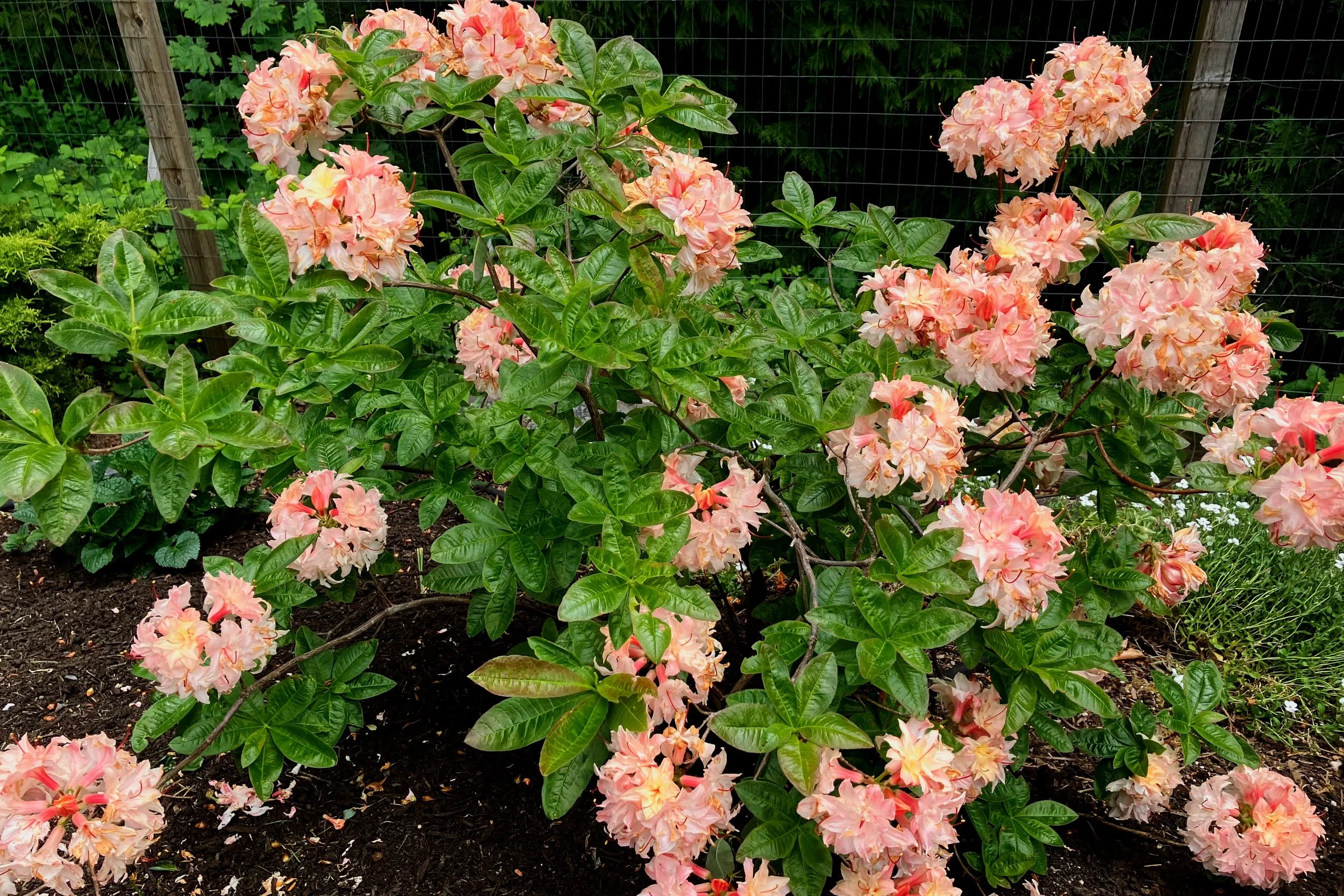
Azalea ‘Cannon’s Double’ in a friend’s garden
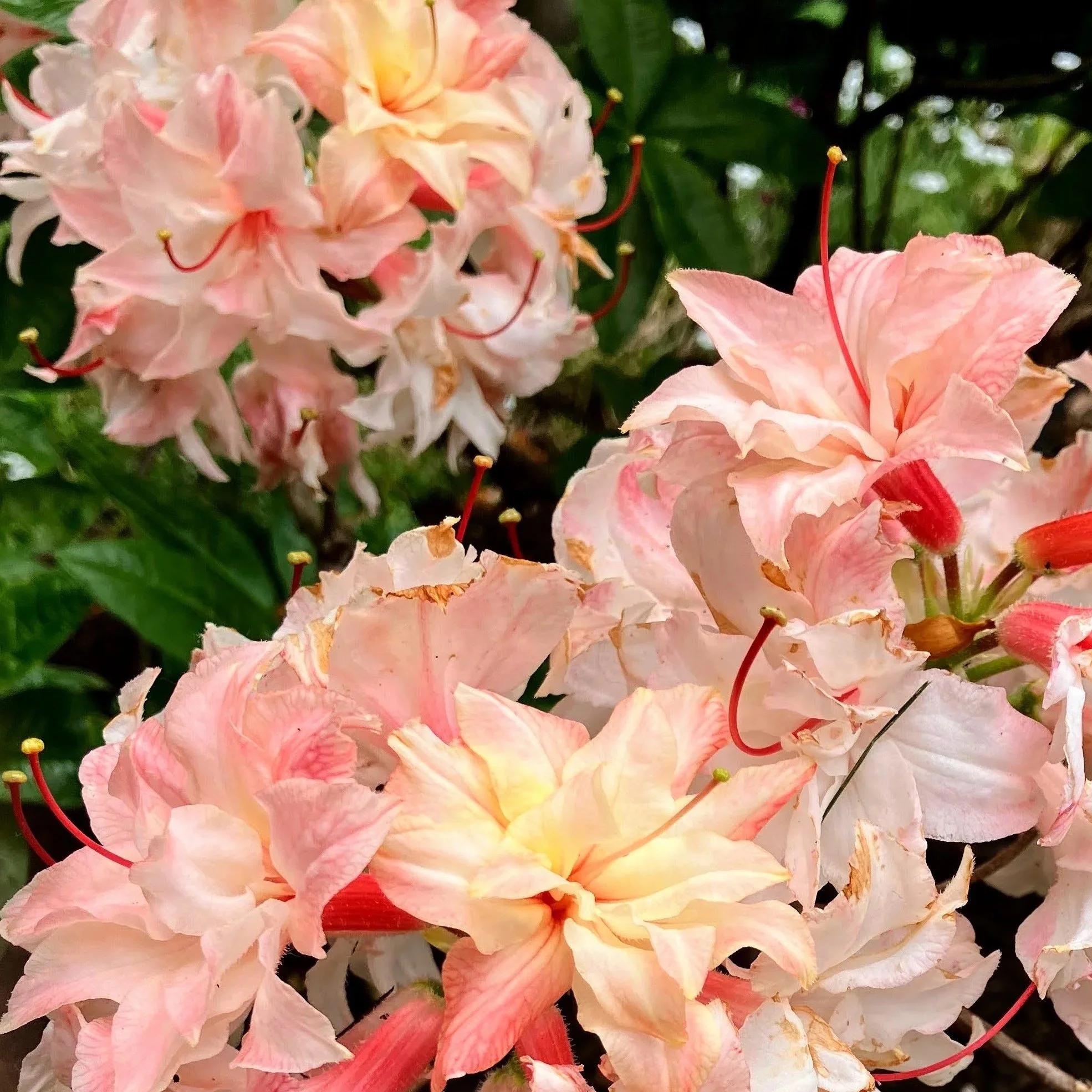
A favourite of mine. . .
Several years ago, I lost my Azalea ‘Cannon’s Double’ so I was thrilled to see one again. Note the hose-in-hose double flowers.
As I do some propagating of rhododendrons, I was asked during the garden tours, if I had any deciduous azaleas for sale. I did not, and our club has not been selling deciduous azaleas in quite a few years.
Propagating from Cuttings:
Deciduous azaleas are very tricky to propagate from cuttings. The process requires patience and ongoing care. However, considering how popular they are in spring, it may be worth the effort for you to try it.
Following are a few tips:
Begin your cuttings collection early. In fact, NOW, very soon after flowering, is the time to check the new growth on the plants
The cuttings must be soft and pliant. The ability to root decreases rapidly as new growth matures
A planting medium to use is 60% sphagnum peat moss and 40% horticultural perlite
Trim cuttings just below a node to a length of approximately 3 - 5 inches
Dip into a rooting hormone
Use bottom heat of about 75 F to aid rooting
The second stage is more difficult:
In late August, rooted cuttings should be transplanted and grown on in a greenhouse with supplemental lighting of, at least, 14 hours per day
To develop strong rooting and new growth, normal early dormancy must be prevented; this additional growing period is very important to successful propagation of azaleas
Delay dormancy for an entire year, and in the following fall, transfer the plants to a cool, frost-free environment of approximately 35 to 40 F in induce dormancy
The following spring, the plants can be transferred to a shady environment and regular growing conditions
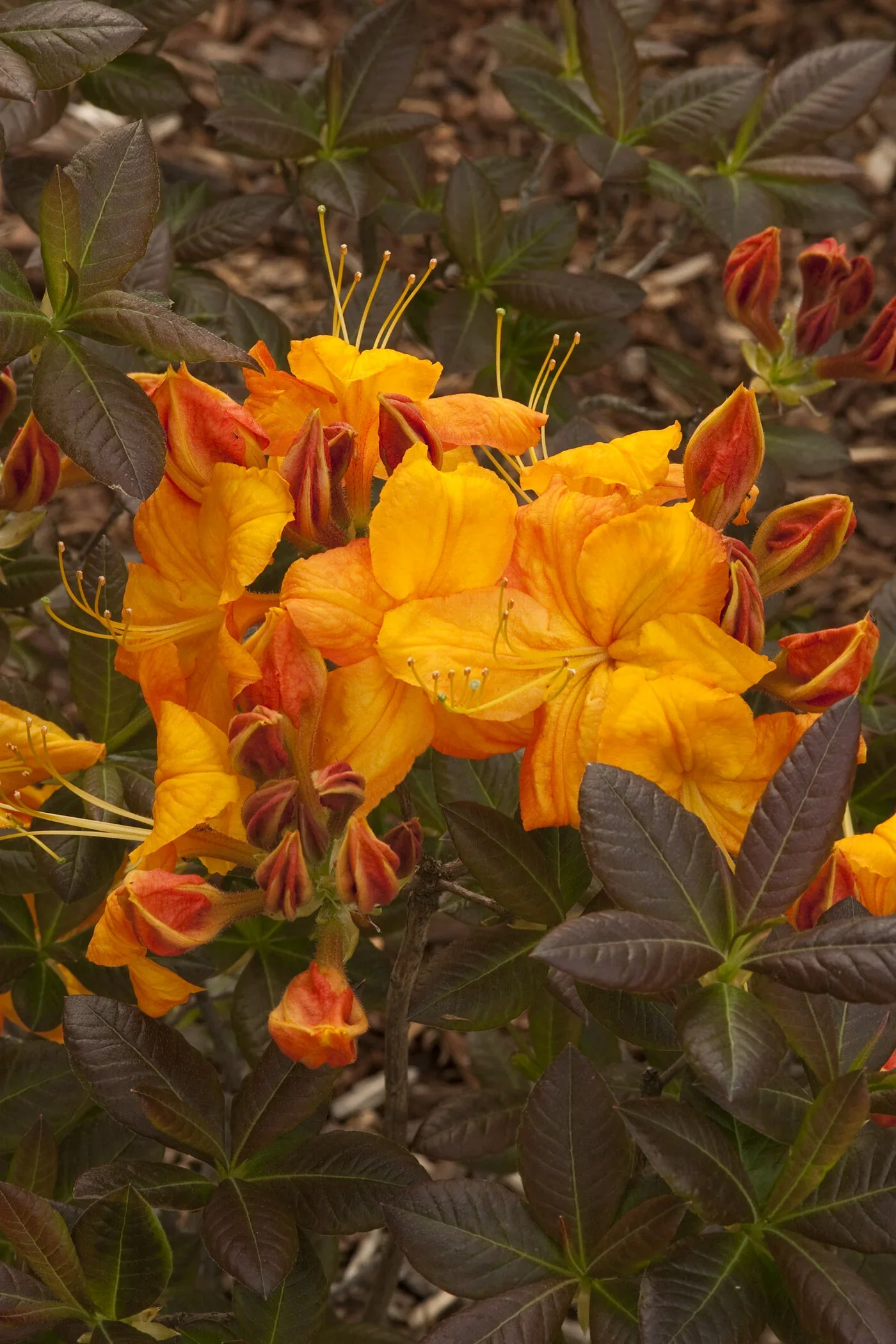
Azalea ‘Klondike’ is favoured for its brilliant mandarin yellow flowers set off by bronze foliage
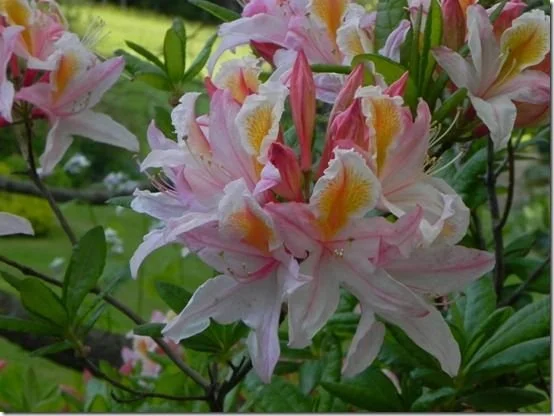
Azalea ‘ Irene Koster’ emits a lovely fragrance from its distinctive blooms
Propagating by Layering:
For home gardeners, propagating by layering may prove to be the most successful method to produce more plants, that is, if parent plants are available.
If a parent plant is available, select a branch that is low to the ground
Cut a slit or small wound in the branch where it makes contact with the soil. The contact must be with the soil, not mulch
Treat the wound with hormone solution
Pin the treated wound of the branch to the soil with a rock or brick
Ideally, the cut area will sprout roots
When the roots are developed enough to support the end of the branch, usually in 2 years, cut the rooted branch from the parent plant and transplant