
After the Rhododendron Blossoms Have Faded
Time to rest? Sure, for a while, but then there are tasks that will help bring the best out of your beautiful plants next season.
PRUNING
THE BEST TIME IS AFTER FLOWERING
That time is now! If you attended the CVRS Pruning Workshop on May 9th, you have probably already cleaned and sharpened your tools and begun.
If not, here are some of the photos and key points from the workshop.

Pruning workshop in May
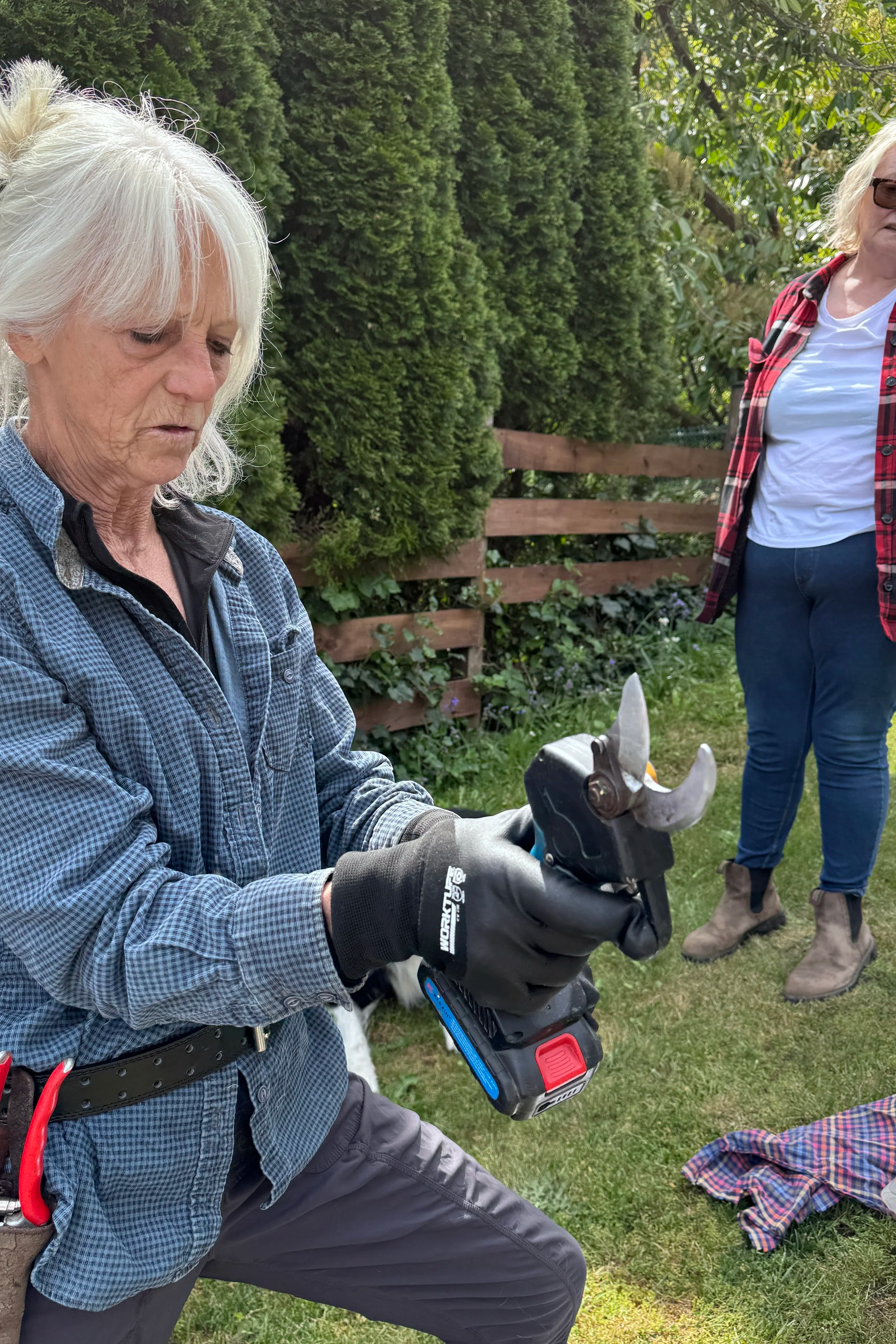
Tools are important
Sharpen pruners and loppers
Tighten any loose or wobbly cutting tools
Sterilize, using 10% bleach or alcohol
Reasons for Pruning Rhododendrons:
Appearance is “shabby and untidy”; foliage and flowering are becoming smaller, and look unhealthy; the inside of the plant is a tangle of dry, dead branches
A rhododendron is “overfilling its space”, crowding other much-loved plants
You can’t get to the rhododendron’s base or drip line to amend soil or fertilize
Deadheading is becoming impossible without orchard ladders; you can’t see blooms anymore
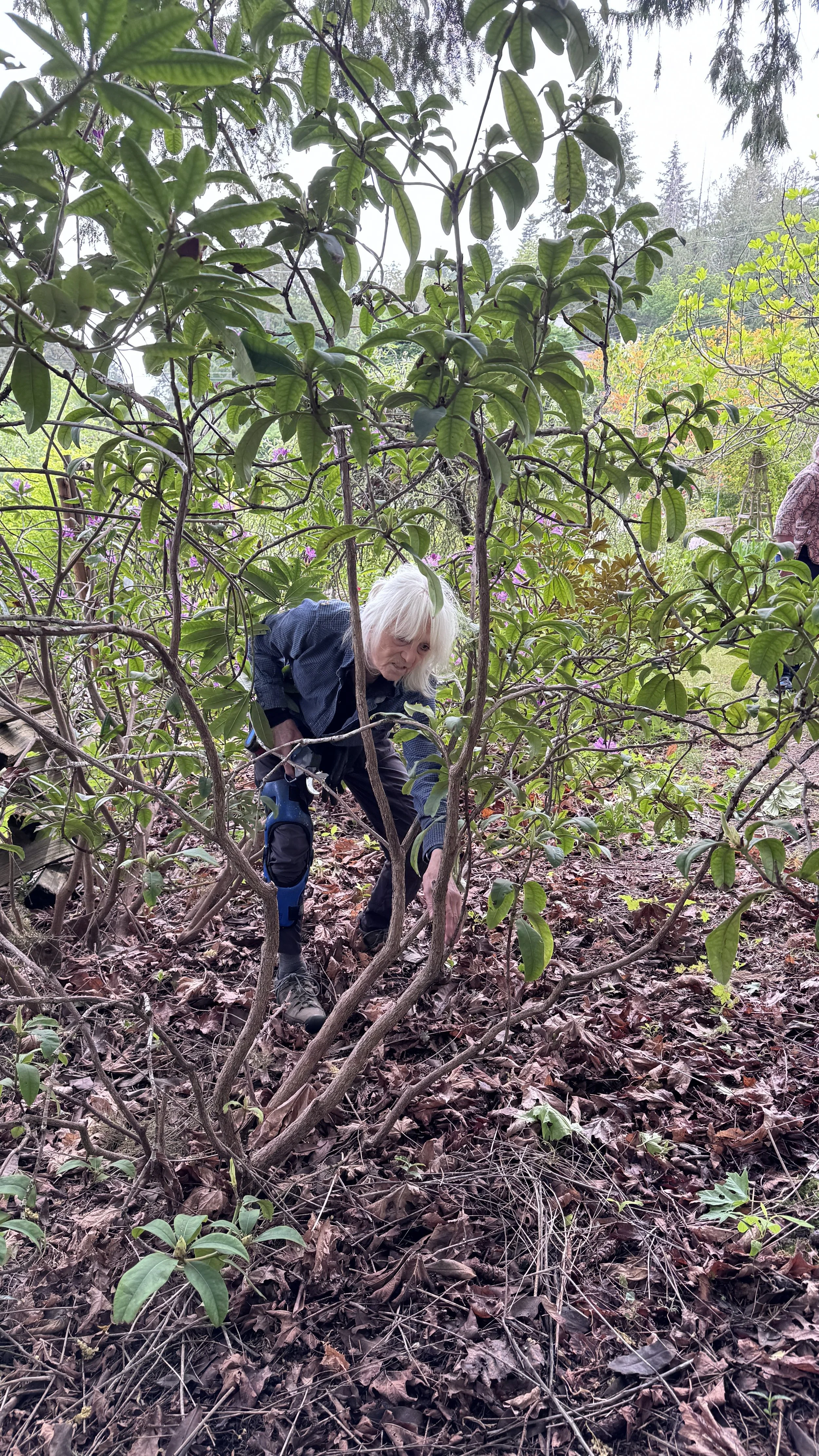
Why Prune This Rhododendron?
The plant is lean and floppy
Branches are thin and weak
Very little healthy new growth

Know your Purpose Before You Cut:
Compactness?
Restoring and rejuvenating?
Reducing size to facilitate moving?
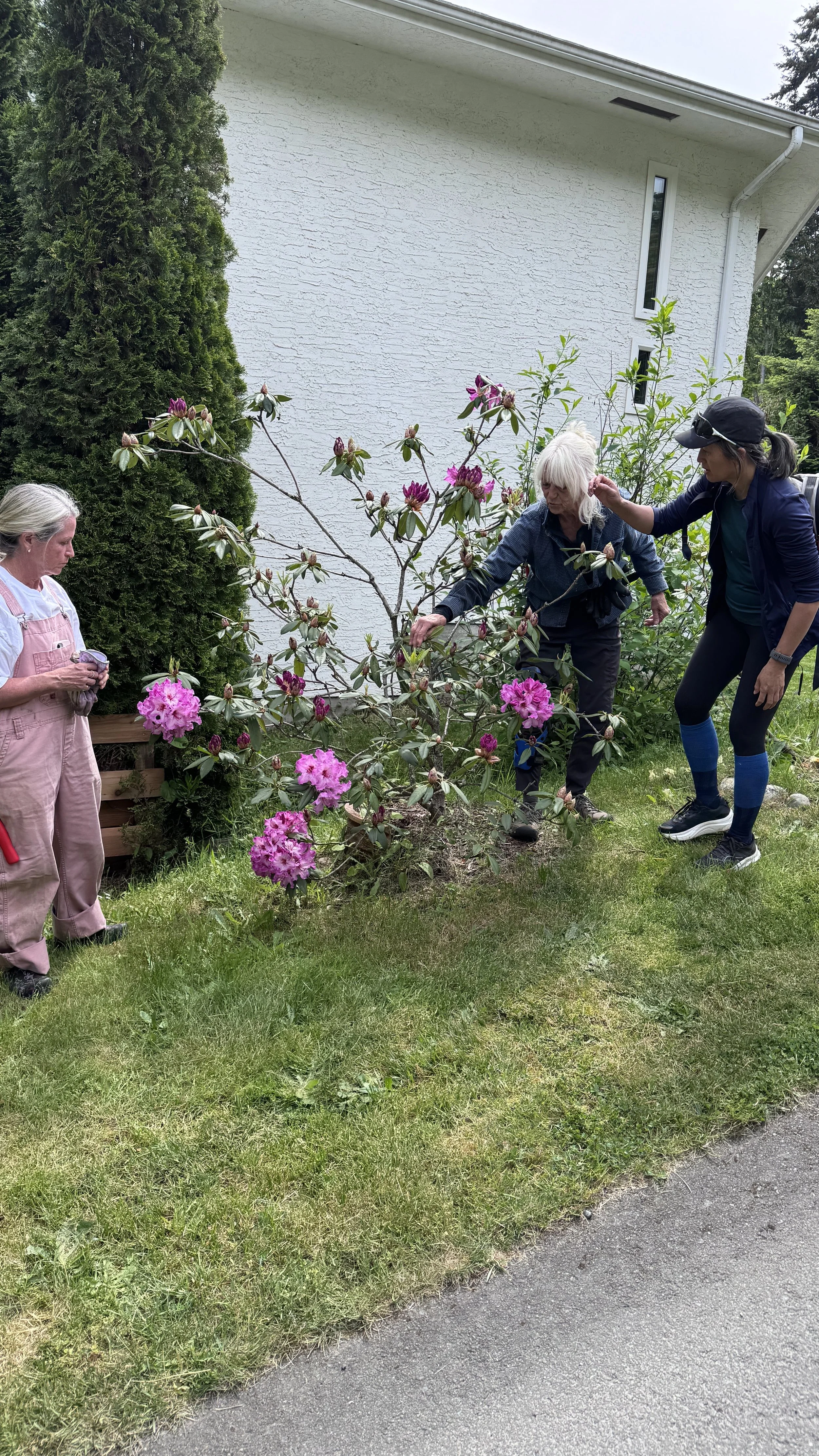
When to
Prune:
The best time is after flowering
At this point, only dead branches should be trimmed out
After flowering the plant can be pruned to encourage more compact and dense growth
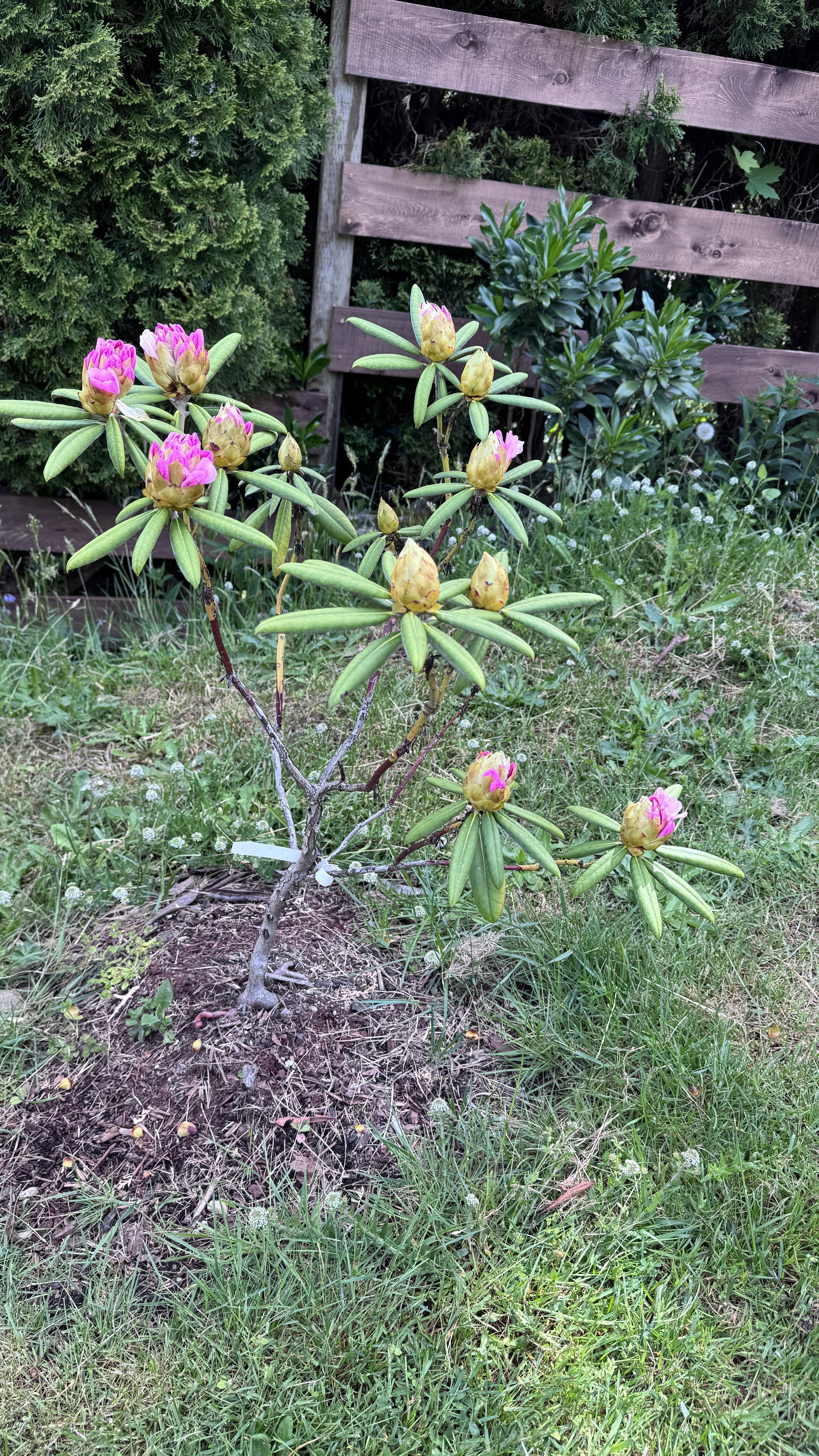
Note More Needs Than Just Pruning:
This brave plant also needs help at the root level
Widen the circle of soil to the drip line
Add organic matter to cover exposed roots to the crown level

Make Clean Cuts:
Exposed roots, and old poor pruning cuts are stressing this rhododendron.
Cuts must be made with sharp tools
A few demonstrations on Pinching to create more dense growth:
Know your purpose; then proceed:
COMPACTNESS:
Thinning – late winter, early spring, after flowering: re-direct growth energy
Reducing – after flowering
Bushy growth – de-budding and summer pruning
Special Effects – single or multiple trunks; asymmetrical or tiered: one side up – north or east, other low and cascading - west and south. Use groupings to tier.
RESTORING AND REJUVENATING:
Retain the mature structure and improve vigour and capacity to bloom
Plan a 2 – 3-year approach; this plant is your friend. Be gentle and patient
Deteriorating at the top? Gradually, over years, remove older limbs low on the plant
Salvage an injured plant – may recover if cut back hard
Re-leadering: re-shaping an overgrown plant to gradually reduce its height is more complicated – re-directing energy to lower secondary branches
FACILITATE MOVING:
In fall or early spring
Cut back roots
Haul or skid the plant
Set in a high mound of loose soil and mulch
Prune some foliage to reduce shock and allow digging
Lower branches to allow digging
Some upper unneeded branches
Givens/Key Points:
Best time is after flowering as this allows new growth and bud set for next years flowers
Deadheading helps direct energy to growth instead of seed production. It is a perfect time to pinch to shape a plant
Crawl under the rhododendron. Begin with a clean-out from inside: dead, diseased, broken. Scratch test a branch when in doubt
Thinning, heading, shearing all produce different effects. Thinning redirects energy; shearing is not recommended as it produces dense outside growth
Leave no stubs. Cut cleanly at the collar of the branch
Step back often, and assess as you prune
BE PATIENT. ACHIEVE MAJOR PRUNING GRADUALLY. THINK YEARS, NOT HOURS
In summary, it is a myth that rhododendrons should not be pruned. The essential thing in pruning is to decide upon the purpose. Then don't be afraid to apply the saw and pruners to achieve the desired result. The rhododendrons will appreciate the attention and respond to it.
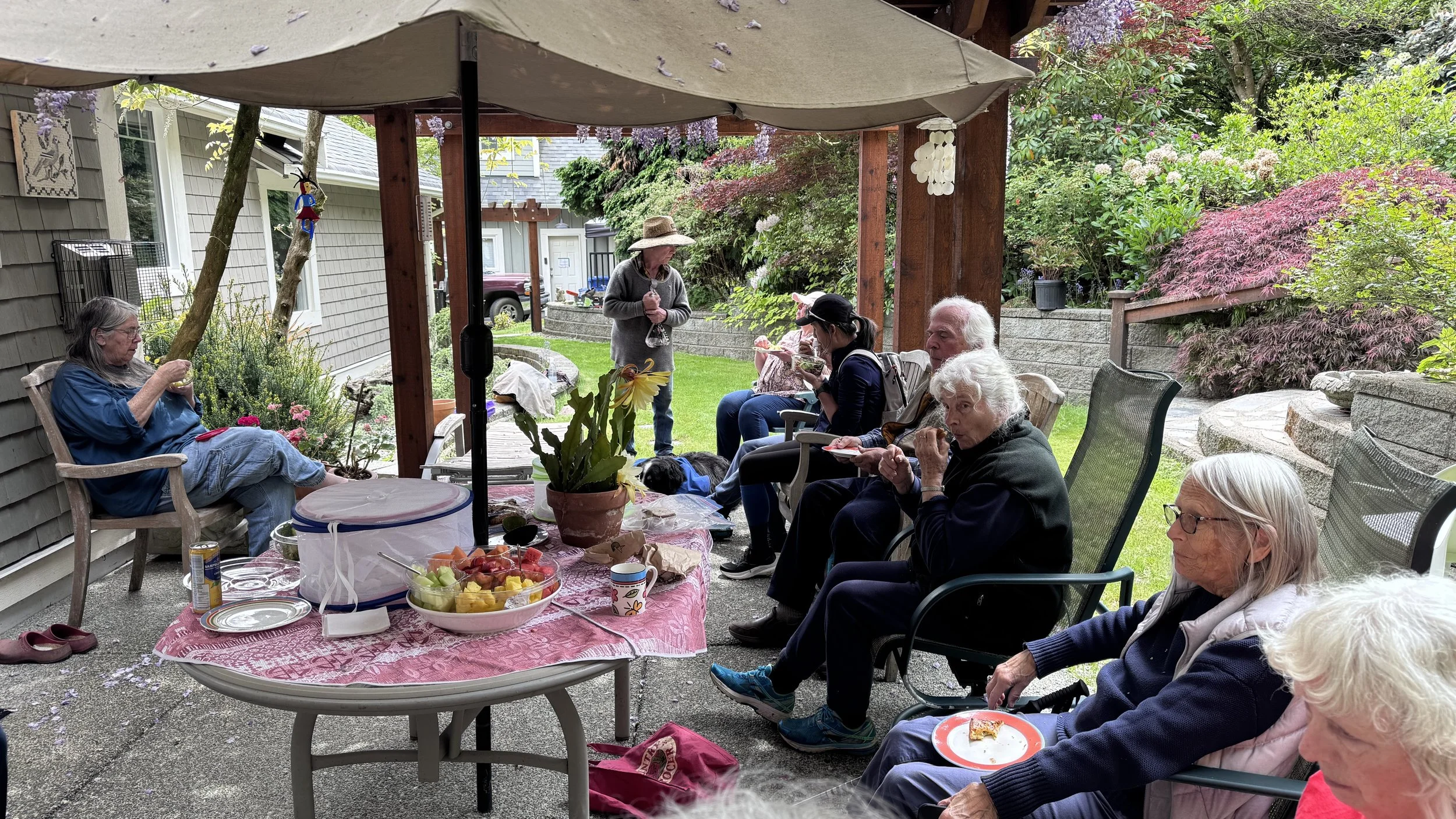
After the pruning workshop — nibbles, beverages, and chats

Thank you for hosting the workshop, Dorothy and Randy!