
Rhodo Care-Calendar
By Joanne Meredith
We moved into this house in the Valley in 2020. The previous owners kept an immaculate garden; the neighbours tell me they had lots of help from gardening services. We are much more hands-on when it comes to yard work, but it didn’t take long for us to realize we might have bitten off more than we could chew when it came to the upkeep of this little oasis.
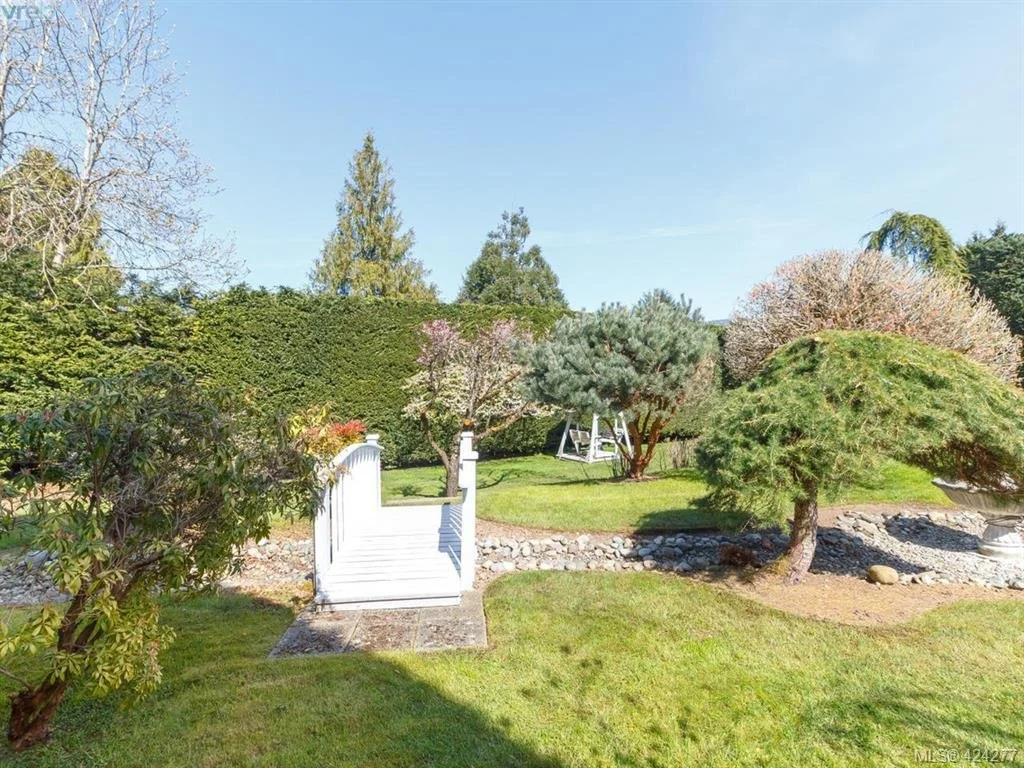
The previous owners loved the lighter hues- whites and light pinks- with dark green shrubs to make everything pop. It was serene and elegant, but I need bright, bold colours in my life. The next-door neighbour has a beautiful, vibrant purple rhododendron that is 15 feet tall, next to a luminous pink one that blooms just after. Once I realized the variety and intensity of colours I could get from rhododendrons in our garden, I was on the hunt to get bright pops of colour into the light pastels throughout our yard.
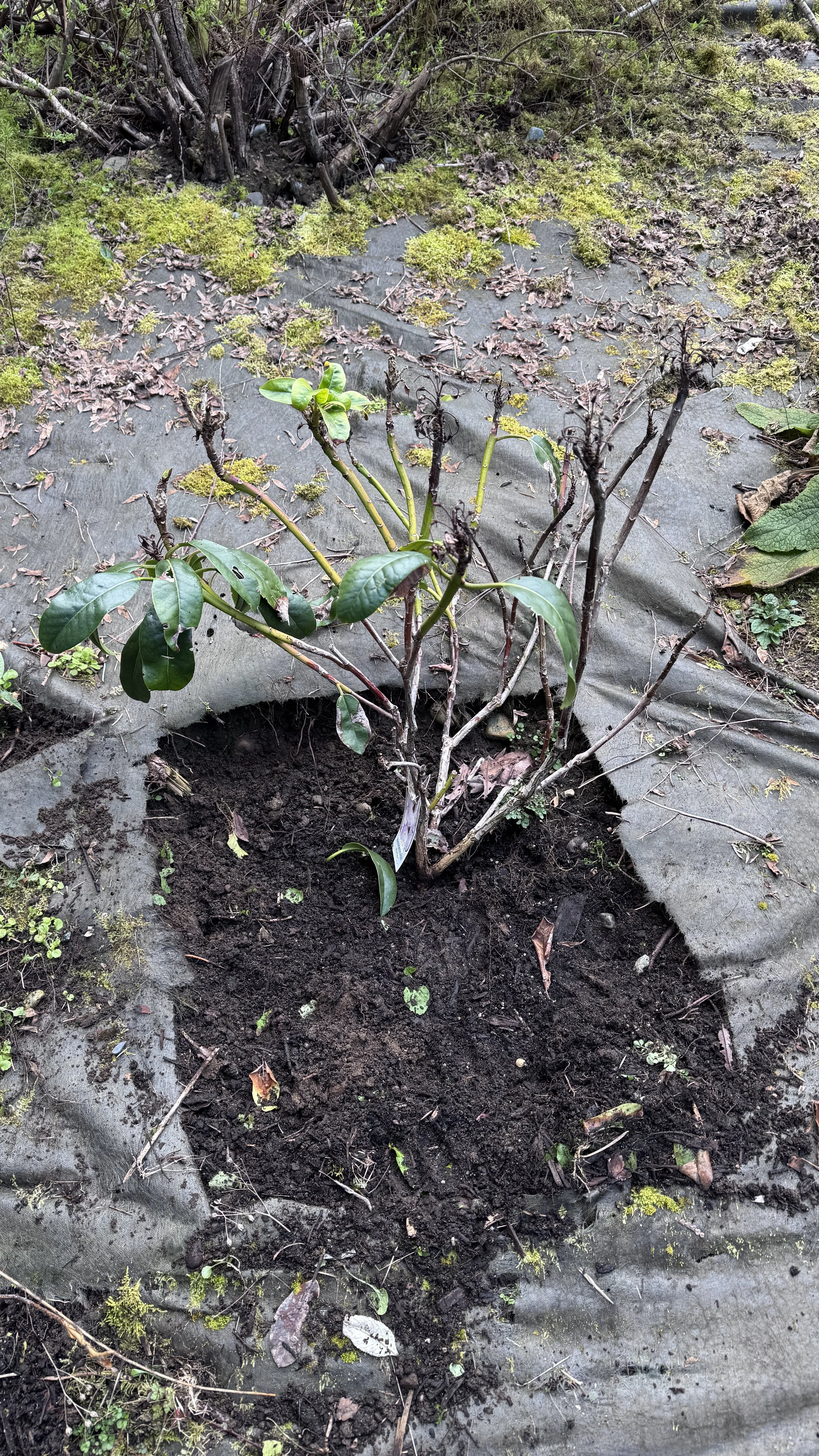
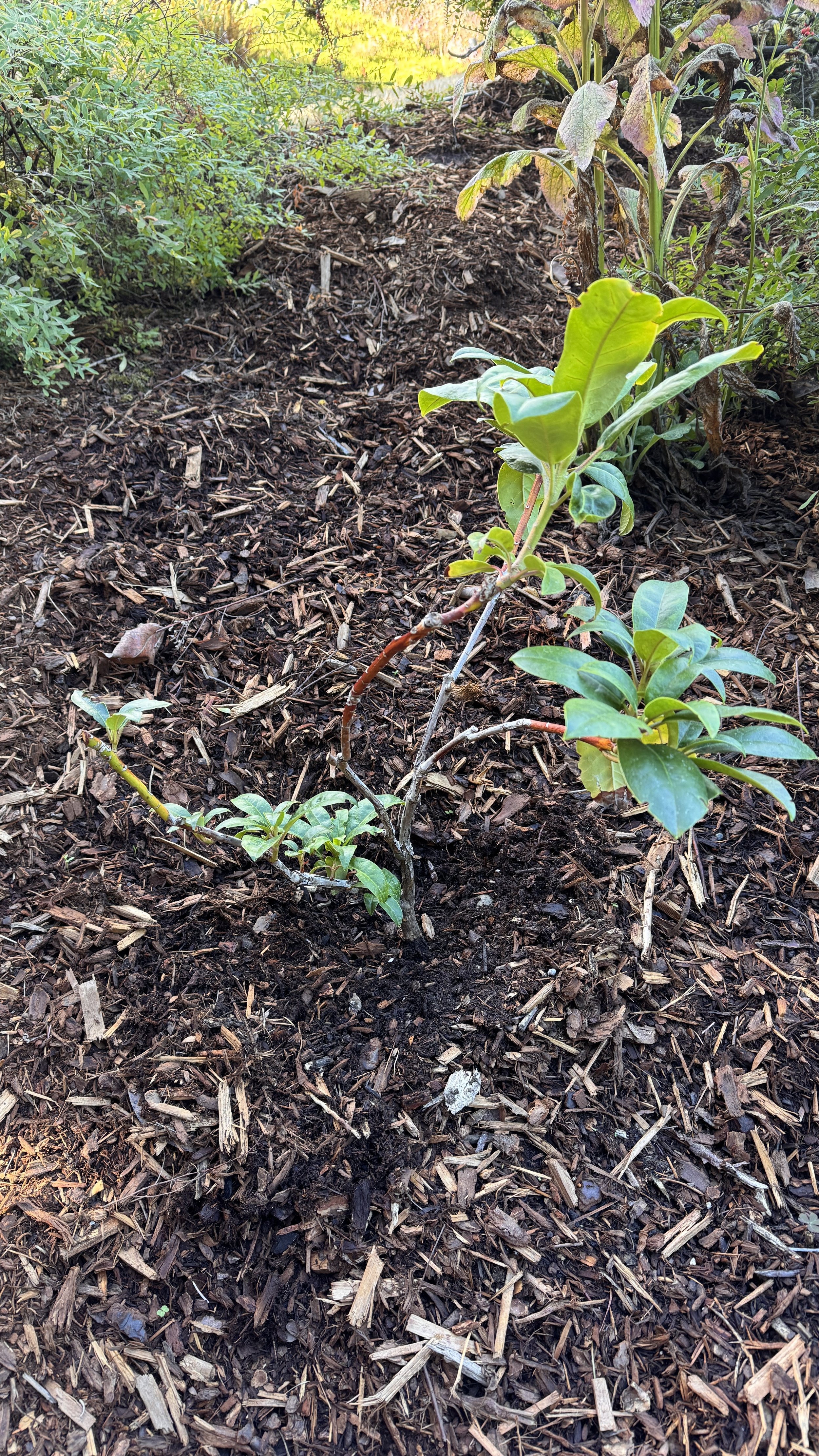
I now have 4 new and small rhododendrons in the garden, all in varying shades of purple, blue, and pink. After realizing they were not thriving, I knew joining the CVRS was probably a good idea if I wanted to have a 15-foot-tall rhododendron someday.
Gardening may be my hobby, but in my professional life I am driven by a need for organization and planning, and a good spreadsheet. So join me in this article series as I create a “Rhodo Care-Calendar” with the expertise of CVRS members who have the experience and knowledge to guide us through the seasons of caring for rhododendrons in the Cowichan Valley.
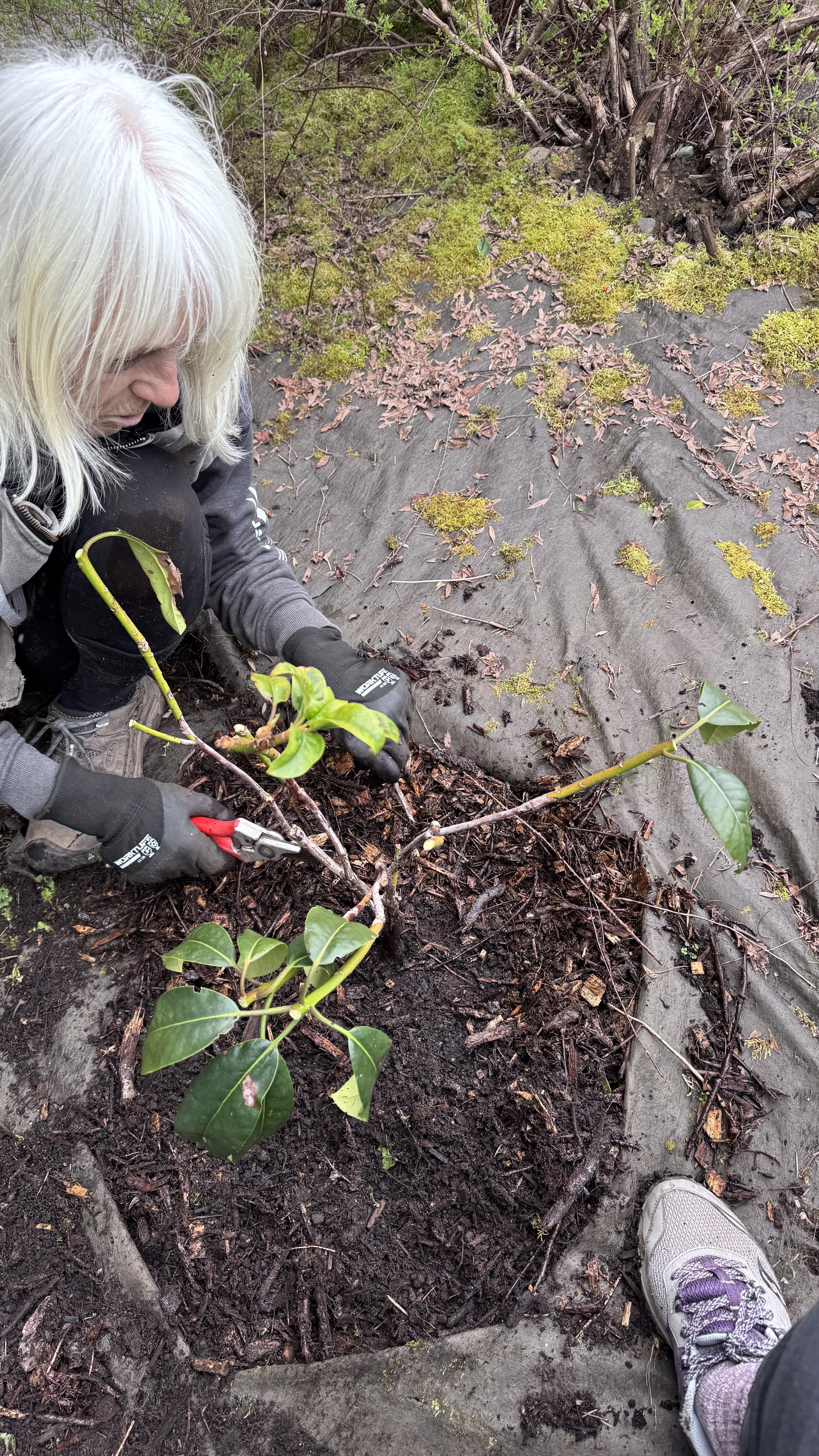
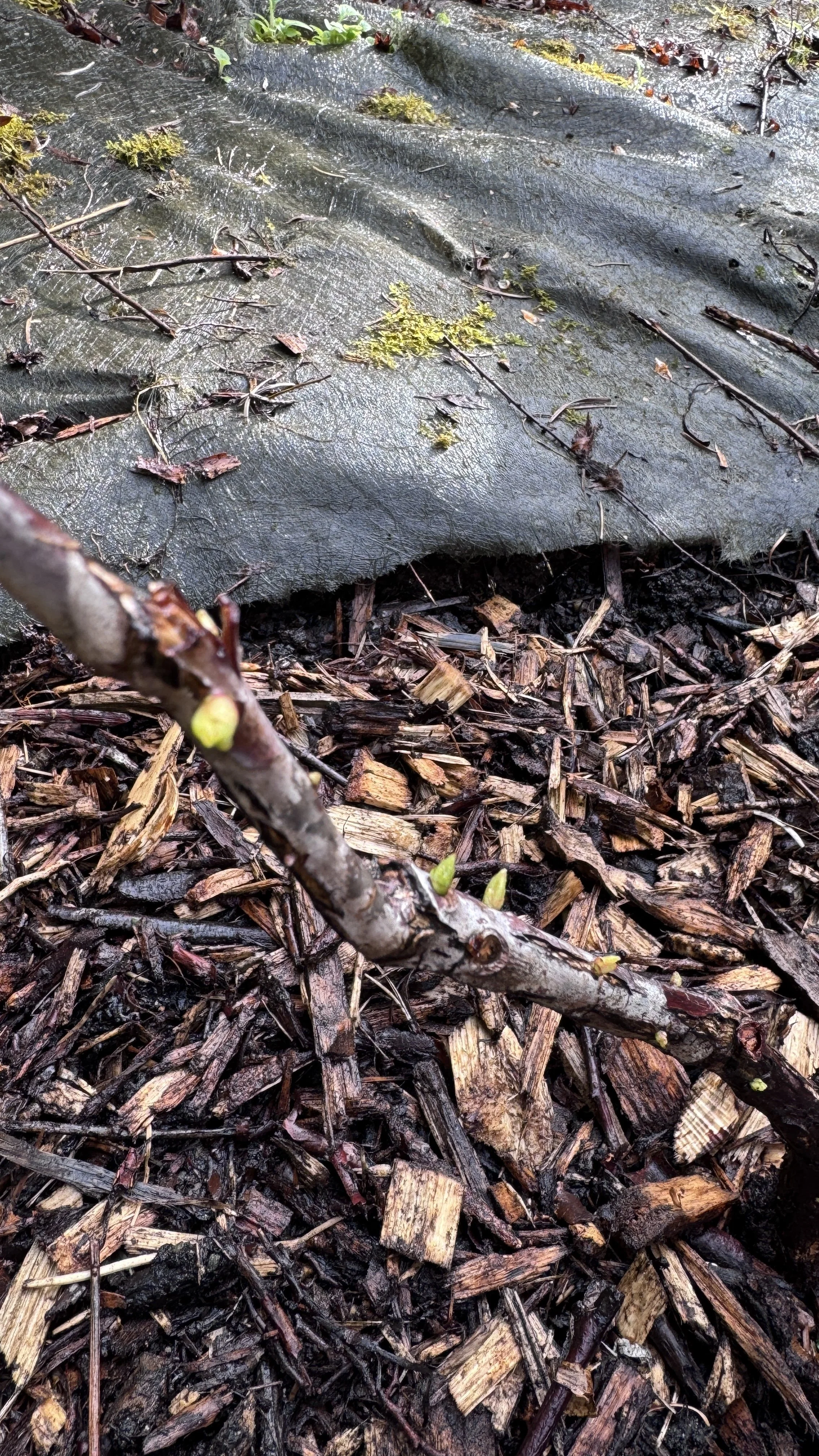
This month, I have asked Verna Buhler to join me as the CVRS expert. When I first joined the society, Verna popped by my house after I described the sad state of one of my rhodos. She showed up with all the dirt, mulch, tools, tips, and tricks to bring my rhodos back from the brink of death. So having Verna join me on this first article is fitting.
September
By Joanne Meredith in collaboration with Verna Buhler
What is the most important job to be doing for your rhododendrons in September?
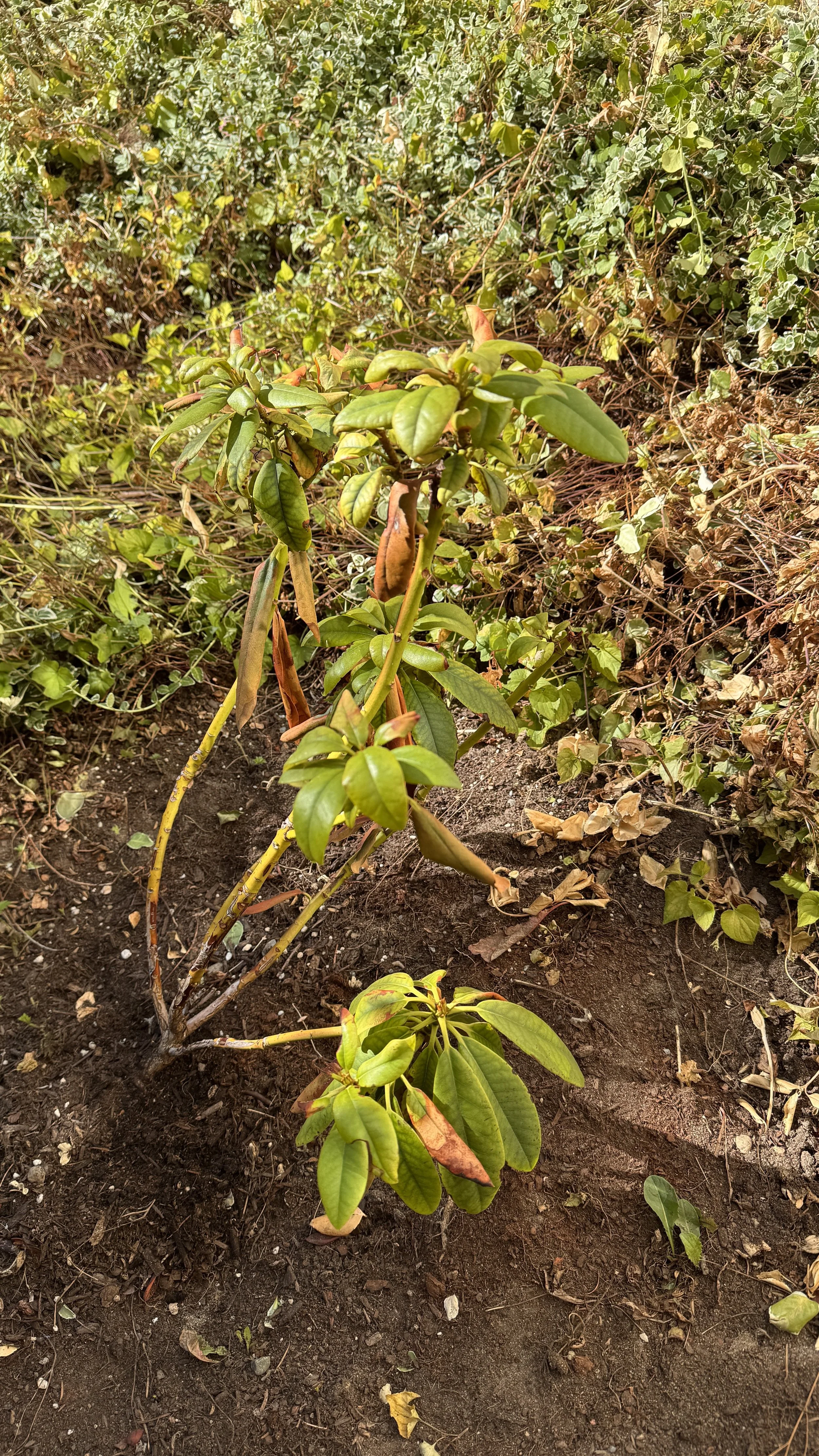
Ensuring your rhododendrons continue to receive adequate watering in fall is most important. Most gardeners are exhausted from the intense routines of watering to ensure their plants survive hot, dry summers, and are eager for a break. When temperatures cool, it is easy to forget that the soil may still be very dry.
Rhododendrons need deep water before the soil locks up. Dry roots crack from freeze-thaw cycles. Provide 1–2 inches of water weekly until the ground hardens. Wet the soil to a depth of 12 inches (30 cm). Test this to make sure. Cold, dry winds and sun cause desiccation of the foliage. Without adequate water levels in their cells, the tips and edges of rhododendron leaves will turn brown and die.
Mulching rhododendron roots is also very important at this time.
What should I be watching for?
It is a good idea to walk through your garden slowly this month, looking for conditions that could threaten the healthy survival of rhododendrons during the winter months.
Check the depth of moisture in the soil. Ensure 12 inches of moisture.
Check that the base or crown of the rhododendron is not planted too deeply in the ground and that mulch is at least 2 - 3 inches away from the trunk. During the wet season, rot can easily occur on a trunk left in these situations.
Roots must not be exposed. Mulch well to protect the roots from freezing and from the effects of soil heaving.
Look for low areas in the garden where root rot will occur if drainage is poor and water collects. Enhance drainage or build mounds to lift any rhododendrons so threatened.
Should I feed, mulch or amend the soil this month?
Definitely do not feed rhododendrons at this time. Any new growth will not harden off before the frosts arrive, and young leaves will be destroyed. Fertilizing should not happen after mid-July.
Do not dig amendments into the soil around the roots, as doing so can damage fine, shallow roots. Choose amendments carefully. Material that is already well-composted, enough to be used by the plant immediately, would result in the same untimely new growth as applying fertilizer. You can apply 2-3 inches of coarser organic material to the surface so it can break down slowly before spring. Bark mulch is suitable
Is this a good time to do pruning or deadheading?
Only pruning of dead or broken wood should be done at this time. Pruning stimulates new growth, which will not harden off in time before winter cold.
If deadheading was not completed after flowering, it can be done now, but must be done cautiously. It would be better to leave the dried flower remnants on the plant to avoid breaking off any new growth, which will have the same effect as pruning and cause untimely new growth. There is also the danger of breaking off the flowering buds that have already formed during the summer.
Is this a good month to plant, move or propagate rhododendrons?
Yes, September and October are good months to plant new plants, and to lift or move rhododendrons. In many ways, it is a better time to do so than in spring. In spring, rhododendrons may have difficulty becoming established before they are challenged by summer heat and drought. In fall, the soil is still warm enough to stimulate good root growth, rain is more consistent, and moisture in the air is similar to that of rhododendrons in their natural habitats.
It is also the time for propagation of rhododendrons to begin. The October CVRS monthly meeting will be a propagation workshop. We hope all CVRS members and anyone interested in learning more about the Society will join us.
What’s one mistake gardeners should avoid this month?
Do not procrastinate in completing the fall care and clean-up tasks on your list. It is tempting, because plants are still growing, flowering, and looking good. In the last several years, I have noticed that winter seems to strike swiftly and suddenly. Two years ago, my dahlias had continued blooming beautifully into a lovely late fall. Suddenly, the ground froze and did not thaw for months. Most of the dahlia tubers rotted. Furthermore, it is much more difficult to complete these tasks when one’s hands are freezing, rain gear is required, and the soil is mucky and heavy.
What are you noticing in your own garden right now?
My garden is still colourful and, for the most part, appears healthy. Some leaves on trees seem to be drying ahead of schedule.
But something has happened in my garden to an extent that I have never, in sixteen years, experienced before. I am shocked and overwhelmed to see the weeds, fully set with seed heads, absolutely covering the garden.
I was on vacation from late July to mid-August. I had worked very hard before I left to set up the watering and clear the weeds. My husband managed the watering admirably, and thanks to him, the garden is healthy. It appears, however, that the weeds flourished the most. I have no doubt that my fall tasks will carry on into wet and freezing temperatures. But that’s gardening.