
A Question of Hybridizing
Article by Alan Campbell
What is the purpose of the rhododendron flower? Fundamentally, attraction is the basis of its design. The rhododendron flower is the allure which alters the path of a passing insect. Mother Nature’s improbable flyer, the Bumble Bee, unwittingly becomes an instrument of conception for the perpetuation of the species rhododendron.
Continuity of a rhododendron species is not always the outcome as this industrious bee bustles about, absorbed in its own self interest. Impartial meanderings through forests of pollen laden stamens, collecting and dispersing pollen onto waiting stigmas will undoubtedly produce seed from which a plant will develop, exhibiting characteristics which will not always key [or be true] to type. [Instead, they result in hybrids] These accidental hybrids are not always destined to greatness; most will fail to produce a viable addition to the rhododendron family. Only occasionally will a seedling speciate, over thousands of years, to fill a niche as nature sees fit.
Attempting to deduce when and where man first involved himself with the hybridizing of plant material would surely confound even the wits of 221 Baker Street. The ‘why’ is elementary. The hybridization of food crops was goal oriented and approached with focused deliberation. The purpose, to increase crop yield for the benefit of the community. I don’t believe the same claim can be made for the ornamental plant material.
Does the rhododendron hybridizer consider that the genus rhododendron contains a void that needs filling, a lack of variation? Rhododendron sinogrande will grow to a one-hundred foot tree with leaves twenty four inches long and a flower truss ten inches across. The other end of the scale can be represented by R. fastigiatum having leaves and flowers measuring no more than a half inch. Rhododendron edgeworthii will give all the fragrance any grower could hope for, if that is the need. Choose your colour and a rhododendron will provide it. Nature’s palate is fully utilized from the pure white of R. hemsleyanum to the deep black-crimson of R. sanguinium var. haemaleum. Is any other genus able to boast further colours? No, no, I know what you are thinking, but that story of the Black Dahlia was not about a flower. All right, I will concede that there is no deep ‘gentian’ blue on the rhododendron canvas, so perhaps there is a very narrow niche to fill.
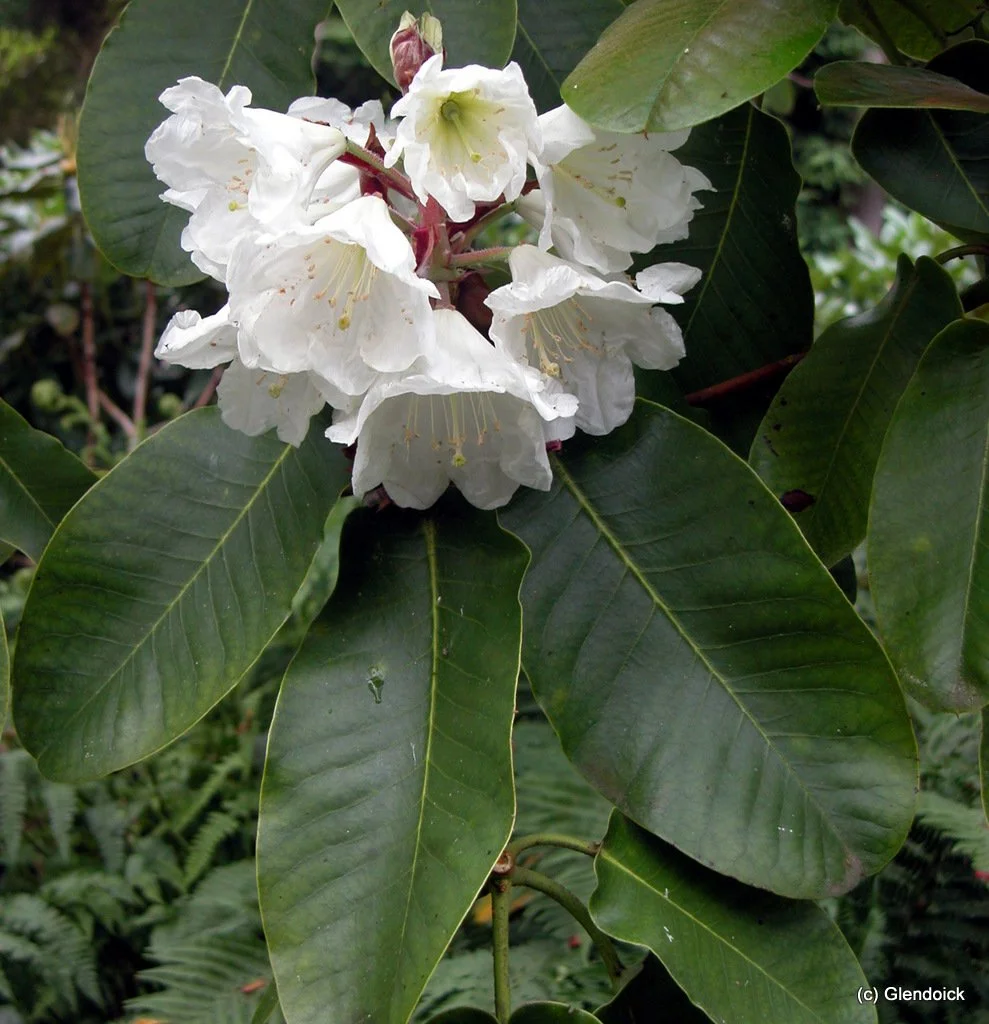
The pure white flowers of Rhododendron hemsleyanum
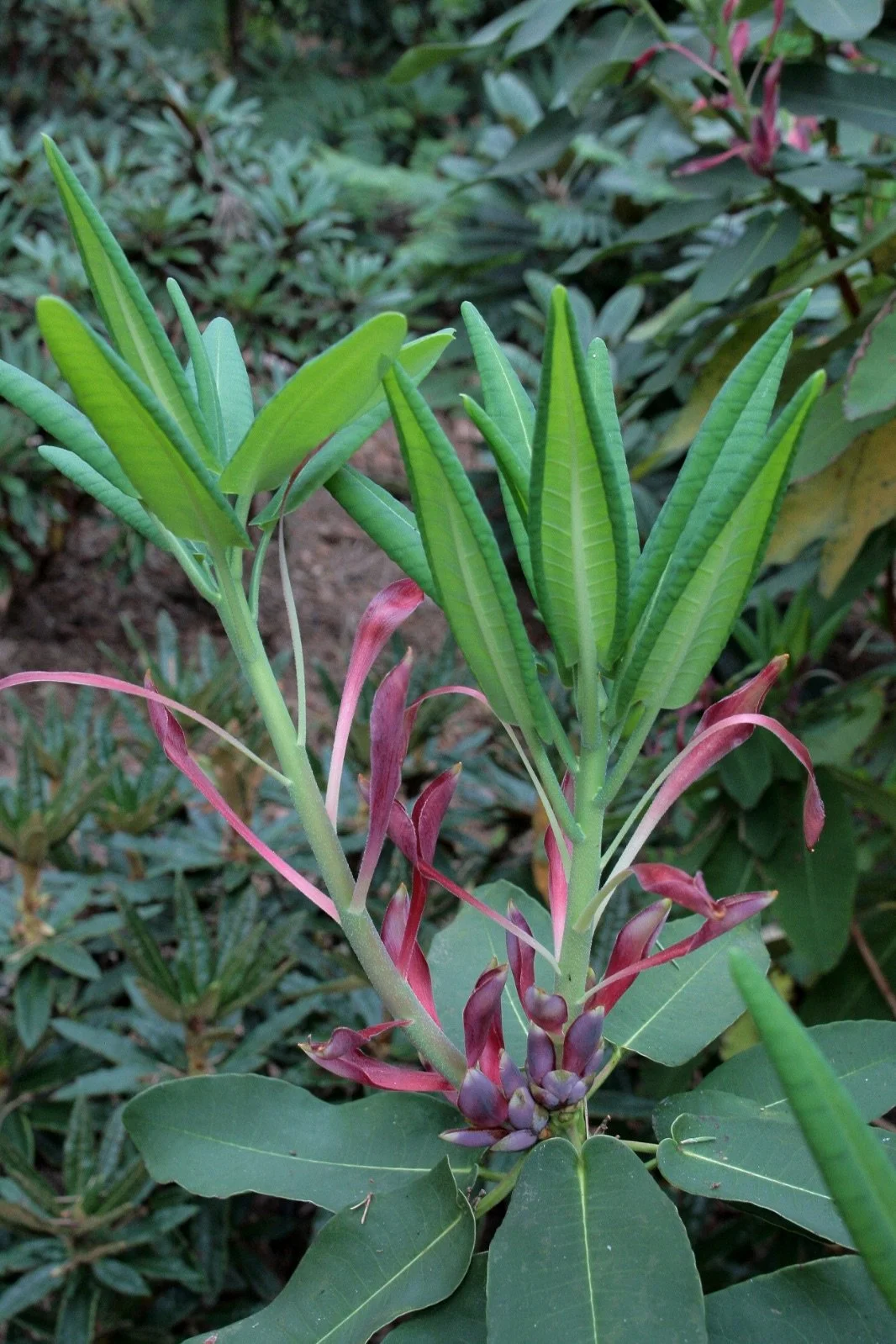
New growth on Rhododendron hemsleyanum
Mary Greig of Royston Nurseries is reported to have remarked about hybridizing, “Do we really need another pink rhododendron?”. Princess Abkhazi showed thinly veiled contempt towards hybrids with the description of “blousy barmaids” when compared to their species parents. So what drives these upstart hybridizers into, perhaps, thinking their genetic engineering can, in anyway, improve on what Mother Nature has perfected over millions of years?
It is quite possible that I am afflicted with a quixotic delusion but it is my ardent belief that hybridizers are a very special group of individuals bearing an abiding interest and affection for the genus Rhododendron and seek an appropriate outlet to express their passion. Consider the steps and span of time taken to produce their progeny. Initially, developing a focus and desired outcome of their efforts, choosing both seed and pollen parents which will hopefully form a sound base to their vision, working in minutiae to guarantee precise fertilization, waiting with expectation for seed pods to swell, sowing the resulting seed and waiting for germination. Waiting, always waiting. Judging, critiquing, appraising, and culling. Evaluating the growing plants for 10 years (the required time before registration) hoping to find that one out of hundreds which fulfills the vision. Ten years! Surely this display of gumption rivals even the work of Michelangelo at the Sistine Chapel! Hybridizers are, without a doubt, the artists of the plant world. The painter, the sculptor, the perfumer will all find their muse within the genus rhododendron.
We have all felt the allure of the rhododendron flower. Upon returning home after a long day on the job, we turn off the car engine and sit for a moment. There, at the tree line, Bob Rhodes’ Rhododendron ‘Gabriola Blue’ waves a greeting in the breeze; Frank Fujioka’s R. ‘Starbright Champagne’ glows in the evening light. Up the walkway, Cox’s little R. ‘Razorbill’ with its pink tubular firecracker-shaped flowers shows more enthusiasm at your return than does the cat lying next to it. On the patio, a potted Rhododendron ‘Fragrantissimum’ administers aromatherapy easing the furrow between tired eyebrows; eyes soften and tension falls from the shoulders. We’ve returned to the embrace of Mother Nature. We feel the touch of the Divine.
That, my friends, is the purpose of the rhododendron flower.
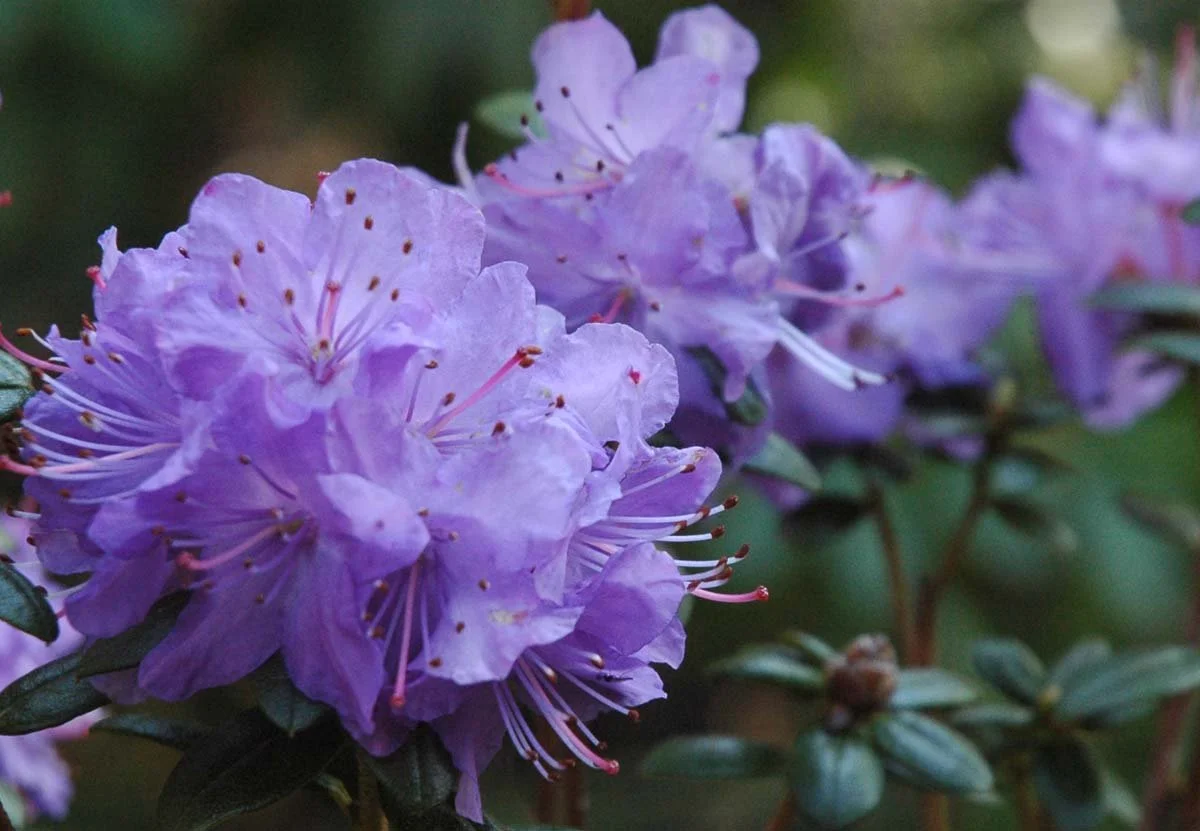
'Bob's Blue' is the formally registered and widely known cultivar name of the hybrid, sometimes known as ‘Gabriola Blue’, produced by Bob Rhodes of Gabriola Island.