
By Joanne Meredith and Alan and Sandy Campbell
When I first joined the Society, I learned that Alan and Sandy Campbell had owned a large property and had recently downsized to a smaller property and garden. I found their transition story interesting because I was trying to make my own yard and garden more manageable and easier to maintain. So to continue our monthly article series, I connected with them to get their thoughts on November rhodo care, and their insights on garden transitions.
As November arrives, what are the most important things you do to prepare your rhododendrons and gardens for winter?
As our colourful gardens of summer devolve into the cooler temperatures of late September and into October, a change in a gardener’s perspective takes over. Even though the dahlias continue to bloom in mid-October, garden clean-up and preparation for Winter is required.
Sandy has begun cutting back hosta foliage. Next is removing drying lily stalks and drooping hydrangea blooms. The best hydrangea blooms will be brought into the house to dry and display.
Not all of Sandy’s Autumn endeavours are bent on removal. Hostas are divided and beds extended. Primilas and Michaelmas daisies are divided as well, and these smaller additions are placed along garden perimeters and border the edges of pathways. Always on her mind is the removal of seed heads, weed or not, before they broadcast their progeny throughout the garden.
Alan’s focus at this time is less ardent than Sandy’s. Collecting seed pods off of the Japanese maples, hoping for a slightly different form to add to the garden display. Propagating rhododendrons from cuttings has been Alan’s interest for thirty years or so, though now his purpose is centred on the rarer and more difficult-to-root species varieties.
The rhododendron varieties that Alan has purchased at different ARS Chapter plant sales or from the Rhododendron Species Botanical Garden Spring and Fall catalogues are now ready to be planted, freed from their pots. Alan considers Autumn as the most beneficial time to plant rhododendrons. Many years ago an older rhododendron guru told told him ‘if the air temperature is warmer than the soil temperature, the plant will put on growth. If the soil temperature is warmer than the air temperature, then the rhododendron will grow roots.’ The rhododendron will not grow roots if the soil is frozen, but if not, then the roots can grow and establish themselves in its planted spot well before the heat and dryness of the Summer, with less chance of added stress.
All of these duties will cover a number of weeks but the contentment of a garden ready for spring is a reward. Of course, let’s not forget the constant raking of leaves.
Having developed both large and small gardens over the years, how has your approach to gardening changed? Are there lessons you've learned that might help someone just starting out or downsizing their garden space?
We became owners of the two and one half acre Shawnigan property in March of 1994. We purchased the 1920’s home from my (Sandy) parents. Not until the following year did we begin the pleasure which would become ’Stonefold’.
The five rock-walled terraces found on the sloping front of the property were constructed by some unknown landscaper in the distant past. All that was growing on the terraces were dying and diseased, spreading junipers. The first order of business was to remove the junipers. Using a truck to pull out the plants damaged the rock wall in various places, which we rebuilt with rock steps to access various terraces.
(click to enlarge photos)
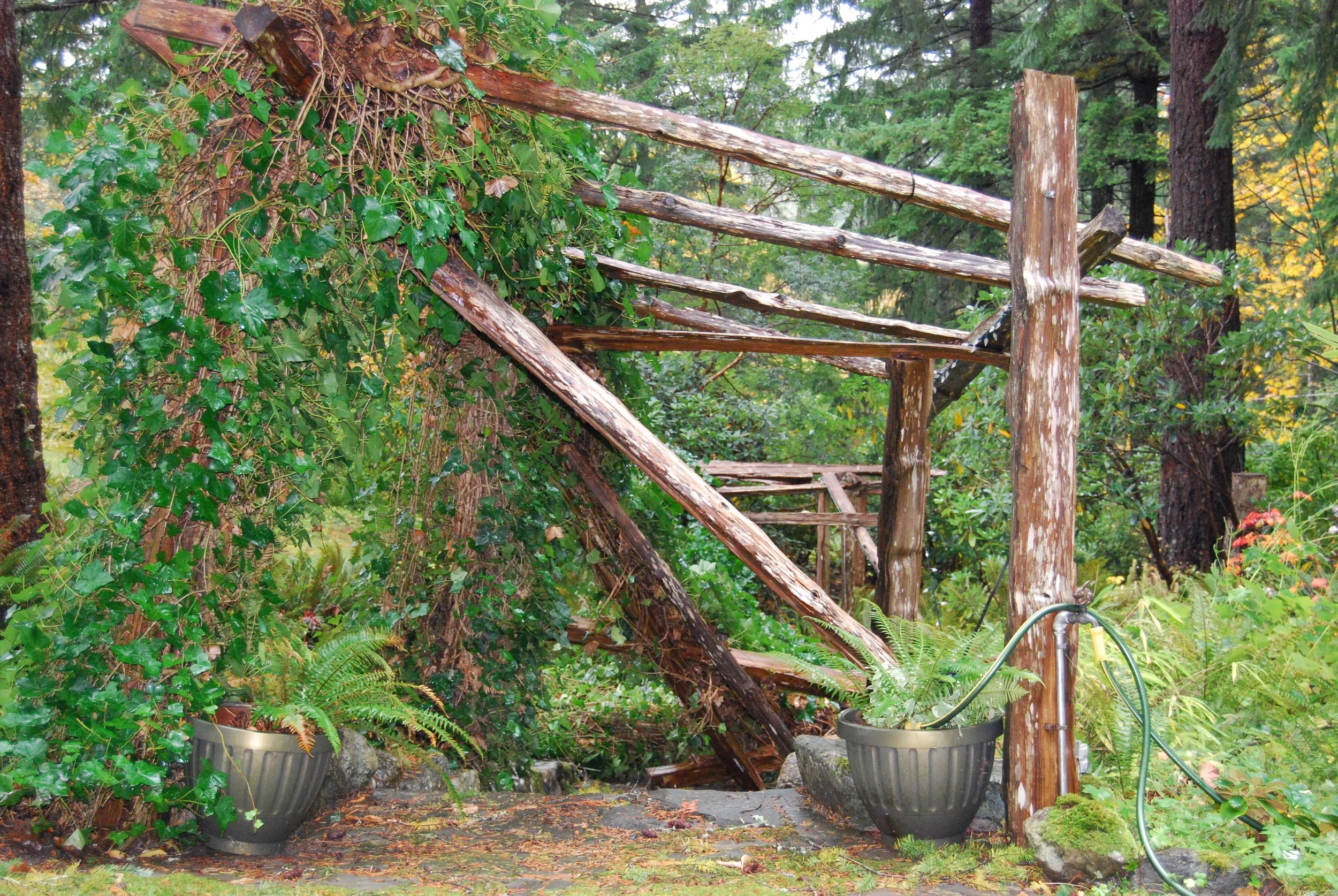
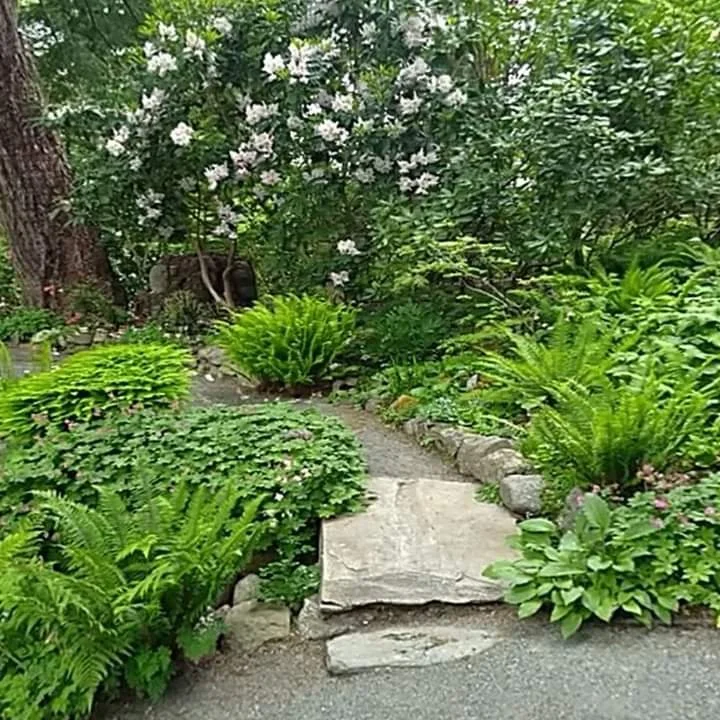
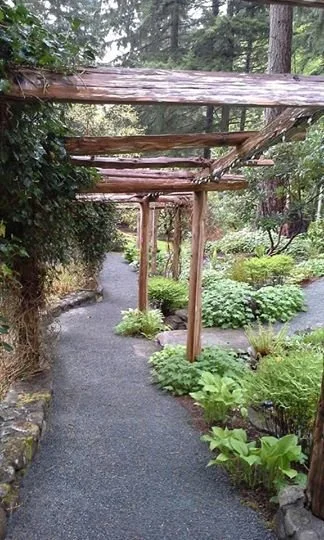
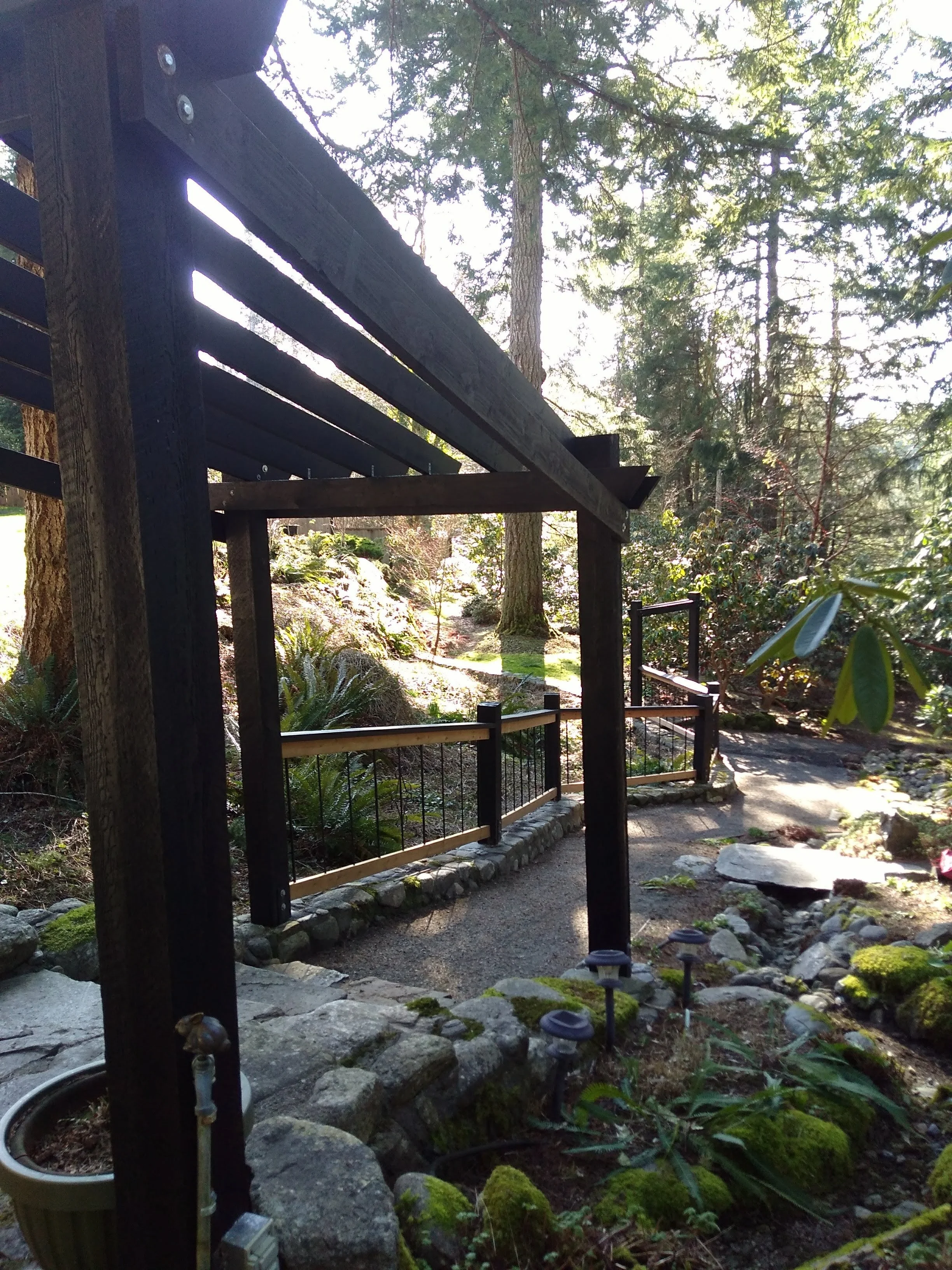
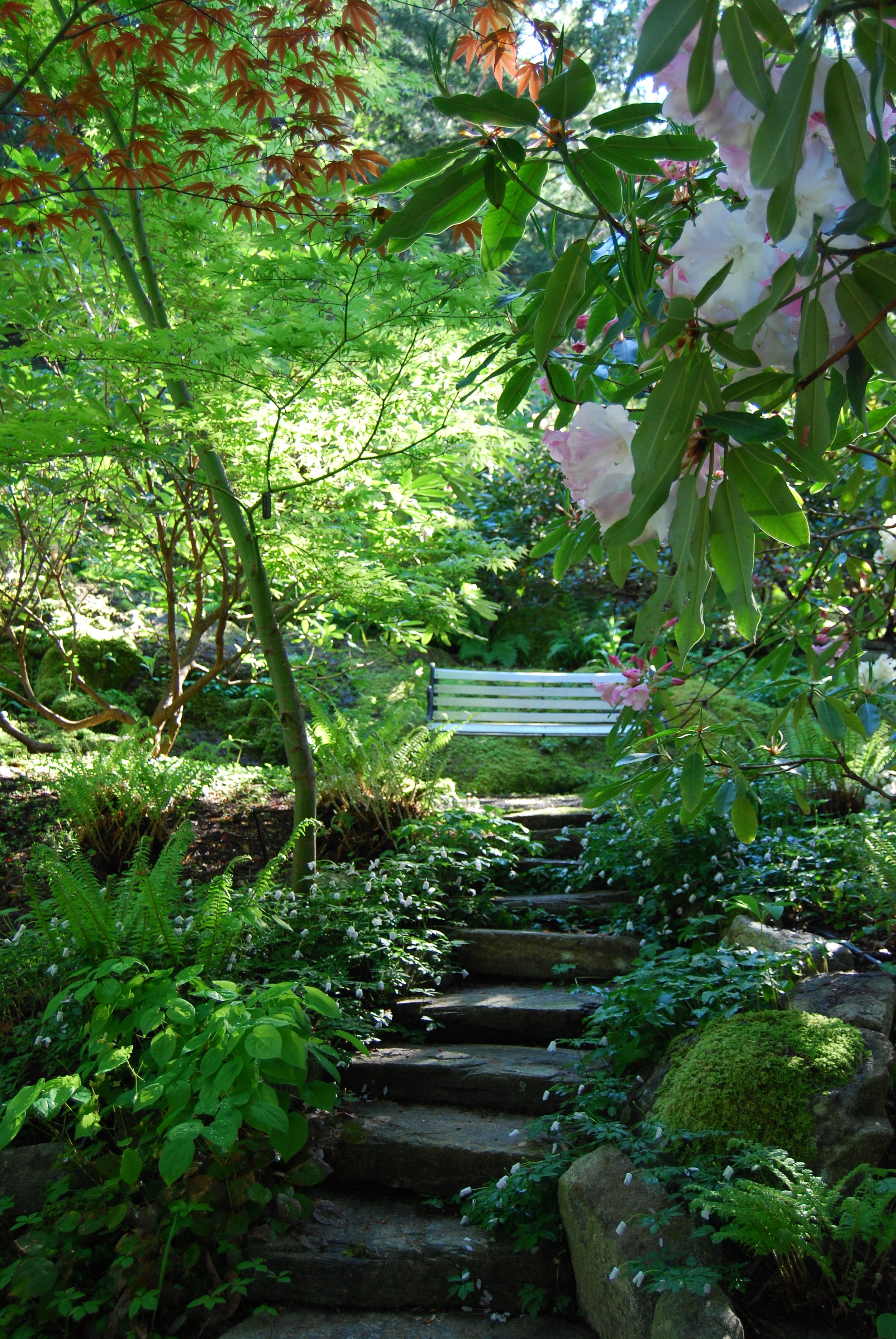
Under the large fir tree canopy was a vast expanse of English ivy, covering from the house parking area down to the driveway. The initial attack on the ivy gave us space to construct a split cedar arbour, crushed stone pathway, rock retaining wall and rock steps at the top of the arbour. Removing more ivy allowed us to dig out a stream bed, with two small waterfalls, bordering the path. This was constructed to contain and control Winter runoff.
It was a full five-year undertaking to remove all the ivy we wanted gone, but it was Mother Nature that guided us in our plantings and in the building of pathways and steps.
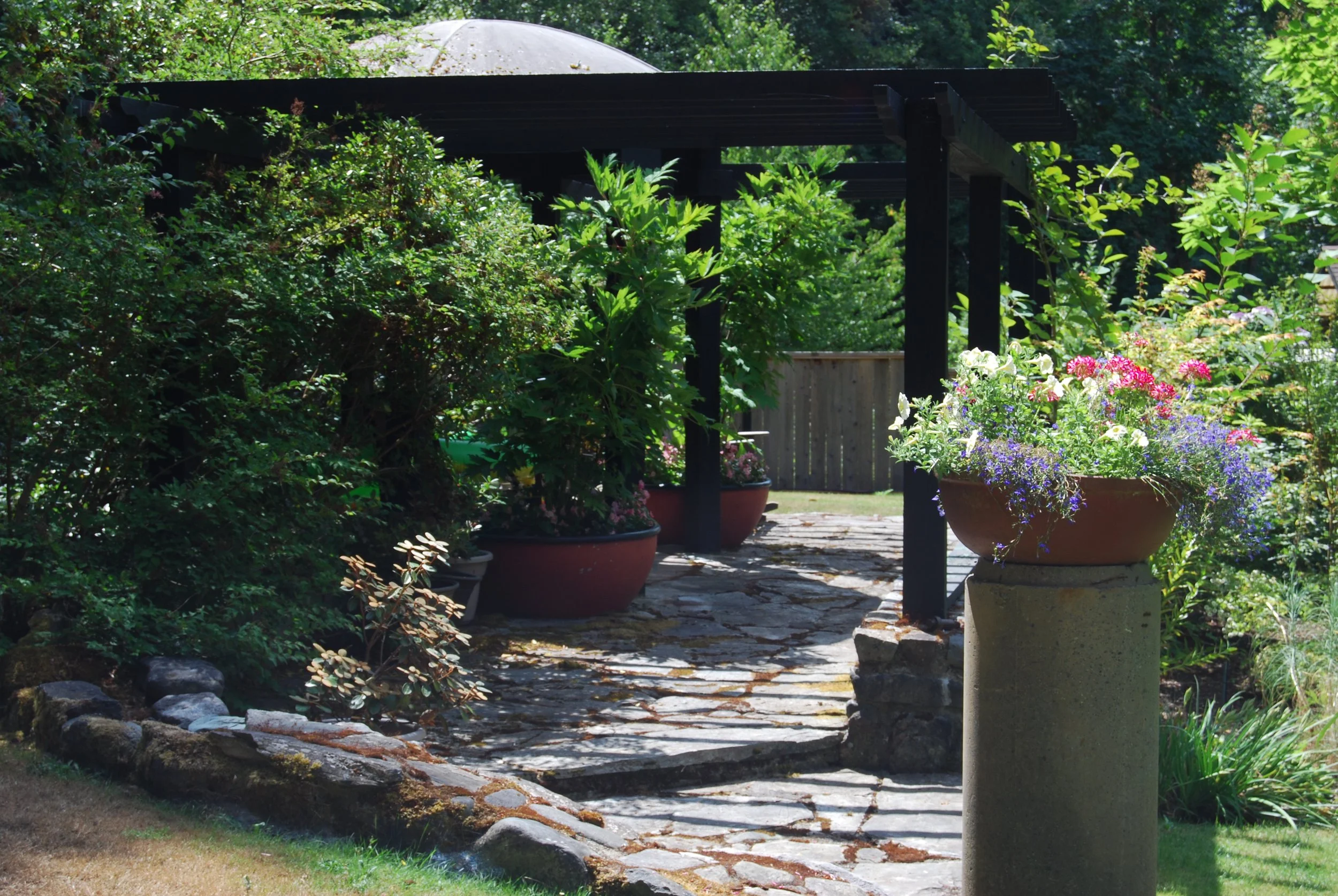
The backyard was different. There was grass which needed to be removed to be replaced with planting beds, a greenhouse and a large arbour or pergola with its flagstone floor and seating area.
Over the 28 years of our stay in Shawnigan, the garden expanded with multitudes of varieties of herbaceous plantings, which were Sandy’s forte, complementing Alan’s planting of over 750 varieties of rhododendrons and three dozen or so Japanese maples and other small shrubs.
In between all the garden bed construction, a calamity occurred with the cedar arbour. Over time, the wood rotted to the point that the ivy growing over it acted like a large sail, which the wind caught and brought the whole structure down onto the pathway and stream bed. Back to the drawing board and a new idea.
All construction, be it of wood, rock, concrete or gravel, planting beds (along with the needed irrigation) or pond work, was undertaken by the two of us. Unless we could cajole our 3 children into helping. The rock, field stone and flagstone was all hand picked and collected from back roads and logging roads in a thirty kilometer radius and brought home in a F150 Ford pickup which eventually expired from the exertion.
We did not see a future point where we would not be complementing, supplementing or making changes to Stonefold but Mother Nature demanded another path.
Needing a hip replacement at 70 years old Alan was finding clamoring up and down the steep terrace front gardens more and more of a chore rather than recreation.
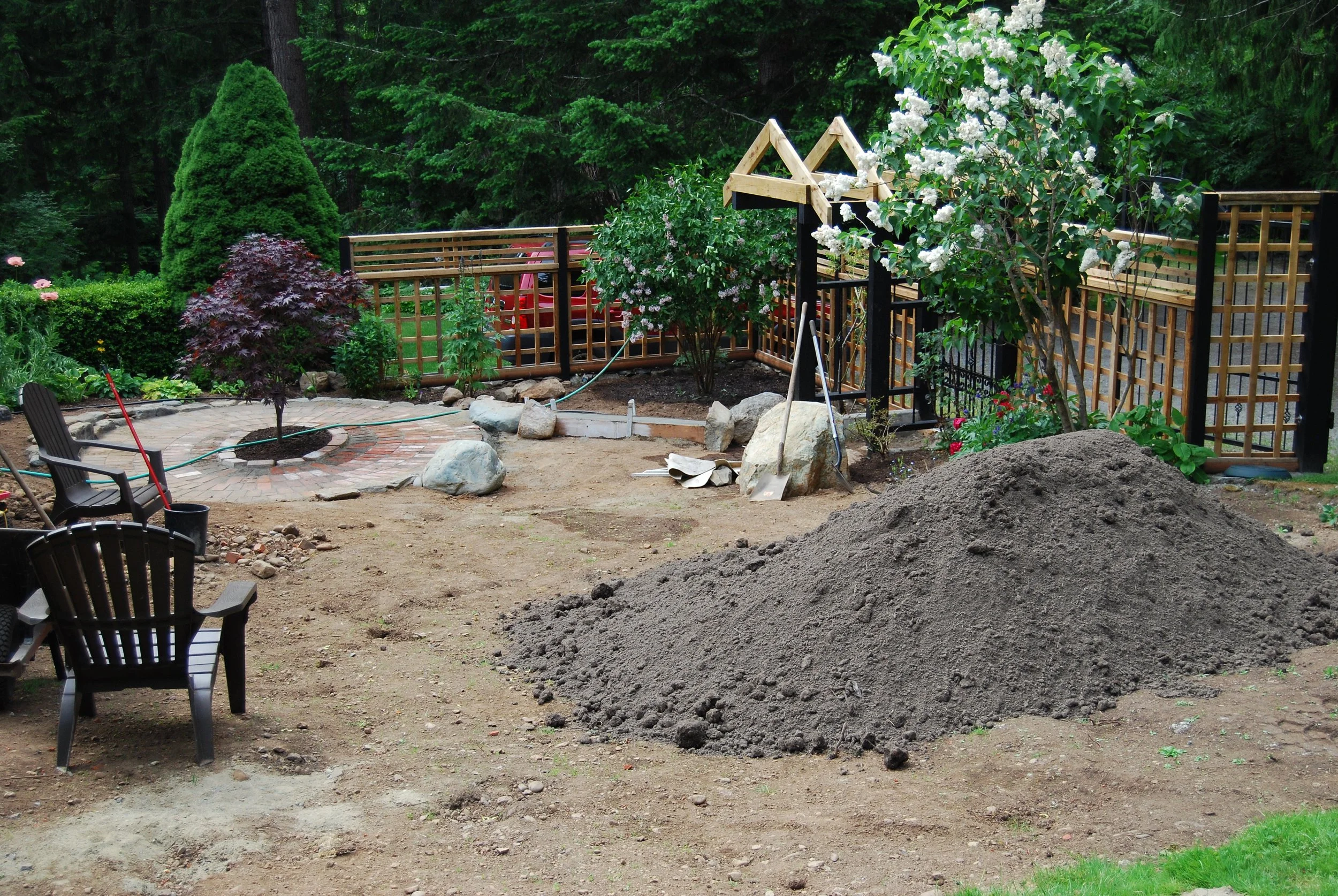
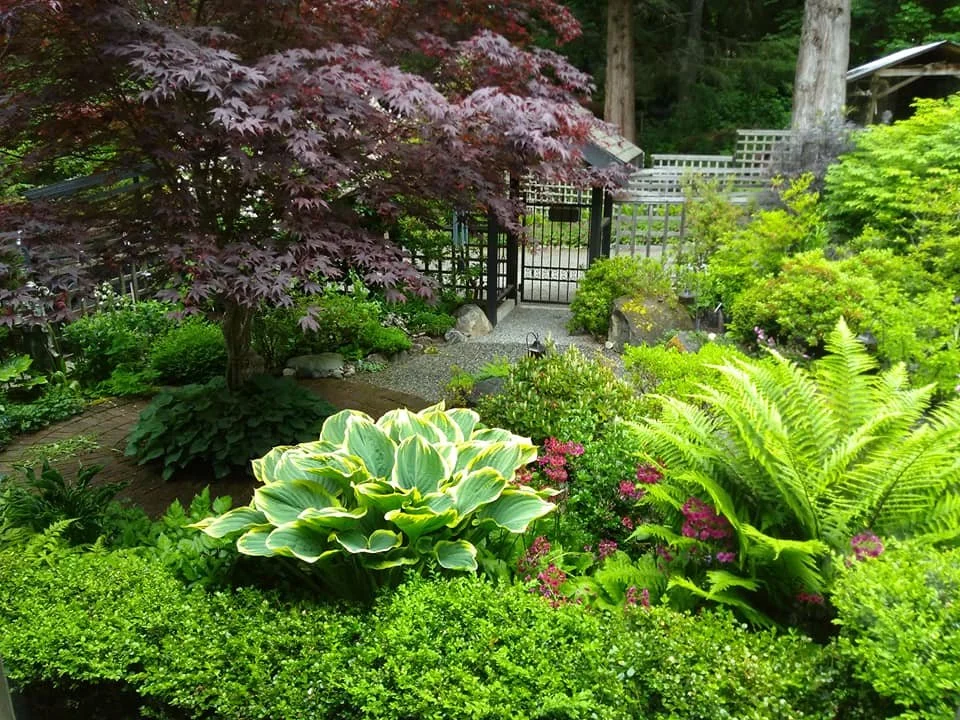
Five years ago we purchased our ‘new’ home in Cowichan Bay. A much smaller one fifth of an acre on level ground. The bones of this new garden were here but much of the plantings were not of our taste. Many truckloads of unwanted and diseased plants were removed and taken to the compost dump. Allowing us to place our mark.
Fencing was in place, pathways needed to be embellished and planting begun. Spring and Fall bulbs were added, ferns, hostas, various heuchera, lillies, dahlias and a host of other annuals and perennials. Of course Alan needed to add some rhododendrons. Because most of the property experienced full sun exposure, some careful consideration was needed. Of the 80 rhododendrons planted to date most are lepidotes: triflora, cinnabarina, campylogynum forms, some rare species along with a few hybrids of Barlup, Fujioka, Cox and Wright.
The garden will continue to evolve as gardens always do.