
Companion Plants for the Woodland Garden — Hostas —
By Verna Buhler
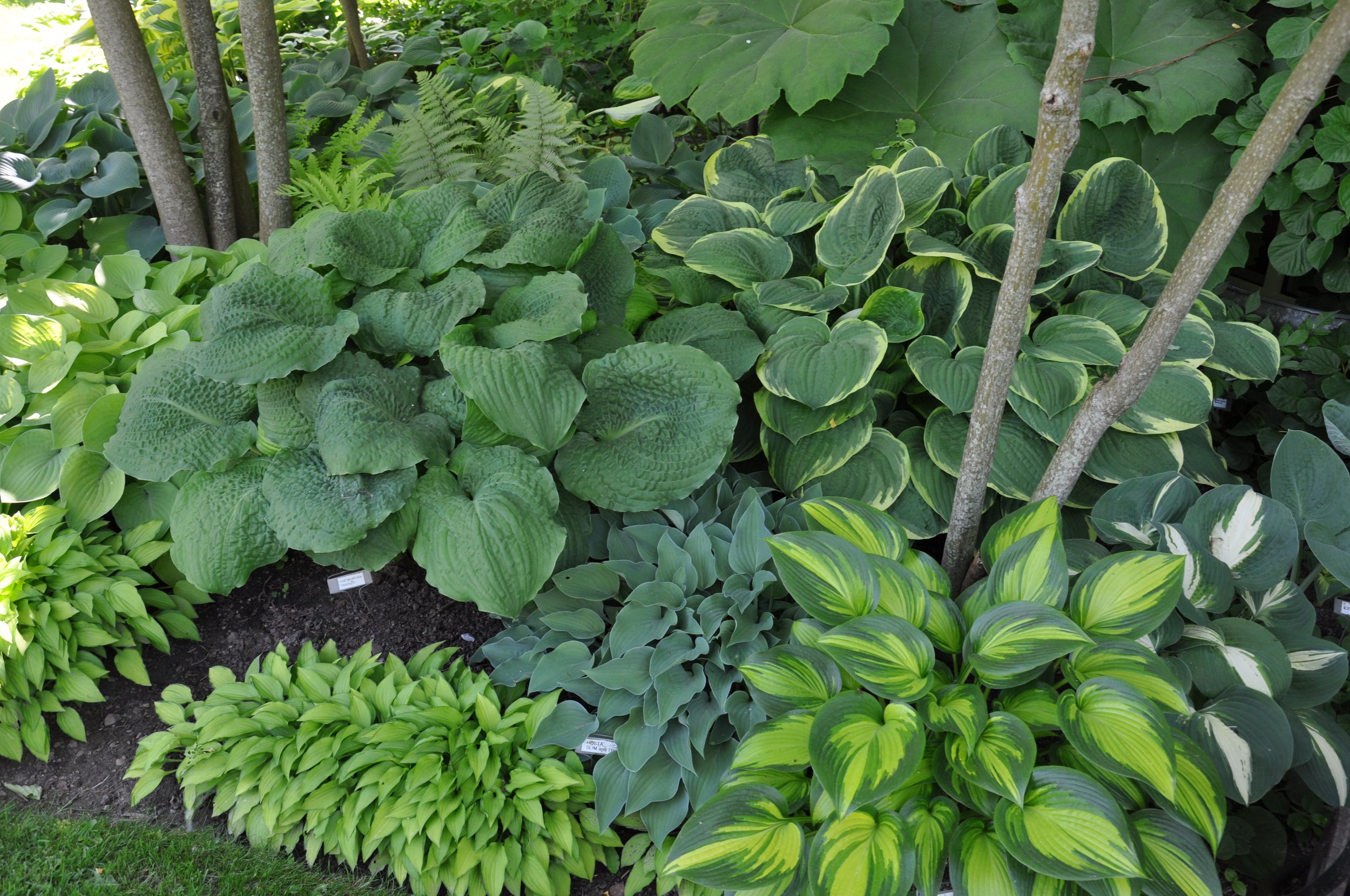
Hosta with a variety of foliage textures (Photo: Giboshi Hill Hostas)
As I wander my garden in late March and early April, I spot numerous one-inch spikes of Hosta piercing through the woodland leaves and mulch. There is a strength and determination in their upward thrusts that invigorates my own spring movement.
Over the last several years I have been adding more companion plants to my woodland garden and am drawn to plant drifts of ferns and hosta together with my rhododendrons.
Although I love every hosta variety I have in the garden, there are several that are special: Hosta ‘Praying Hands’ with unique upright pointed foliage; H. Empress Wu’, the largest known hosta; H. 'Sun and Substance’, also generous in but golden; H. ‘Guacamole, richly-coloured and dependable; H. ‘First Frost’ with distinct blue and cream contrasts; H. ‘Baby Mouse Ears’, forming diminutive perfect clumps.
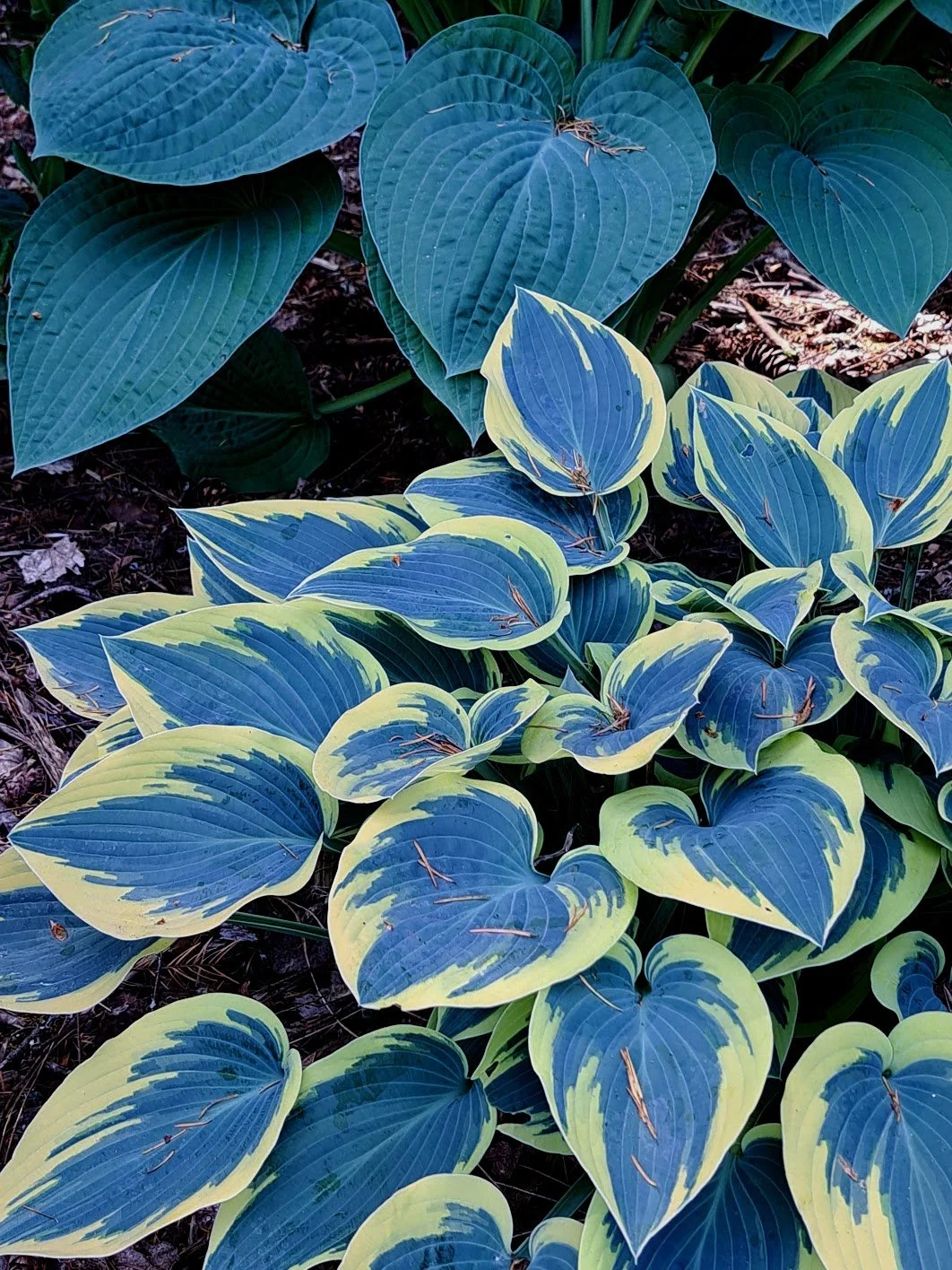
Two of my favourite Hosta enhancing one another’s rich blue tones
There are several new Hosta on the market each year. This year, I have noted a few, new to me, that I hope to find locally. As I prefer to support our community, I usually don’t mind waiting. However, this may be difficult for me this year!
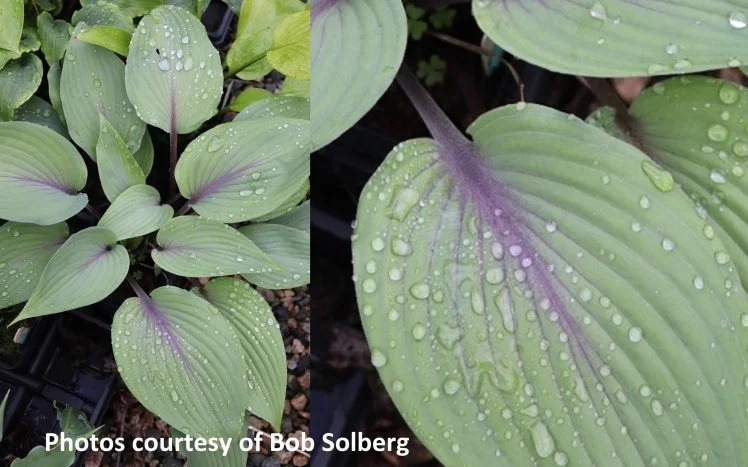
Hosta ‘Sip of Wine’ The dusky, purple in the petioles saturates the base of the milky, moss-green leaves, and continues in the veins throughout the full length of the leaves. The purple pigmentation apparently stays all season; in Fall, lavender flowers complete the picture.
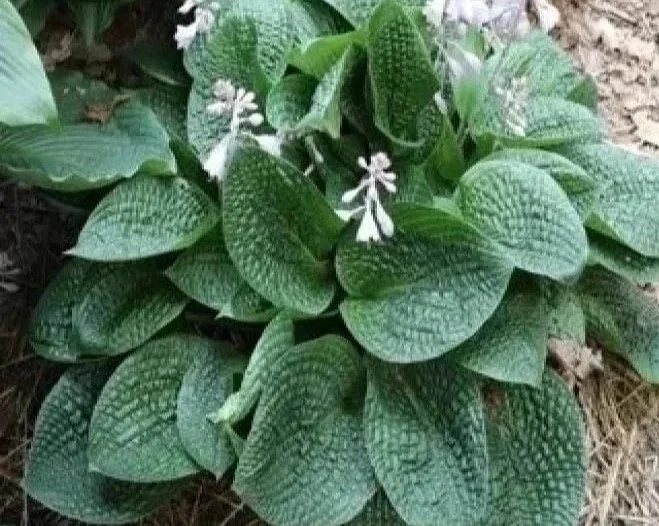
Hosta ‘Alligator Rock’: ‘Alligator Rock’ is a 2026 introduction with foliage of thick substance with perfectly aligned rows of alligator-like corrugation. (Photo is courtesy is Don Rawson)
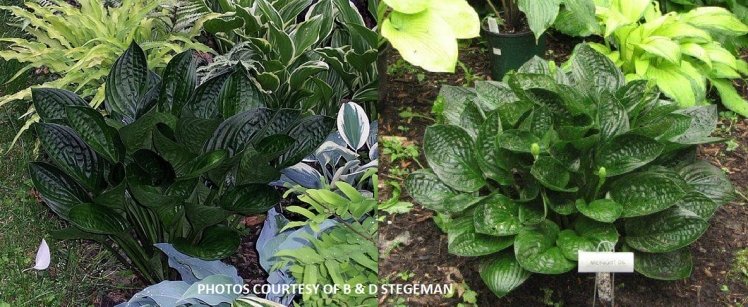
Hosta ‘Midnight Oil’: This hosta will need to be meticulously sited in the garden so as to fully augment its unique features. Thick, extremely dark-green leaves grow upright, are cupped and corrugated, and so shiny that they appear oiled. Purple flowers are a lovely contrast to the foliage.
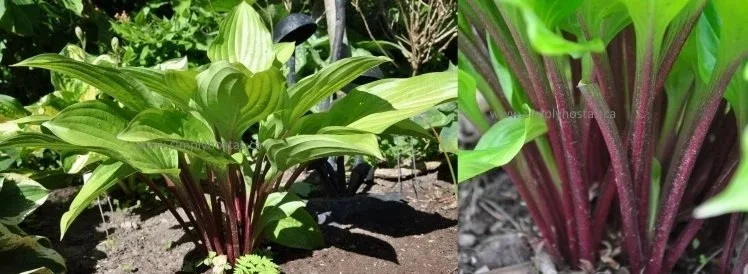
Hosta ‘Beet Salad’: Beautiful, deep red petioles lift bright-green, distinctly-veined leaves displaying a red vein visible on the border until July. Purple flowers held on 36” scapes turn to red seed pods in fall, and, as a bonus, are viable. Photos: Giboshi Hill